

In this post we’re going to talk about some classic Super Robot shows, which we will loosely define as the piloted Super Robots created in the 70s and 80s. The shows will be listed in Production order. We will update this post as we add additional classic super robots to the MechaStellar roster.
Mazinger as well as Getter Robo are both large franchises and each have their own where to start posts.
Mecha Anime on Japanese TV really took off in the 1970s and continued into the 1980s. You may have seen some of these iconic super robots featured in Super Robot Wars (SRW) so if you’ve ever wanted to know more about them below is a good starting point.
Yuusha Raideen (1975)

Raideen
- Height: 50m
- Weight: 520 tons
Raideen was the 4th piloted Super Robot show after Mazinger Z, Great Mazinger and Getter Robo. Raideen also started a long line of mecha shows that clone the personalities and character designs of Mazinger Zs Koji, Sayaka and Boss. In Raideen’s case it had Akira, Mari and Dan as their version of Koji, Sayaka and Boss. They also added in Jinguji the older brash and mysterious fighter pilot as well as Rei Asuka a nun with mild psychic premonitions.
Brave Raideen (1975) was a favorite among many early mecha fans including those who would go on to direct their own shows with Raideen influencing Hideaki Anno’s Evangelion, and those two shows influenced Izubuchi’s RaxXephon.
The directors for Raideen’s first 26 episodes was Yoshiyuki Tomino who would go on to to create Zambot 3, Daitarn 3 and Mobile Suit Gundam. The director for ep 27-50, Tadao Nagahama who would go on to do Combattler V, Voltes V, Daimos, and Daltanious (a precursor to GoLion / Voltron).
Raideen has an Egyptian motiff and one of the few giant robots to use a bow and arrow, it can also transform into a giant egyptian god bird and crash through enemies. Raideen itself tends to display psychic powers and the SRW games tend to give Akira + Raideen a renamed version of the Newtype bonus.
Me personally I find the fight choreography in Raideen and Combattler V (at least the first half of both shows) to be my favorite of the 70s Super Robot shows. A commonality in both shows is they both tend to drag after the first half.
Combattler V, Voltes V, Daimos


Combattler V
- Height: 57 meters
- Weight: 550 tons
Voltes V
- Height: 58m
- Weight: 600 tons
Daimos
- Height: 45m
- Weight: 150 tons
Combattler V, Voltes V and Daimos are part of the Robot Romance Trilogy created by Toei, animated by Sunrise and directed by the late Tadao Nagahama. The character designs for Combattler V were done by Yoshikazu Yasuhiko (of Gundam fame) while Voltes V and Daimos were done by Yuki Hijiri known for his designs on Locke the Superman.
The shows share common themes and story beats, with Voltes V often being seen as an improvement over the original Combattler V formula by taking the sympathetic villain and keeping them for the entire show’s run, whereas in Combattler V the fan favorite villain lasted until the mid point of the show, at which point the show was greenlit for a second half and had to come up with new villains and plotlines.
My personal thoughts are that Combattler V has a stronger first half than Voltes V, but a significantly weaker 2nd half, whereas Voltes V is strong the whole way through. Internationally, Voltes V tends to be much more popular, it’s a very beloved show in the Philippines even having its own live action remake with impressive CGI for the Voltes machines.
Both the shows are rather foundational in the mecha genre for they popularized the 5-man color coded pilot team of a combining super robot which would become a genre staple and also inspire the 5-man color coded team for the Super Sentai (Power Rangers) franchise. They also have excellent fight choreography and engaging story telling, highly, highly recommend if you haven’t seen it yet.
The third in the Robot Romance Trilogy is Fighting General Daimos. Daimos features one robot and pilot but still has relevant support characters. It takes a lot of lessons learned from Combattler V and Voltes V and builds a compelling narrative between the humans and the Baam (winged aliens) are in constant conflict with one another, there’s still hope with a budding romance between the Deuteragonists and Daimos pilot Kazuya Ryuzaki and Princess Erika of the Baam Empire. That said, Daimos eschews the color scheme of its predecessors and so looks a bit out of place while Combattler and Voltes very clearly look like brother units. While Daimos is an enjoyable show, it tends drag a bit in the middle and never quite reaches the peaks of either Combattler V or Voltes V. It’s a still a solid show and worthwhile to wrap up the series.
Combattler V – Opening Theme
Voltes V – Opening Theme
Daimos – Opening Theme
Daitarn 3

- Height: 120 meters
- Weight 800 tons
Daitarn 3 is one of my absolute favorite shows. This was created by the fledgling studio Sunrise before Mobile Suit Gundam (the show that aired after Daitarn 3) made it a Juggernaut in the mecha production scene.
Daitarn 3 stars a 120m tall transforming robot piloted by Banjo Haran, a James Bond-esque character out to stop the Meganoids (Robot Androids who want to turn all of humanity into androids themselves). While this may sound like a serious show it’s actually an amazing comedy with some great action.
Through the course of the show you’ll see Banjo and Daitarn outwit and outsmart some goofy villanous Meganoids while also being captured, put in compromising and comedic situations not unlike James Bond being dangled above a pool of water filled with ill-tempered bass armed with laser beams. It’s an amazing show, check it out!
GoLion (Voltron)

- Height: 60 meters
- Weight 700 tons
Arguably one of the most famous Mecha series in the US, Voltron, The Defender of the Universe. was a long running TV show that spliced together Beast King GoLion (Lion Voltron), Armored Fleet Dairugger XV (Vehicle Voltron), and Lightspeed Electroid Albegas (Gladiator Voltron). Lion Voltron was the most well received and well remembered of the bunch and became synonymous with Voltron. It received several sequels and reimagining over the years.
The plotline for GoLion and Voltron are overall very similar, one of the obvious differences being name localization with the pilots team of Chief, Moody, Shorty, and Hothead becomes Keith, Lance, Pidge, and Hunk. For your reference we included both names on the mecha unit profile sheet. Similarly, GoLion’s iconic Jyuoken (十王剣 Beast King Sword) is renamed to Blazing Sword. The opening and sound effects were adjusted, here’s the original OP by the every famous Aniki (Ichiro Mizuki).
The biggest changes from GoLion to Voltron, is that GoLion is hyper violent. Death, dismemberment, blood rains and other cataclysms are all common occurrences to the population of Althea who are frequently killed off by the various heinous warcrimes of the Galra Empire. Naturally for a US release in the 80s this had to be heavily edited by Toei to tone down the violence. There were also changes with character deaths / reapperances as well. While the wanton death and destruction were toned down, GoLion tearing into the Galra empires ships & monsters is always enjoyable.
Still the original Voltron (GoLion) was a big hit and still fondly remembered to this day in the West. While not very popular in Japan, it did manage to make it’s way into Super Robots Wars W on the Nintendo DS.
GoShogun

- Height: 52.5 meters
GoShogun while sporting a similar sword to GoLion has no affiliant with the former. Instead of 5 (Go) Lions we have 3 individual robots that form GoShogun with the pilots Shingo, Remy and Killy, supported by their teleporting fortress the Good Thunder. In the North America it was combined with the mecha show SRUNGLE and aired as Macron 1. Here’s the original Japanese OP.
GoShogun is fairly unconventional for a mecha anime. You might say it’s one of the earlier parody / homage series although it mostly takes itself seriously there are a few gags and references in the show. For instance, there’s an RX-78-2 look-alike who learns to hate fighting. The villains are often comical, one’s major goal is to open their universe’s version of a KFC.
What makes it very unique is that the power source for GoShogun “Beamler” in addition to allowing teleporting is a semi-sentient energy source and even allows GoShogun’s signature GoFlasher (5 energy feathers) to induce sentient in enemy robots. The show gets very interesting when they discover that making Beamler unstable might destroy the universe as we know it. It’s a nice plotline to go along with the comedic relief villains.
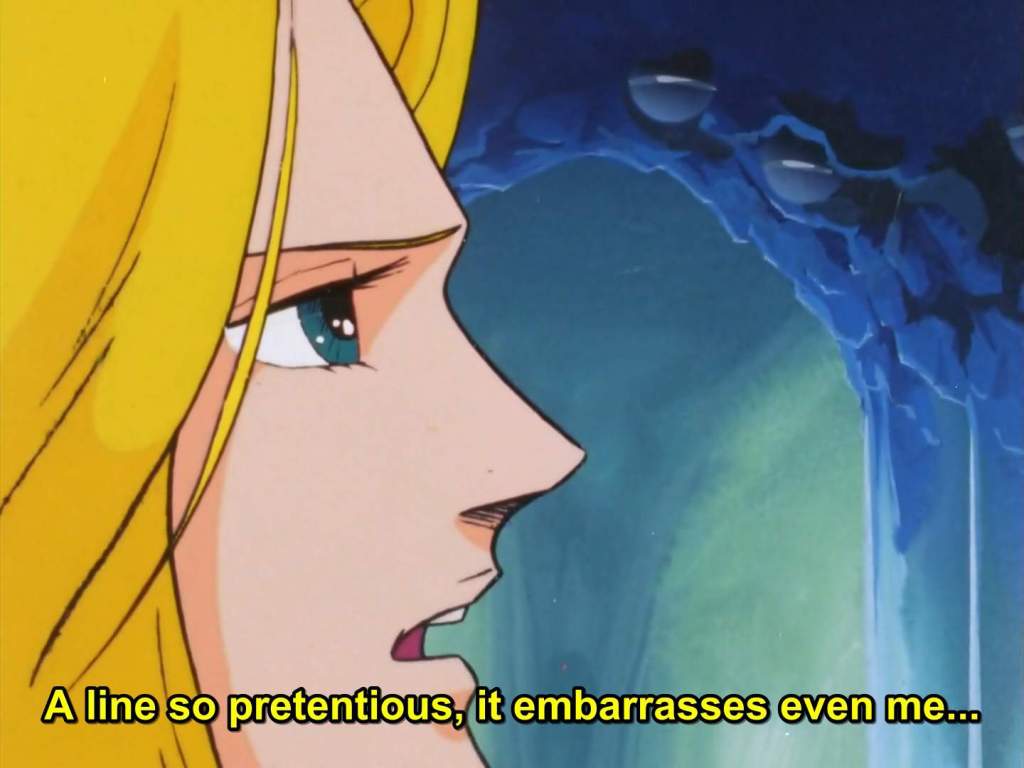
It’s an enjoyable show so be sure to give it a watch. It also has a sequel movie called “The Time Etranger” both of which are directed by Kunihiko Yuyama, famous for Pokemon. The Time Etranger doesn’t feature GoShogun at all, and instead is a remarkable different tone and story. It’s definitely worth a watch, but expect something similar to a Harlock or Emeraldas OVA with the nascent eldritch horror instead of the campy kid friendly GoShogun TV show.
Galaxy Cyclone Bryger
- Height: 32.4 meters
- Weight: 315 tons
Brygar (also commonly spelled Braiger) aired in 1981 created by Sunrise veterans with Yuu Yamamoto as writer and Takao Yotsuji as director. (Yuu Yamamoto had previously work on Combattler V, the extra silly Ginguiser and most notably Mobile Suit Gundam including some of the more famous episodes including the first and last battle with Garma Zabi, the Black Tri-Stars, and Challia Bull.) Brygar started the J9 series which includes Galactic Gale Baxingar and Galactic Whirlwind Sasuraiger, the pair would also create two other classic mecha series Acrobunch and Srungle. Brygar is notable for bucking the trend of mecha anime and avoiding a “good guys vs bad guys” type of conflict and instead setting up episodic space adventures and odd jobs with a plot, characters and villains that rarely take themselves too seriously with a rock&roll aesthetic prevalent throughout. In its time period it certainly had a unique identify.
The Brygar (and the J9 series) is very fun it’s set in the future in our solar system where outlaws riding space bikes (with space helmets) terrorize the local population. Our group of 4 characters lovable scoundrels with hearts of gold and they strike fear into the hearts of the criminals acting as ‘heroes-for-hire’ for the local asteroid belt population. The Bry-Thunder is their hot-rod space car which can transform into the Bry-Star fighter and then later the Brygar robot.
While there are a number of superficial similarities with Cowboy Bebop (which aired 17 years later) I would caution you not to expect this to be a Cowboy Bebop prototype when you start the series. While several story beats and archetypes are similar (and likely inspired Cowboy Bebop), the two shows are wildly different in tone and execution. Both are great shows but they succeed on their own merits and shouldn’t be judged too closely together.
Character designs were done by the famous Kazuo Komatsubara (Nasuicca, Captain Harlock, various Go Nagai works) and gave the characters a Lupin the 3rd esque look. Characters were voiced by industry veterans which you can read more about at J9 Hard Serenade.
Brygar also has an amazing OP sung by Isao Taira (Ideon, Daioja) and animated by the legendary Yoshinori Kanada (Getter Robo, Yamato, Captain Harlock / Galaxy Express, Nausicaa, Princess Mononoke) . There’s also a cover by Aniki (Ichiro Mizuki).
The opening was so incredible it inspired legendary mecha designers / animators Masami Obari (Dangaioh, Dancouga, Fighbird, Dragonar, SRW OG) and Hiroyuki Imaishi (Studio Trigger cofounder and Gainax veteran most known for TTGL) to get into animation. Obari’s recent original mecha anime Bang Brave Bang Bravern! was a smash hit and heavily references Bryger and of course the Braves series.
Galactic Gale Baxingar
- Height: 48 meters
Baxingar is the sequel to Bryger set in the distant future. The original cast reprises their roles having similar character designs. It’s interesting seeing the same voice actors play similar yet different characters in a new show. You can see a side-by-side comparison on J9 Hard Serenade.
Baxingar can be described as a Tokugawa era story in space, drawing elements from the Shinsengumi and the 47 Ronin for its characters and its story.
It also has another banger of an OP and fun music overall throughout the show. The hotrod and blasters of the original Brygar are now replaced by space bikes, capes and swords for a fun aesthetic.
Overall Baxingar is a fun show, although a bit more serious than Bryger with a deeper focus on political turmoil and rebellious forces. Baxingar also has a change in director but the overall feel of the show is the same. If you like Bryger, you’ll like Baxingar as well.
Click here to return to the “Where to start mecha anime” landing page.
 MechaStellar
One thought on “Where to Start with Classic Super Robot Anime”