
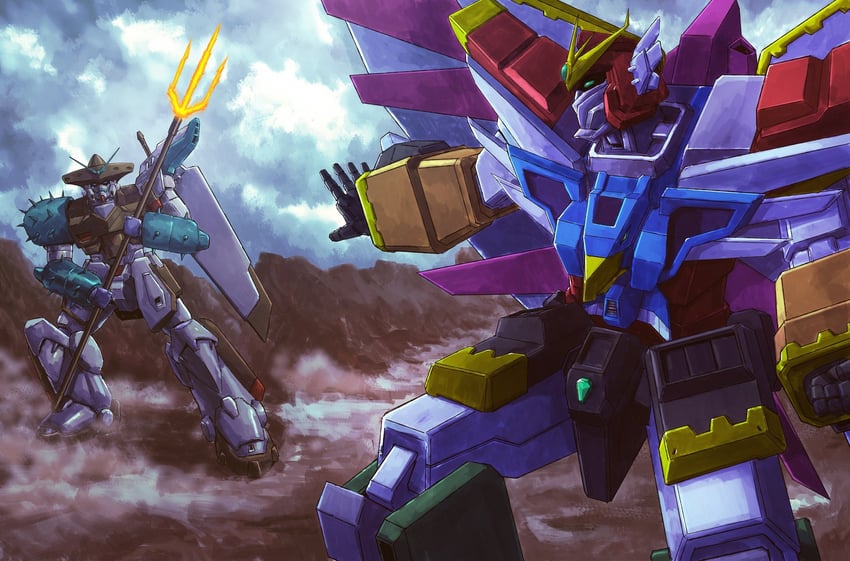
We’re continuing Mech Profile Previews while we update VER11. Check out this post for a guide on how to read a MechaStellar VER11.
Today we’re doing previews for infamous Tequila Gundam
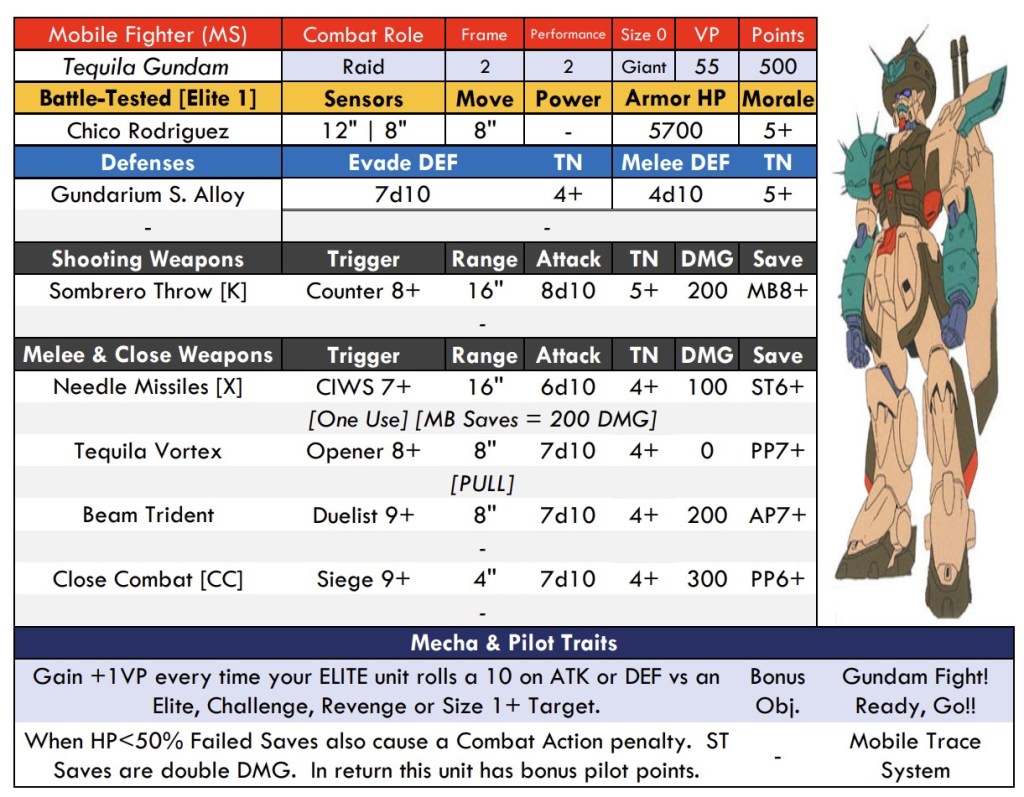
For reference here’s the old VER10 profile
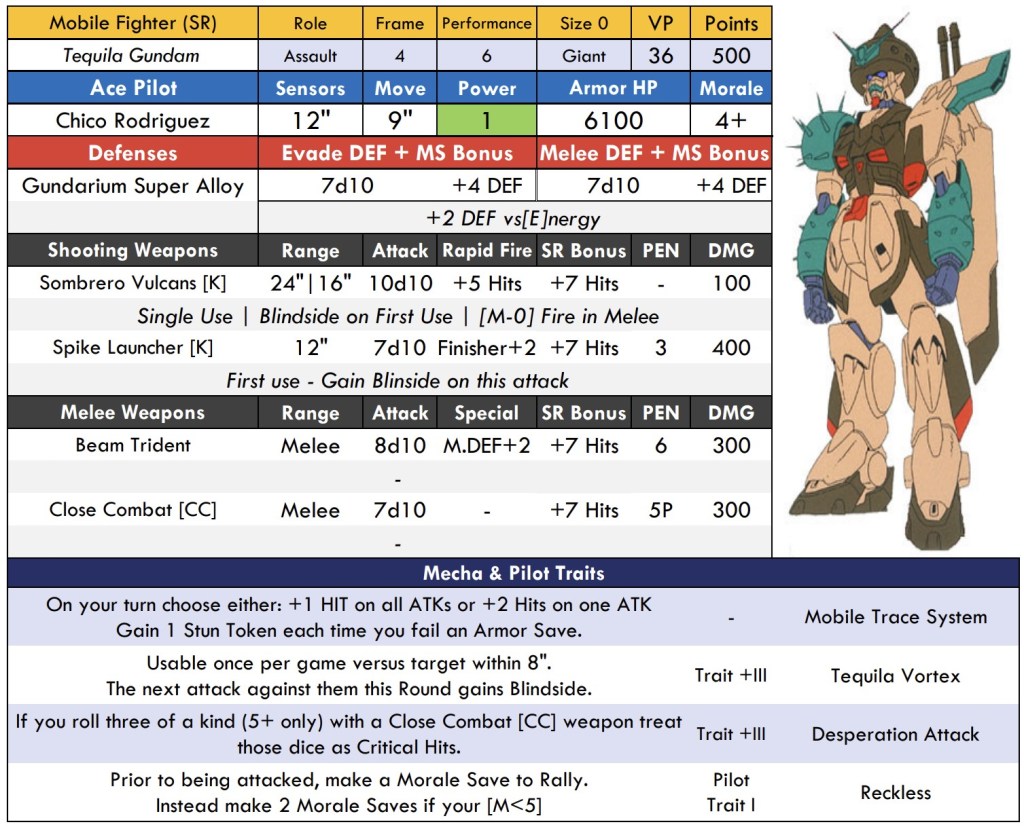
We’re continuing Mech Profile Previews while we update VER11. Check out this post for a guide on how to read a MechaStellar VER11.
Today we’re doing previews for infamous Tequila Gundam
For reference here’s the old VER10 profile

We’re continuing Mech Profile Previews while we update VER11. Check out this post for a guide on how to read a MechaStellar VER11.
Today we’re doing previews for Bolt Gundam
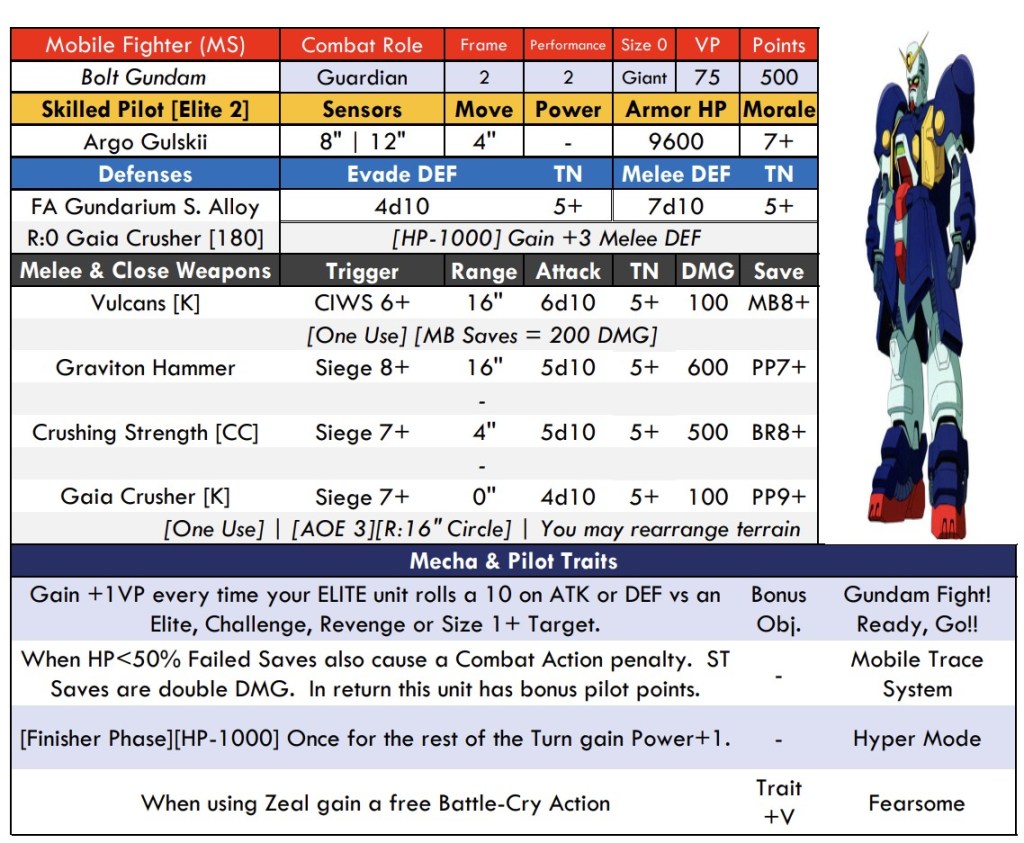
For reference here’s the old VER10 profile
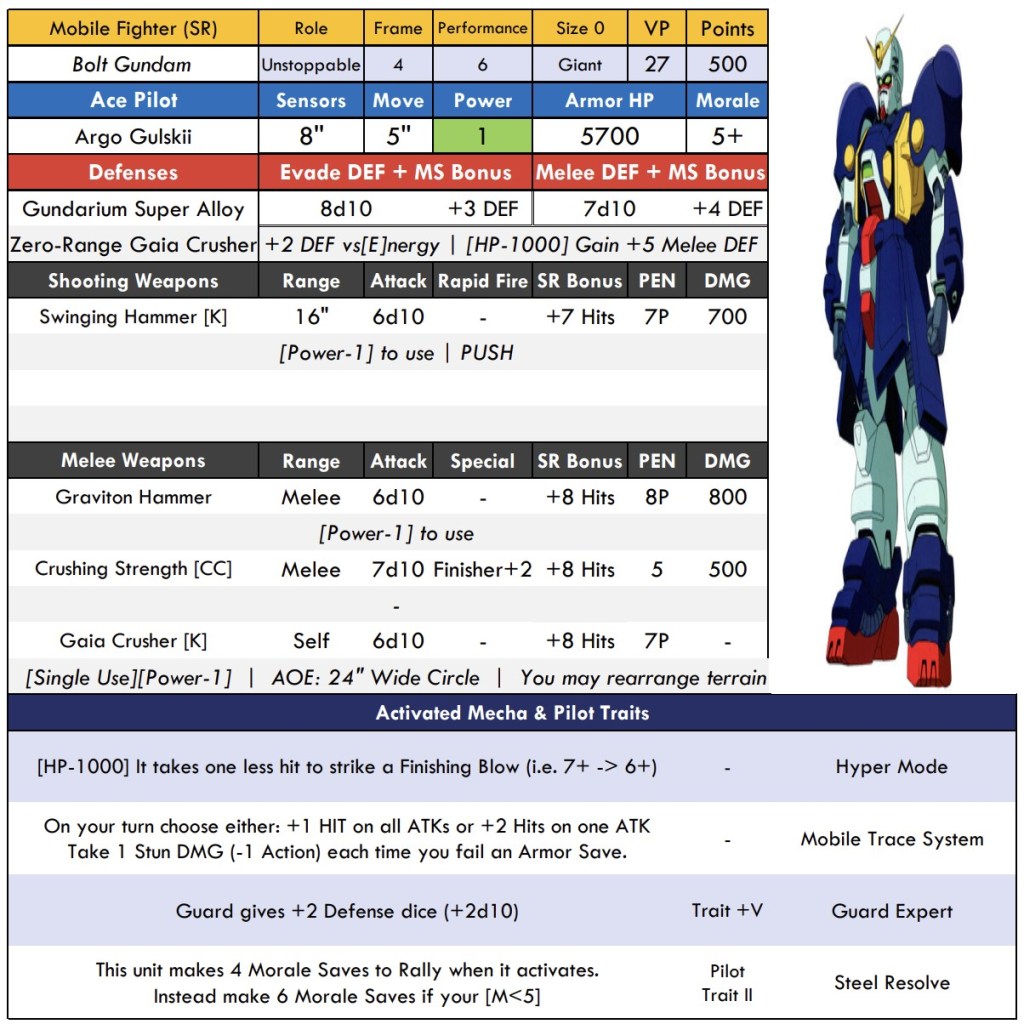
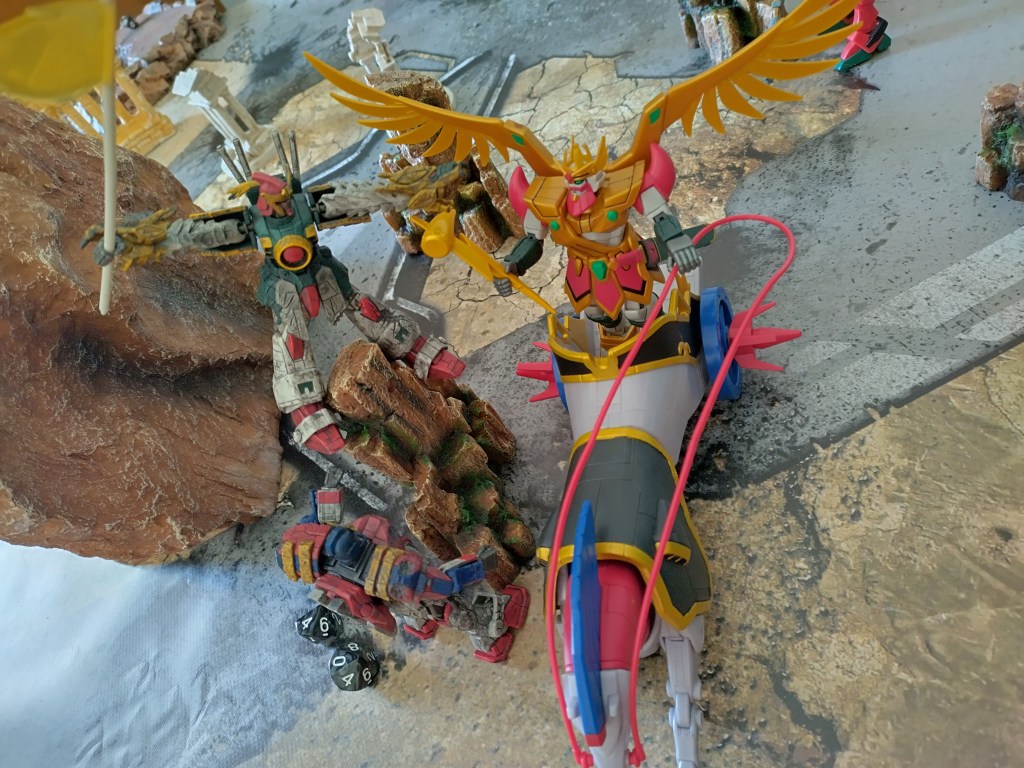
We’re continuing Mech Profile Previews while we update VER11. Check out this post for a guide on how to read a MechaStellar VER11.
Today we’re doing previews for Dragon Gundam

For reference here’s the old VER10 profile


We’re continuing Mech Profile Previews while we update VER11. Check out this post for a guide on how to read a MechaStellar VER11.
Today we’re doing previews for Rose Gundam

For reference here’s the old VER10 profile

We’re continuing Mech Profile Previews while we update VER11. Check out this post for a guide on how to read a MechaStellar VER11.
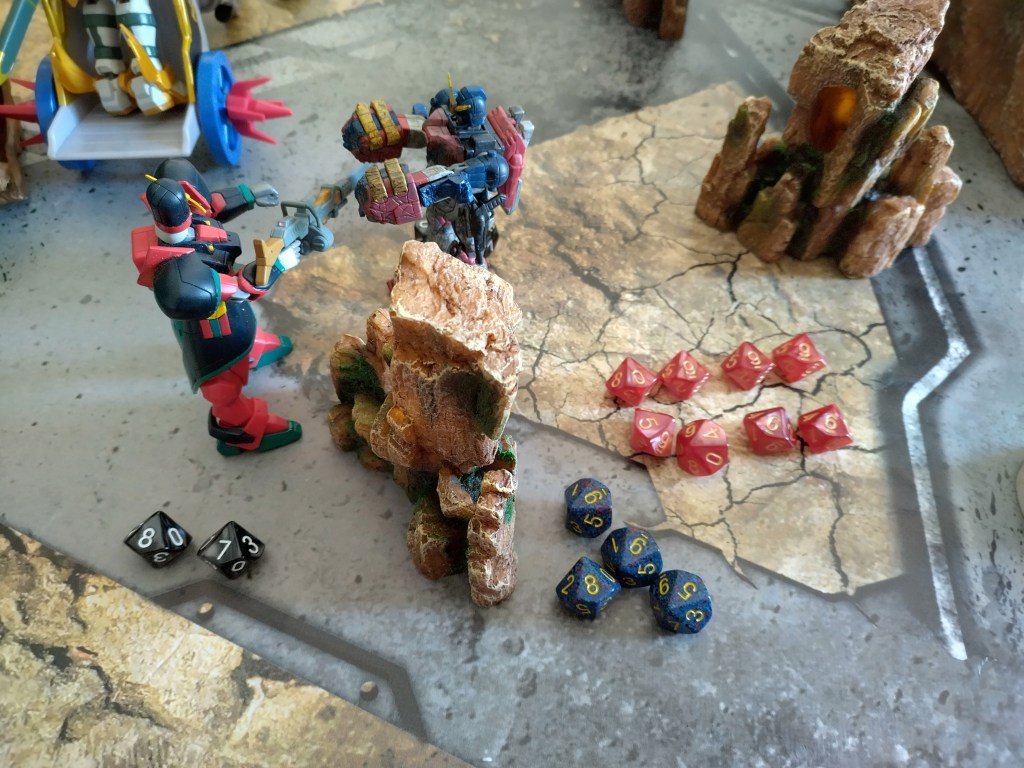
Today we’re doing previews for Gundam Maxter
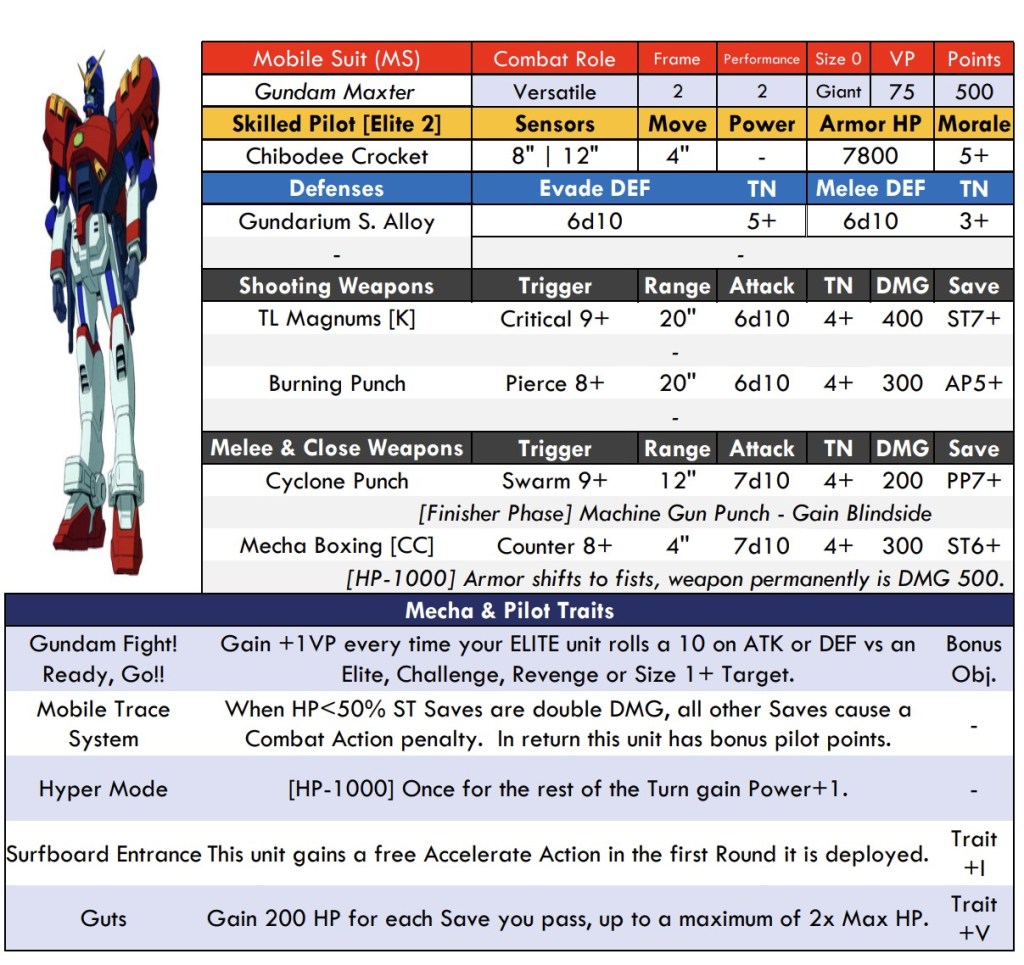
For reference here’s the VER10 profile

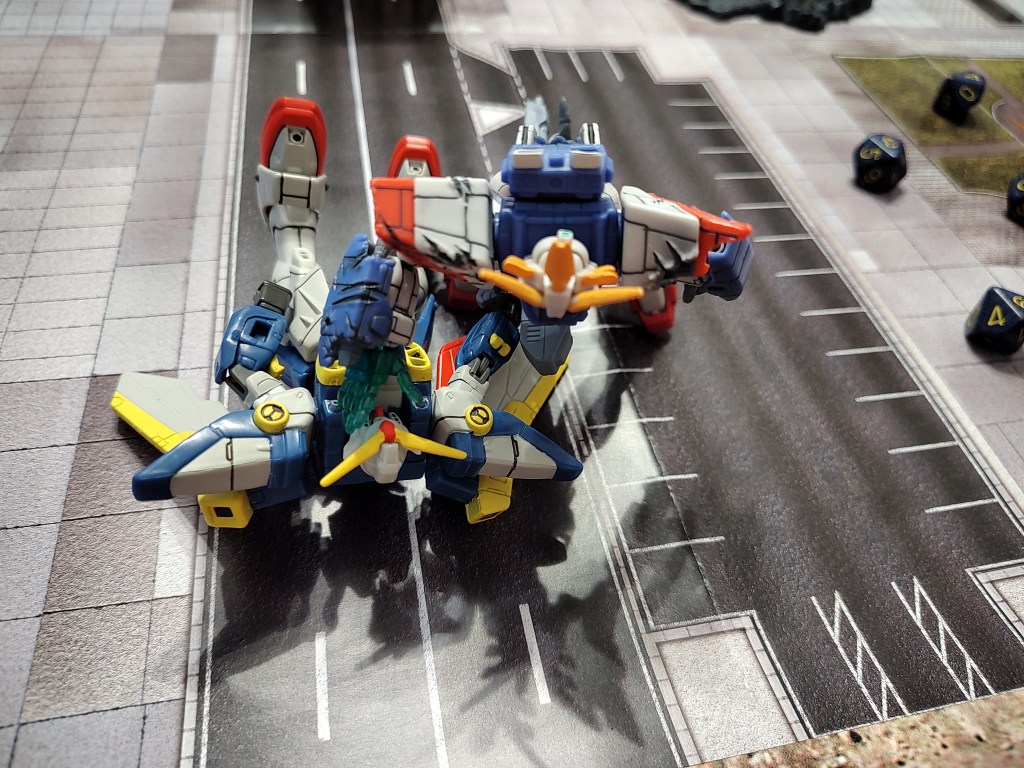
We’re continuing Mech Profile Previews while we update VER11. Check out this post for a guide on how to read a MechaStellar VER11.
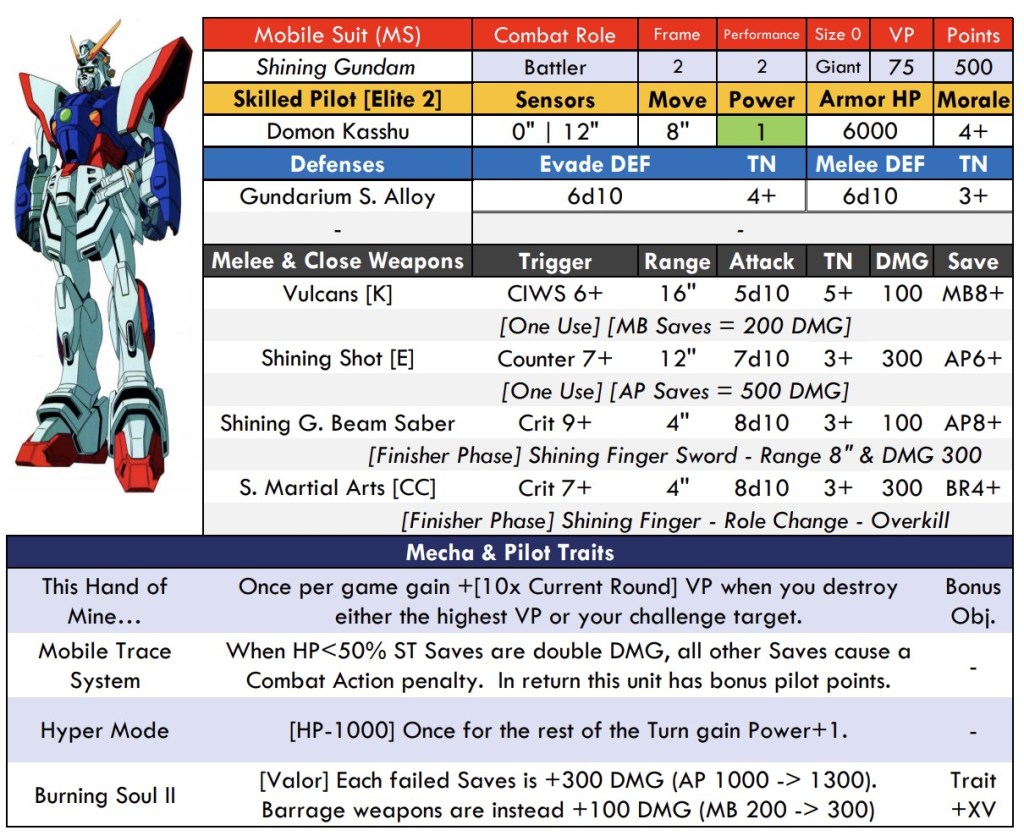
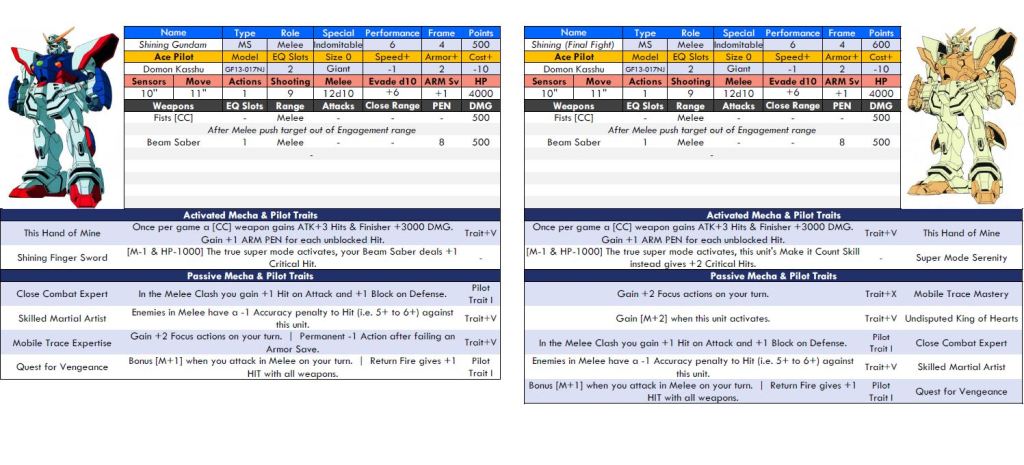
Today we’re doing previews for Shining Gundam.
For reference here’s a much older Shining Gundam profile from VER9!

In designing MechaStellar VER11 we wanted to make a few Quality of Life improvements, both for readability, usability, and overall gameplay flow. Click here to see the MechaStellar VER11 roadmap.
Focus and Valor for MechaStellar went through the most changes while developing VER11, so we wanted to cover their development in depth in this post. Focus and Valor were each trying to find their own distinct niche while remaining different from the other, a struggle we also had with Flash and Iron Wall.
In VER10 Focus was [M-1] HIT or DEF on a 3+ for this roll.
Very simple, very easy to remember, well loved. We didn’t want to change it.
But early on in VER11 development as we were trying to simplify things and remove all the complexity that crept into VER10 we were looking at Elite units. Initially, they were giving a Flat +1 HIT for Elite units and +1 Hit & DEF for Ace units. That eventually changed into Elite = 4+ Hit / DEF and Ace = 3+ Hit / DEF which was well loved by playtesters. This concept of upgraded Target Numbers (TNs) for Hit and DEF would eventually become the basis for the VER11 Elite unit system. You can read more about that here.
Around this time we had settled on identities for Flash and Iron wall and were very satisfied with both. We realized we wanted Focus to be offense only (rather than the VER10 HIT or DEF) that way Flash and Iron Wall were the distinct defense skills and you never had to decide which was better, Defensive Focus or Flash.
Because, Elite units now passively raised your target number we would have to do something with Focus, because it would not be less useful than before, and for Ace units it would provide no benefit. We experimented with a few ideas.
Reroll misses was initially good, but immediately stumbled with the barrage rules with questions of “does this apply to the initial roll, both rolls?” Since barrage was well loved we would rather change focus than redo all of barrage.
Bonus dice was a novel concept and could definitely hits that dramatic feel of Heero Yuy somehow making that critical shot with the Twin Buster rifle and emptying your Morale Point (formerly Momentum) pool. But while awesome for dramatics, it felt like a trap because a player could squander all their Morale Points, meanwhile the Valor skill was a more efficient use of resources. (But more on Valor later).
Bonus Hits was decent, but not exciting. Devs discussed making it +3 Hits to oppose Flash.
Improved Trigger was very exciting, but there would be time where it would do very little (you rolled no dice that were close to your trigger so Focus was worthless) or insanely good (you rolled a bunch of 8s and your Crit on a 9+, focus and you gain a bunch of Crit hits). The devs considered keeping the original rule (Focus = 3+ to Hit) but if you’re an Ace, then instead Focus becomes Trigger TN+1. Powerful but limited to Aces. But as mentioned still very variable.
Bonus DMG was too powerful for [M-1] but we kept trying it for a long time. It was also stepping on the toes of valor.
The Devs also discussed “Maybe regular Focus does this, but [Ace] focus does this.” For example, basic focus was +1 Hit or +100 DMG, and Ace Focus gave both.
We had many options to consider here. But ultimately we needed a way for grunts (or anyone really) to break through a tough defense. Valor obviously can work but it’s a huge investment. So that means Focus should be the breakthrough option. Here’s a DEV conversation on that topic.
Focus improving dice outcome is probably the desired emotional outcome plus it links up with old systems but will be the hardest to balance I think…… on the other hand, we don’t really have way to make attacks breakthrough when defender rolls well.
To use an example, Justice Gundam has incredible defenses, so even when a squad of high performance grunts like Jegans or GM IIIs attack it, they aren’t making it through.
Ok, well this is where a skill should help. So Valor can already be used as breakthrough (but it’s expensive, and do you really want to burn M-4 on your grunts?). So the thought is that Focus should be the breakthrough button.
Yeahand while the “improve hit chance’ has been common for a very long time; if we are changing the identity where Ace = Hit on a 3+, Elite = 4+, Grunt = 5+; then maybe we probably shouldn’t let Focus interfere with that. Keep it simple and so less cognitive load.
I agree with that, likewise less mental math
less “ok do I want to hit better, do I want a better trigger” just a very simple I hit better and certain elite units hit EVEN better than that. downside is in the past, Kamille in Zeta gundam with +X Hit traits, was a monster to be reckoned with
What if Focus gave you an automatic trigger?
What do you mean?
Like, Focus and turn 1 die into a 10 which is a hit and a trigger.
oh that’s good, really good. Let’s try it.
Eventually all these ideas wound up with 2 Skills.
While Focus would become the Trigger button, giving you a chance to do something awesome with your gun. Sure Strike would help your unit hit.
There was a lot of discussion on sure strike and how it would interact with Elite units. Initially Sure Strike was Hit on a 3+. Later it became, improve Hit TN+1, so if you hit on a 4+, now you hit on a 3+. But with Ace units becomes 3+, the Dev’s experimented with Sure Strike hitting on a 2+. This….got a little crazy with barrage weapons and micromissiles as playtesters can attest.
Eventually, Sure Strike for the sake of simplicity and minimizing mental math just became [M-1] +2 Hits.
And at the end of the day, VER11 launched by combining both these skills into one.
Focus [M-1] Wow, the Lieutenant’s skills haven’t changed since the One-Year War
On your Turn, after rolling ATK dice turn one d10 into a 10 OR gain +2 Hits.
Valor Evolution
Valor started off with the VER10 [M-3] = +5 Hits. Then we tried [M-2] = +3 Hits (+5 with Barrage weapons).
We tried doing +3d10 attack dice, with Barrage = +3 Hits. This was decent and fun, but as we were developing the “dice roll only” core mechanic, we realized that we had very little dice to play with. On a 10d10 max for attack, if Frame + performance capped out at 4 dice, Combat Role (Battler / Sniper / Firepower) was another +2 dice, that only left 4d10 left for weapons, so 2d10 for a rifle and 4d10 for a machine gun. Valor would have to drop down to +2d10 to fit in that framework such that rifles cap at 10d10.
Ultimately, we decided to move away from the skill giving bonus dice, that way it gave more flexibility for weapons, if you wanted to have upgraded weapons, like twin linked rifles for instance.
Eventually we came up with the Valor phase where the attacker goes into overdrive and gives it their all and try to force through an attack even if the defender managed to initially block. Valor would give bonus dice (outside your 10d10 pool) as a bonus attack roll. This was awesome!
Since Valor was expensive we also gave Valor a rider ability. Either DMG+100 OR Strike a Finishing Blow. Finishing Blow meant if any hits from the Valor phase got through they would have to make a Finisher Save which would either deal a lot of damage or cause system damage like removing an arm, leg or head.
Each time we updated Valor we would often end up updating Focus. Focus was +1 Hit. Then +2 Hits. Then improved change to Hit (TN+1) which included the regular attack and the valor phase. Then later improve Trigger by 1 (this would later become the ability of the Power stat).
At one point we were considering
Focus = bonus phase was awesome at first but quickly became a slot because people would do it for every attack. Still the Valor = Finisher idea persisted, and was very well liked, because one Dev came up with an idea that during the Finisher phase a Super Robot could have its weapon change. For example, Gurren Lagann’s drill attack becomes GIGA DRILL BREAKER during the Finisher phase.
So with Valor being settled on the Dev’s continued to work on focus, with various ideas of bonus dice, bonus hits, improved trigger, etc. As the weapon triggers were slimmed down (bombard was removed for example, and siege was reworked to have the trigger matter a lot), Focus = +1 Trigger became the winning idea.
Meanwhile a separate Sure Strike skilled was developed to help Hit, either improved TN (Hit on a 3+ or 2+) or bonus hits (+3 Hits or +2 Hits). Ultimately, as noted above, both of these were combined into a single Focus Skill giving the option for a bonus trigger or bonus hits.
We still had to figure out how to make Valor work as a useful skill and an awesome Finisher.
We still enjoyed the VER10 rules of gain bonus dice = to the Round. We went through a few variations to make Valor feel worthwhile for its cost.
The most math heavy involved rewarding ones Morale bonus so Valor dice = Round + [10 – your Momentum] so if your pilot had Morale 3+ you were rolling Round + 7 dice. Quite powerful!
The morale effect later became, you can use Morale for your TN instead of your normal Hit TN, this way Guy Shishio with Morale 3+, Hit 5+, now hits on a 3+
We also briefly tested Trigger TN = Morale, but that was absurd lmao
We tried Valor = 3 + Round, or Valor = 2x Round dice. All of which felt too powerful for [M-3]
Eventually we settled on Valor dice = Elite Level + Round. It rewards your elite units using Valor while not making it too powerful for an [M-3] skill.
[Elite] Valor [M-3] We’ll crush the Hyakki empire once and for all!
• Enter the Finisher Phase: Roll Finisher dice = Elite Level + Current Round.
o Finisher Dice use your Morale TN if it is better than your Hit TN.
o Add any Hits or Triggers to your original attack
Lastly we had to figure out sequencing. At what point do you pull the trigger on Valor. Before or after the defender commits with Flash / Iron Wall.
This went through A LOT of playtesting in both versions. Eventually we opted for the fastest and cleanest sequence which you’ll see in the VER11 rules.
Tilt the Odds in your Favor
Both sides roll dice at the same time, then Attacker and Defender decide on Skills.
- Calculate Current Unblocked Hits = Total HITs – Total DEF
- Gain bonus +DEF equal to the Cover or Shield or Armor Level
- Attacker decides to use Focus [M-1] OR [Elite] Valor [M-3] (FINISHER PHASE PG. 21)
- Focus – After rolling ATK, turn a d10 into a 10 OR gain +2 Hits.
While Valor and Focus are very straightforward now, we’d like to thank our playtesters for their continued patience as these two skills were developed, changed places and eventually got to the end product. Could not have done it without you. Thank you!
In designing MechaStellar VER11 we wanted to make a few Quality of Life improvements, both for readability, usability, and overall gameplay flow. Click here to see the MechaStellar VER11 roadmap.
Updating Skills from MechaStellar VER10 to VER11 took a lot of time, a lot of patience and the ability to try many different methods to find the best fit for each skill with the new “dice roll only” instead of “dice roll + bonus” core mechanic for VER11. Focus and Valor received the most updates so we will cover those indepth in the next post. For this post we’ll cover the remaining skills.
To start, we knew that Morale Point [M] generation (formerly called Momentum) would be smaller and less guaranteed than VER10, so we wanted to make skills as cheap as possible while not making them so cheap they became too powerful. We tried to set a baseline of [M-2] for most skills, with [M-1] reserved for a useful but not super powerful skill, and [M-3] or [M-4] for a very powerful skill. Let’s start with Zeal.
Zeal has changed the least moving from VER10 to VER11, it’s still a skill that gives you bonus actions you can use for extra attacks or for utility actions. The biggest change is that Zeal is no longer a pay what you want ability, it’s no longer M-1 for +1 action, M-3 for +3 actions. Instead, it always gives you +2 actions.
While this does remove a little tactical flexibility, it remarkably speeds up decision making by removing a gigantic layer of “ok I could do this, and if I have this many actions I could do this, and then…” which sometimes led to choice paralysis in some players. Now it’s a simple, use Zeal, gain +2 actions.
We’ve also tightened how bonus attacks work, if you attack the same target twice, or attack with the same weapon twice is will not use up both of your 2 actions. Early on, ther ewere some concerns about what happens when you use Zeal and only need 1 action. Since then we’ve added 3 more Combat Actions to the core rules, Lock on, Sensors Sweep, and Battle-Cry, in addition to Accelerate there are many valuable options you can use your 2 actions on besides just attacking.
There was a Brief time where we created an action that would turn one of your weapons into a Support weapon (using the VER10 rules) this way you could live out your Armored Core fantasies, of firing your rifle and shoulder missiles and pulse laser gun all at the same time. Like VER10, this ended up being more trouble than it’s worth, and the ultra simple, ultra effective “Havoc” upgrade covered that “unload all weapons” fantasy much better with significantly less rules and headaches. We’ll cover Boost / Power / Havoc evolution after we do Focus / Valor.
Initially, we set Zeal at [M-3] since it was often the most powerful skill in late VER10. However, as we continued to fine tune weapon balance, and expected unblocked hits dropped to 0-2 Hits we felt comfortable returning Zeal back to [M-2], the small bit of symmetry, 2 Momentum for +2 actions, makes it easier to remember as well.

We’re going to go over this one more in depth for the Boost / Power / Havoc post. But for now here are the highlights.
We started off with [M-3] Flash = +5 DEF, same as VER10
Then we moved to [M-2] Flash = +3 DEF
While developing Barrage which initially gave you bonus exploding dakka dice = Triggers rolled, we previewed a system where Flash would do the same thing. For example the Flash skill would have a Barrage 7+ effect, every 7+ rolled meant you could reroll those dice.
Later, when Barrage was upgraded to, all hits (not just triggers) are exploding dakka dice, we tried the same thing for Flash.
While mathematically it works out, we did run into a lot of player psychology issues where players were hesitant to use Flash because they didn’t roll that well.
Eventually we settled on the final version of Flash which lets you reroll your entire defense dice pool (hit or miss) making it stronger than barrage. All for the low cost of [M-2]. This was a huge hit with playtesters.
Iron Wall struggled a lot to maintain an identity in VER10, competing with Flash as a defensive skill and eventually trying to be an Anti-Zeal skill which would give you a decent +3 DEF bonus for the whole turn.
For VER11 we tried with that for a little bit but quickly realized that we wanted Iron Wall to feel DISTINCTLY DIFFERENT from Flash.
While Flash was doing the 7++ Barrage effect, we were considering have Iron Wall give you a 10+ or 9+ DEF Crit option. (One of the bigger changes from VER11 is that there are no longer automatic 10s are Crits). It was ok, but still made Flash and Iron Wall feel very samey.
We came up with an idea during the development of the expanded Saving Throw system, that Iron Wall could provide defense and also improve your saving throw.
Later on, we simplified it further to a very simple “Pass a failed Armor Save”
Now that’s a valuable skill! Iron Wall started off at [M-2] but after considerable playtesting we decided that [M-1] was the best fit.
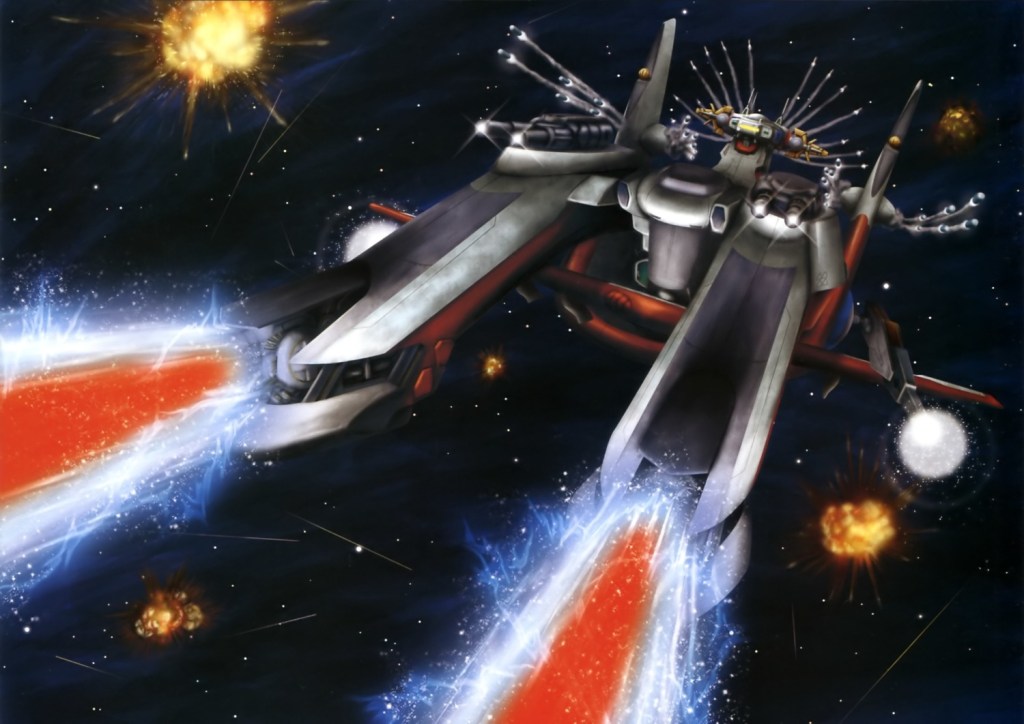
This is a new skill, although players of the older Super Robots Wars games will remember this skill name.
Alert was created just to give a little more flavor to Warships and Kaiju monsters, which as of this time we don’t really want them to use Flash. Alert gives you the benefit of Cover (something Kaiju could do in the past) and also improves your Trigger number for counter weapons like your CIWS Anti-Air batteries on Warships, but also counterattacks like Godzilla’s tail sweep or Crimson Typhoons kaiju throw.
Currently, we did setup the mechanics that if we wanted to let Warships / Kaiju to use Flash they could and it would not be unbalancing (both units have super high HP but smaller defense dice pools). We could also let Mobile Suits use Alert. But for right now, we want to preserve the distinction between these weapon types, and Flash / Alert is doing that for us. That many change in the future based on player feedback.
Next post we’ll discuss the evolution of Focus & Valor.
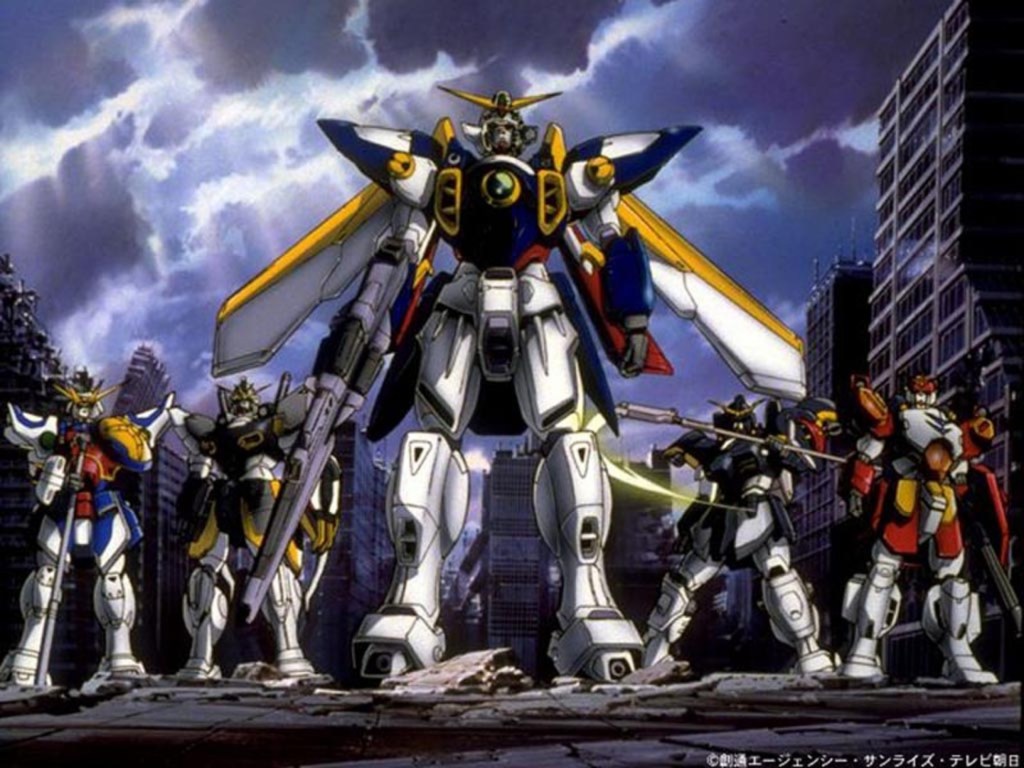
With MechaStellar VER11 releasing late in August, we have a small but powerful update for September a Gundam Wing Update. In addition to updating all the VER10 profiles to VER11 we’ve also added in the Tallgeese III, as well as options to add the Glory of the Losers equipment for the Gundams such as Sandrock’s Armadillo unit, HeavyArms Igel unit, or Shenlong’s Liaoya sword.
You can find the update rules and profile sheets on the MechaStellar game downloads page.
As we mentioned before, Rules updates are now on a 6 month schedule, that way players can master the game without having to worry up minor rules tweaks each month. That said, please keep giving us feedback so we can add it into the 6 month update. Here’s the VER11 After Action feedback form: https://forms.gle/aszwjLG1S2fs1wSQA
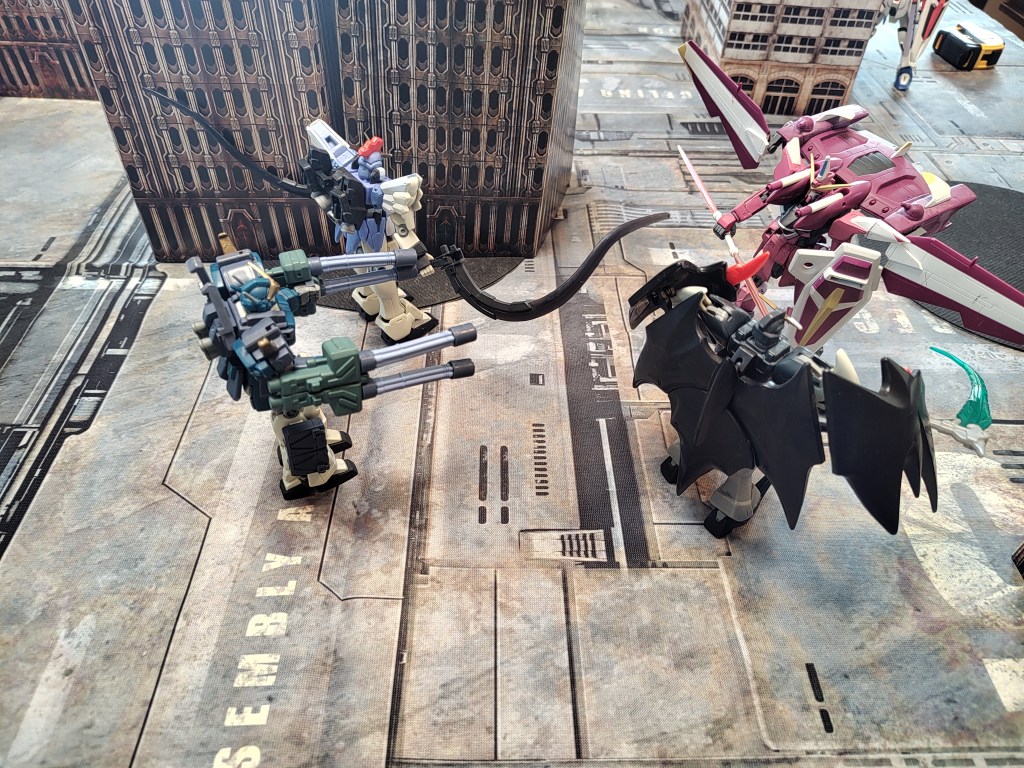
For this month’s update we have a few format tweaks, weapon balance updates, as well as an expanded pilot upgrade system. See below for a summary of updates.
Formatting
Weapons & Mech Profiles
Pilot upgrades
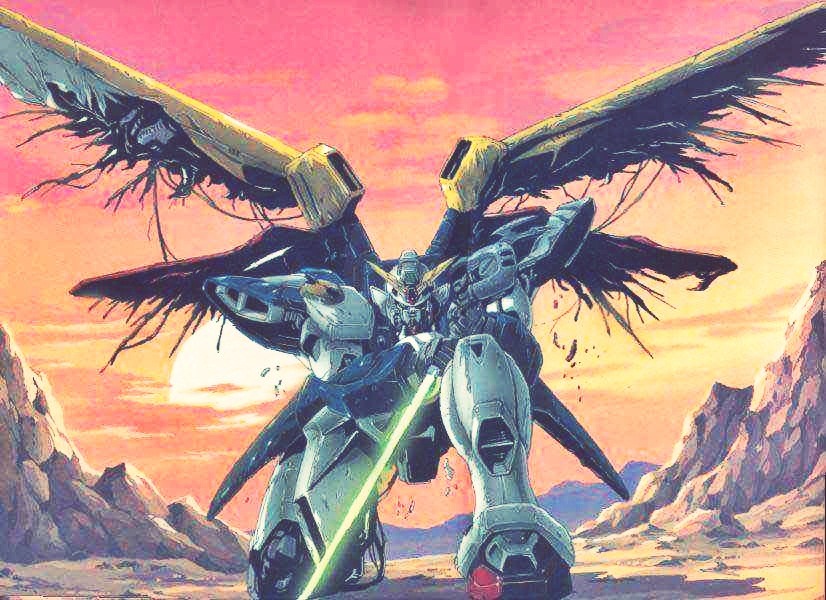
We’re continuing Mech Profile Previews while we update VER11. Check out this post for a guide on how to read a MechaStellar VER11.
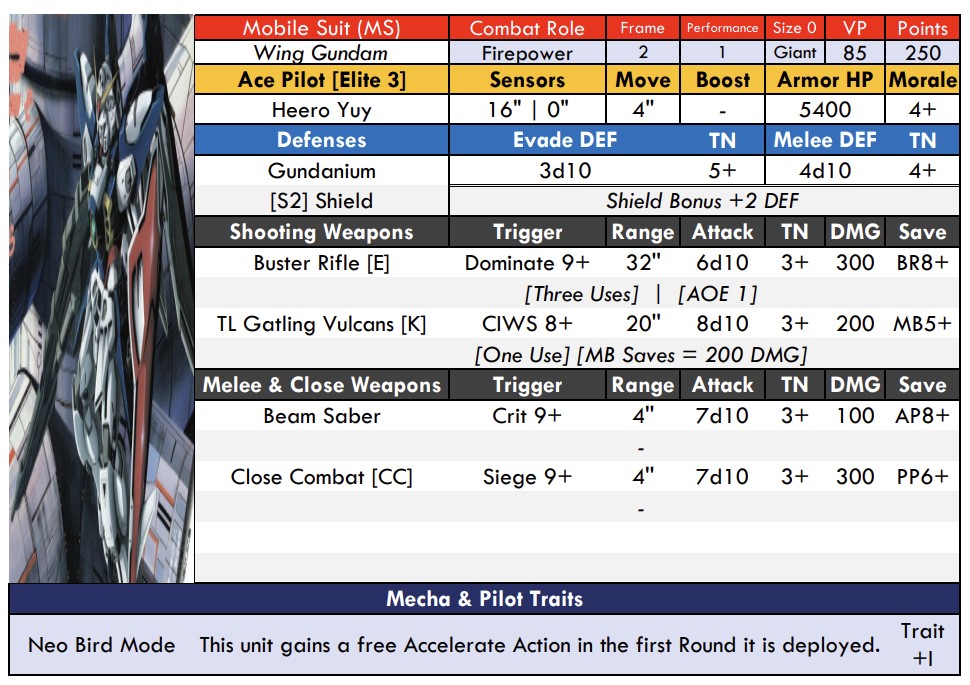
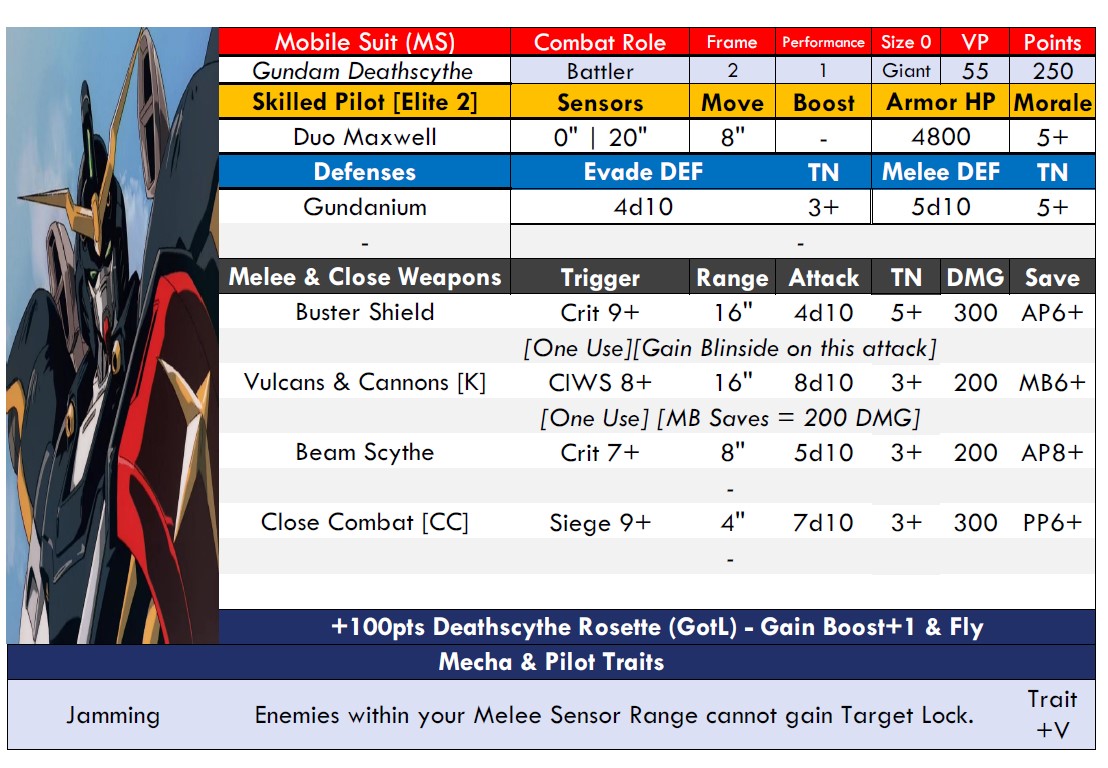
Today we’re doing previews for Wing Gundam & Deathscythe we’ve also included loadouts for their Glory of the Losers counterparts. These are quite a bit different from the original previews when VER11 first started. We hope you enjoyed the polished product.
 MechaStellar