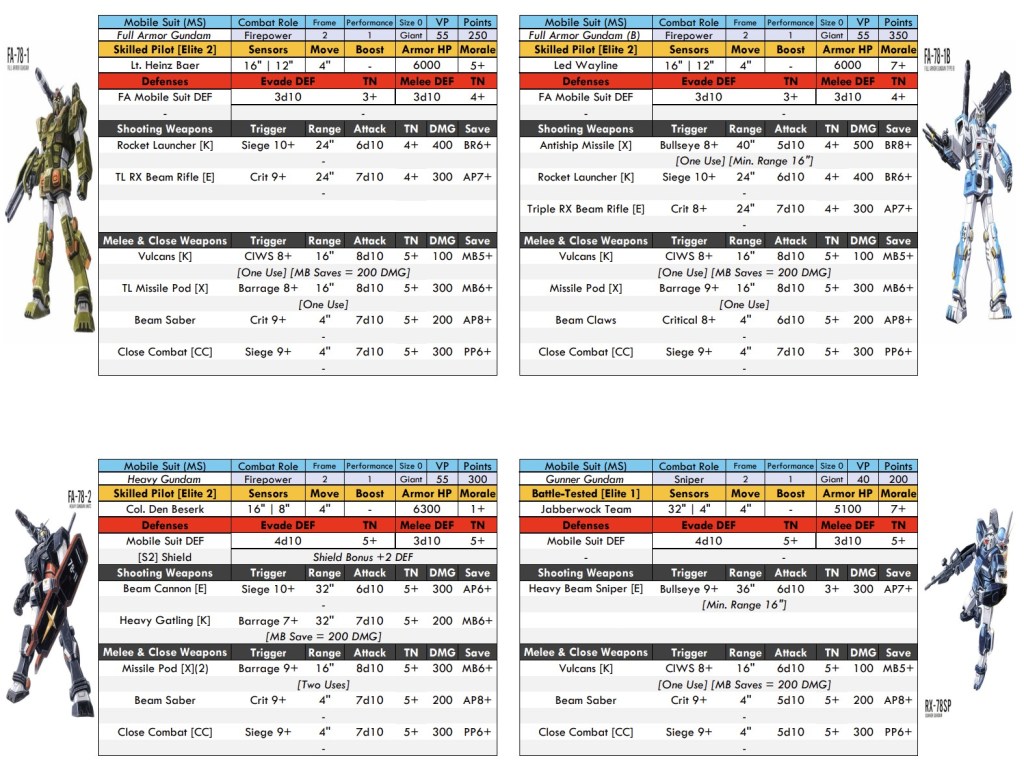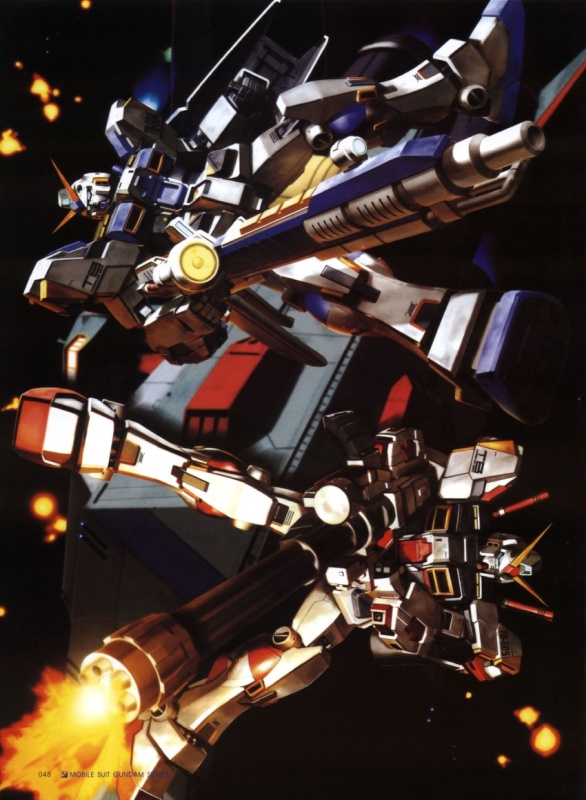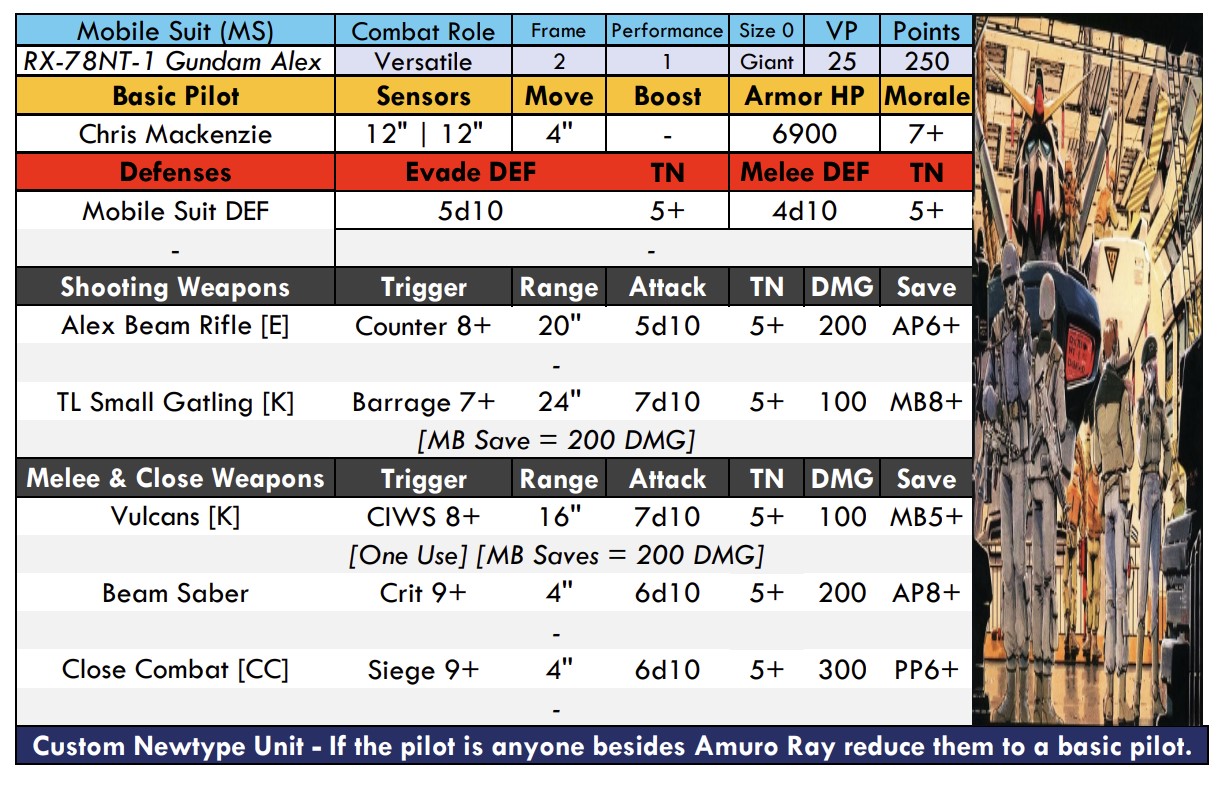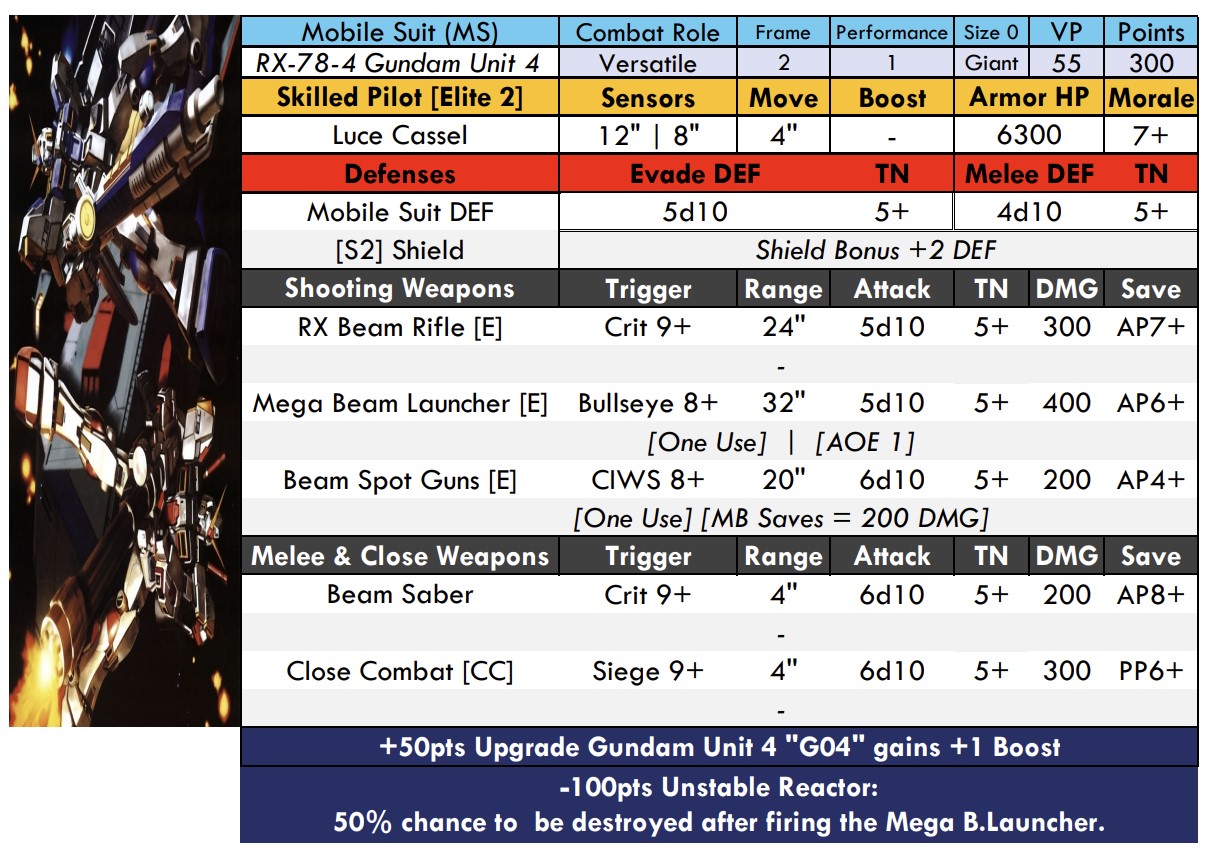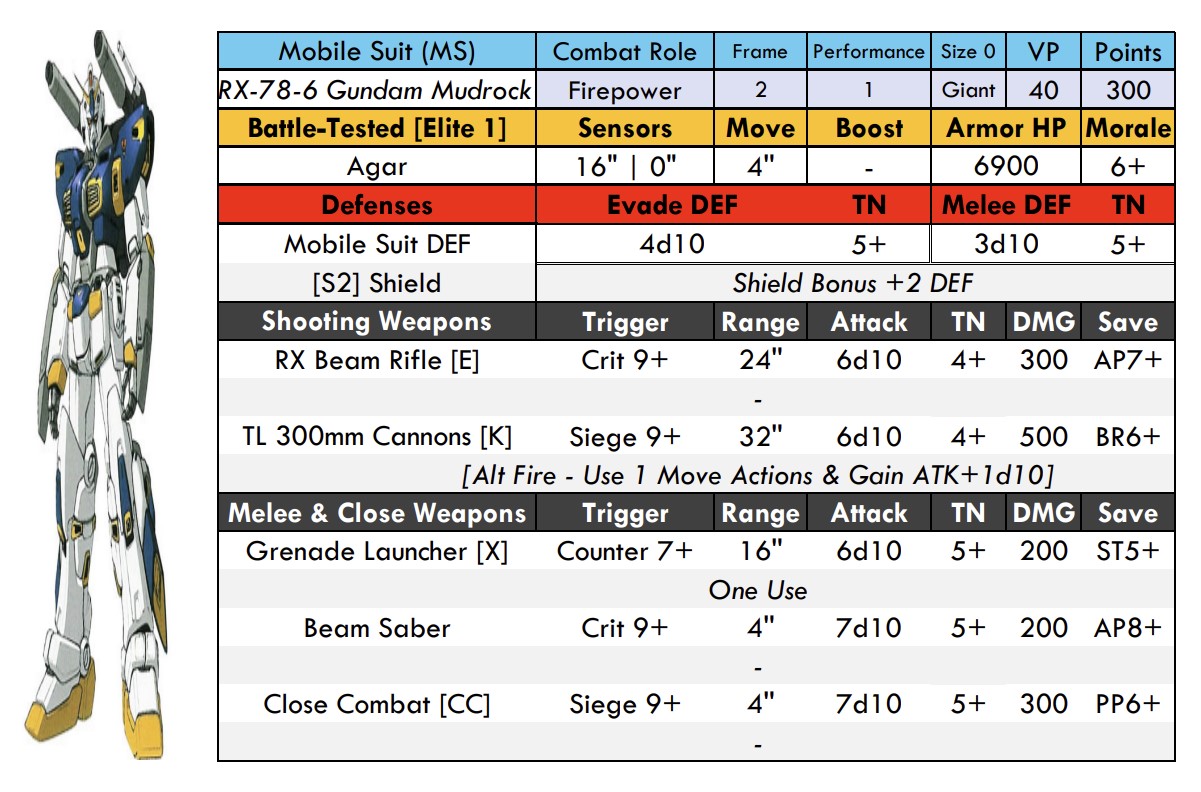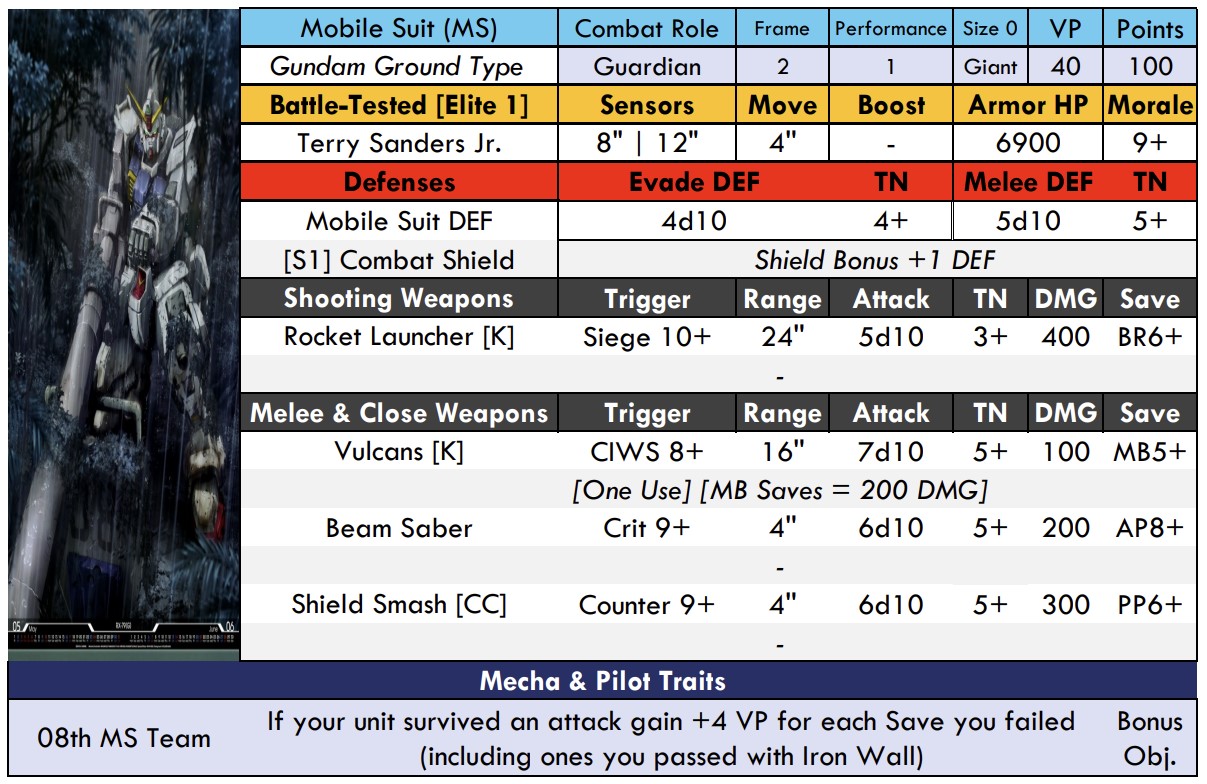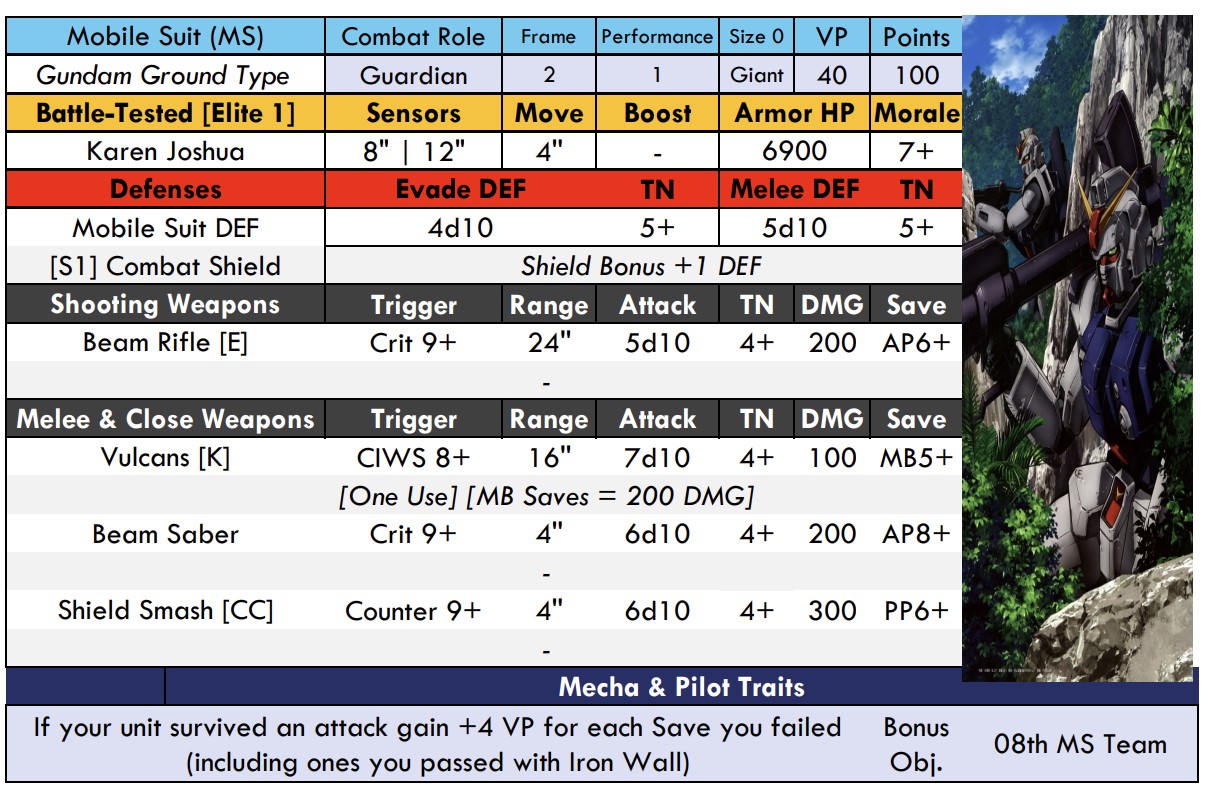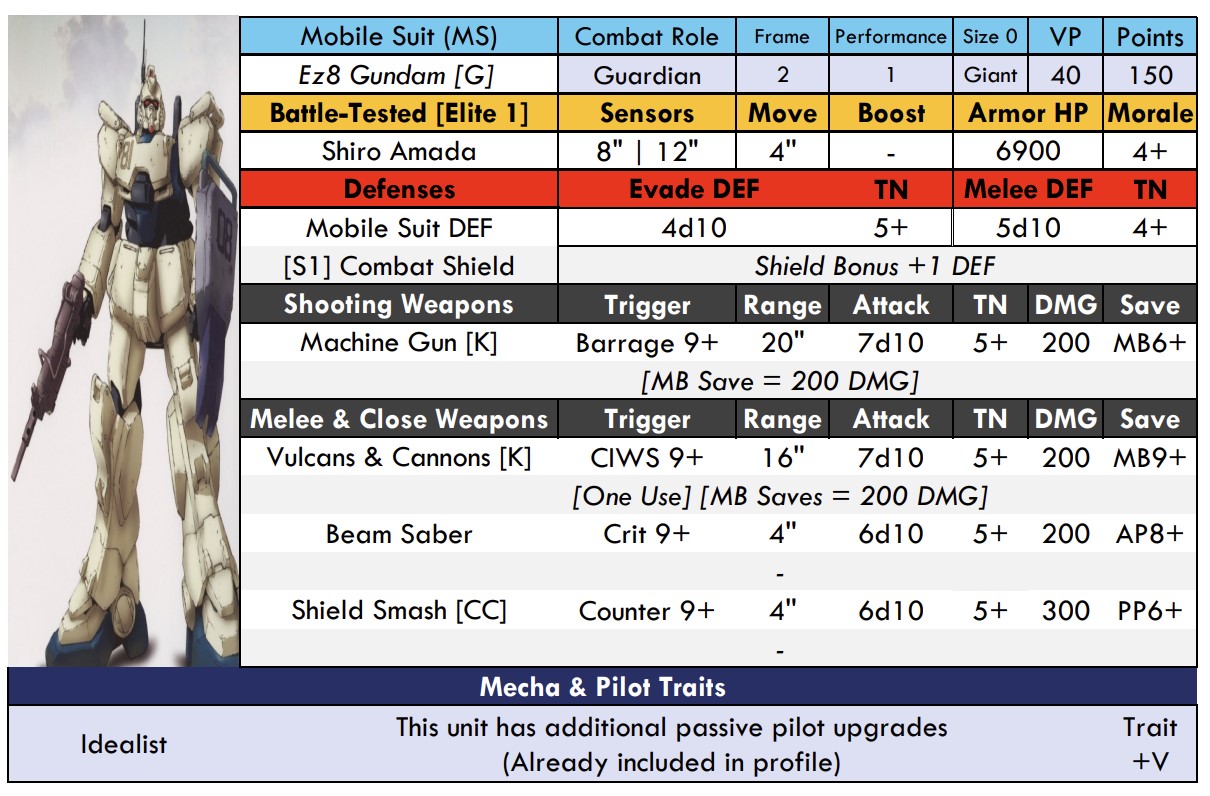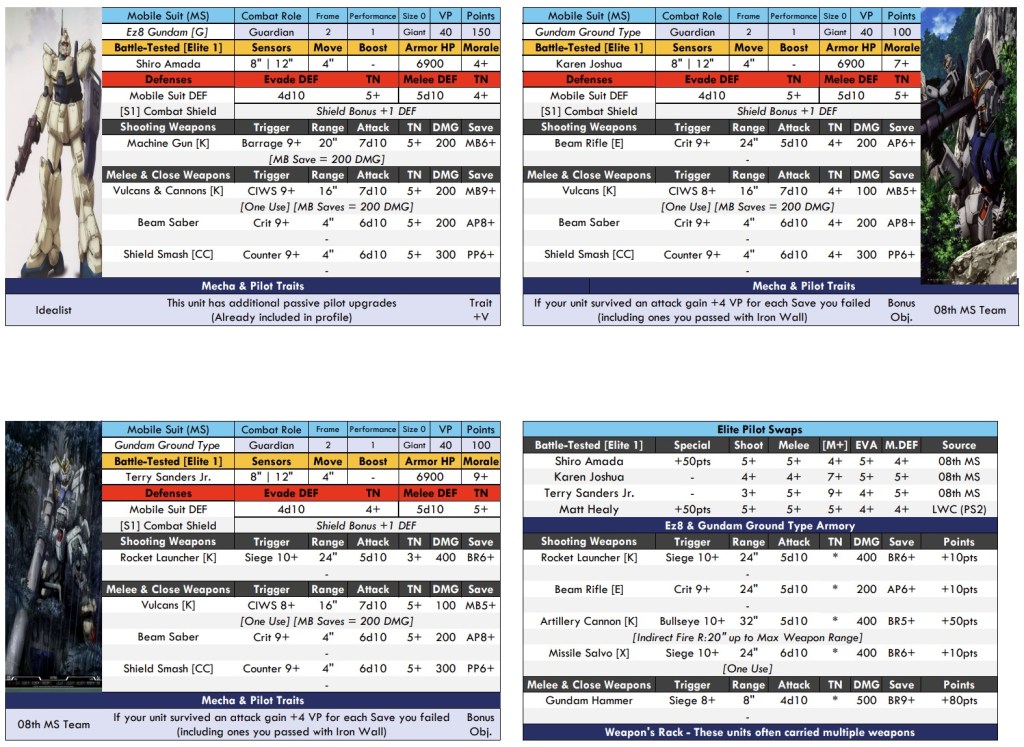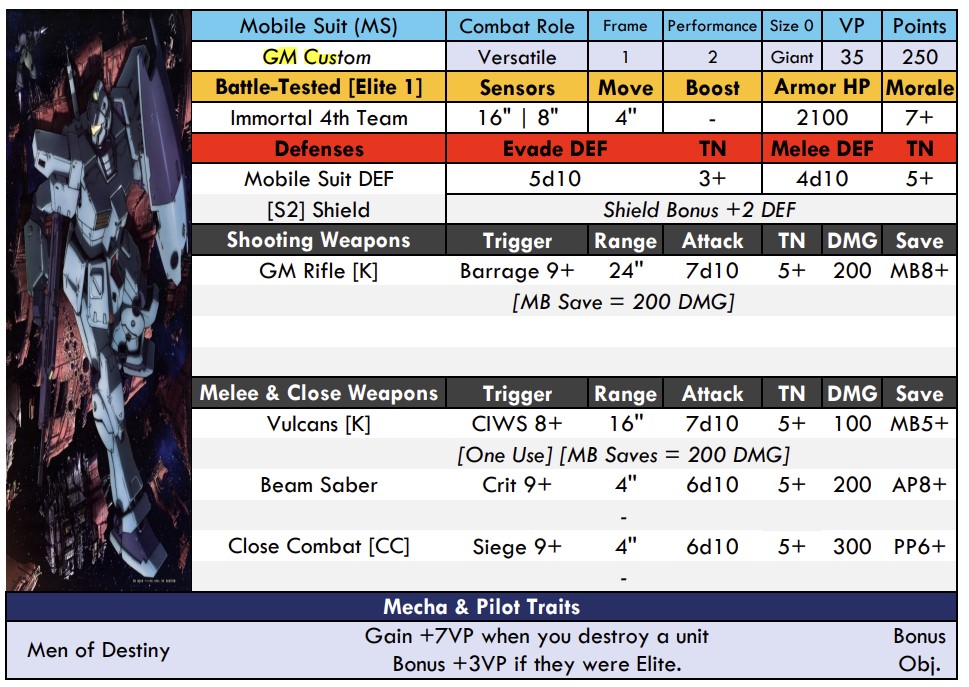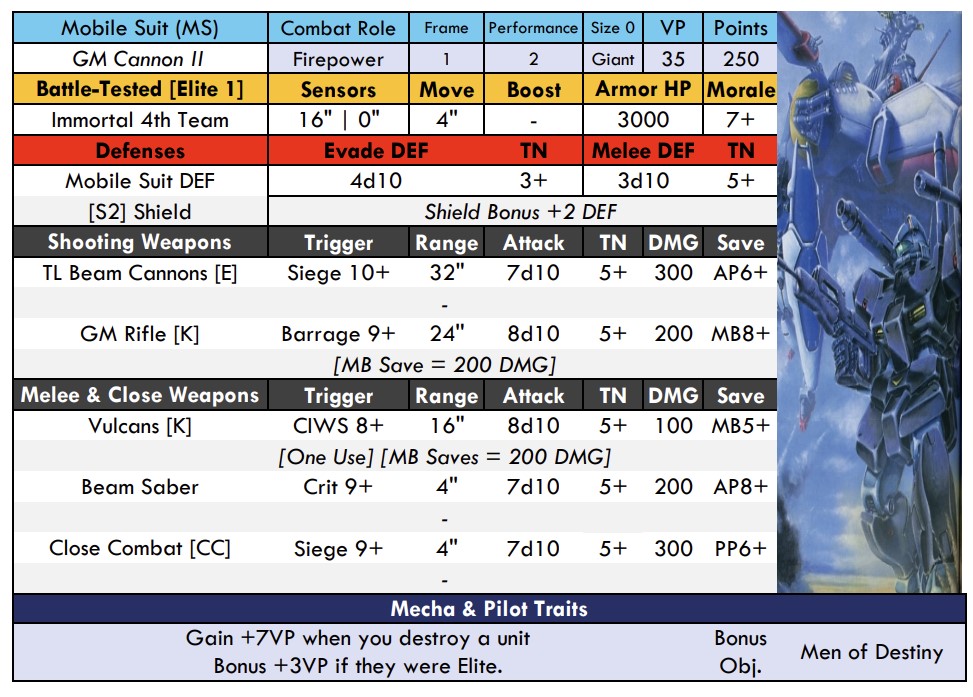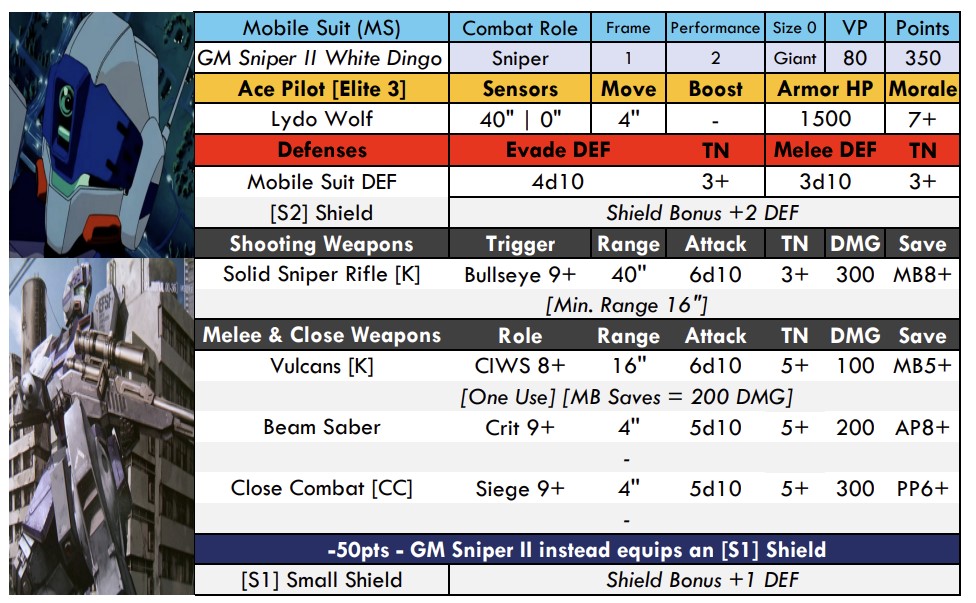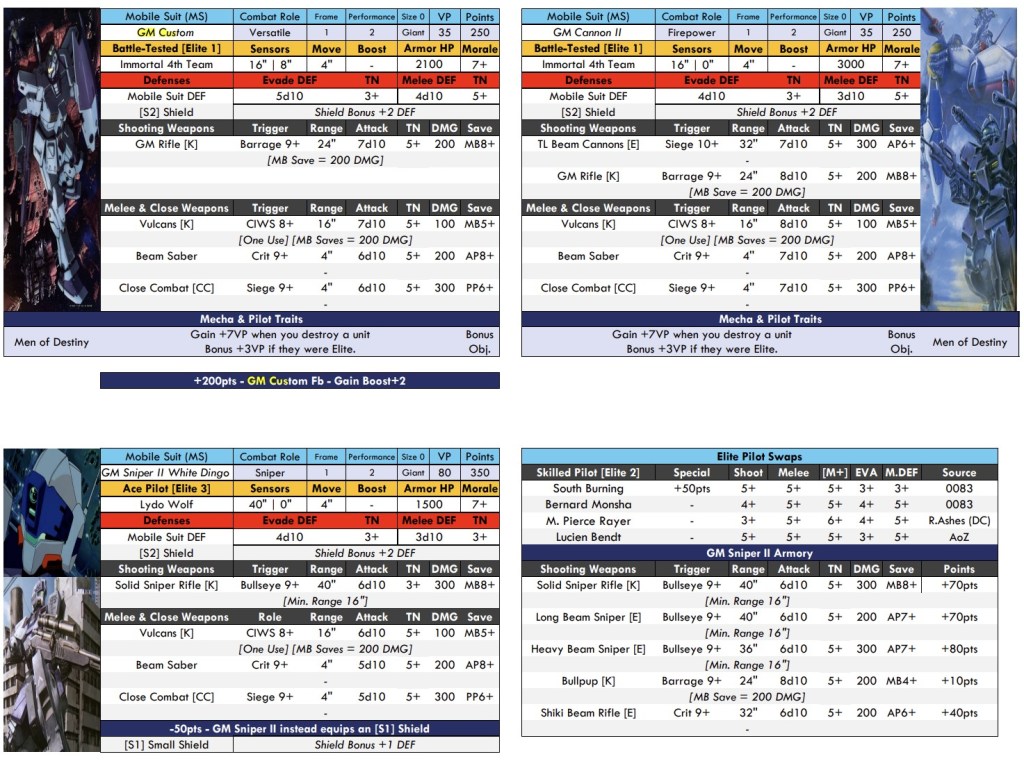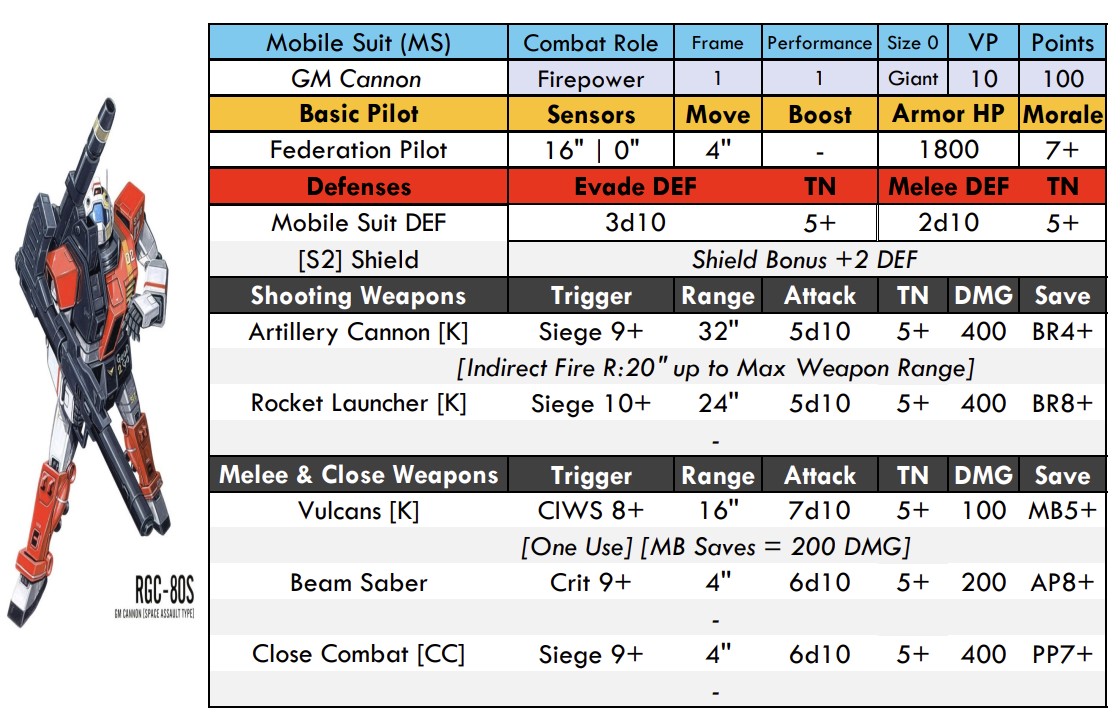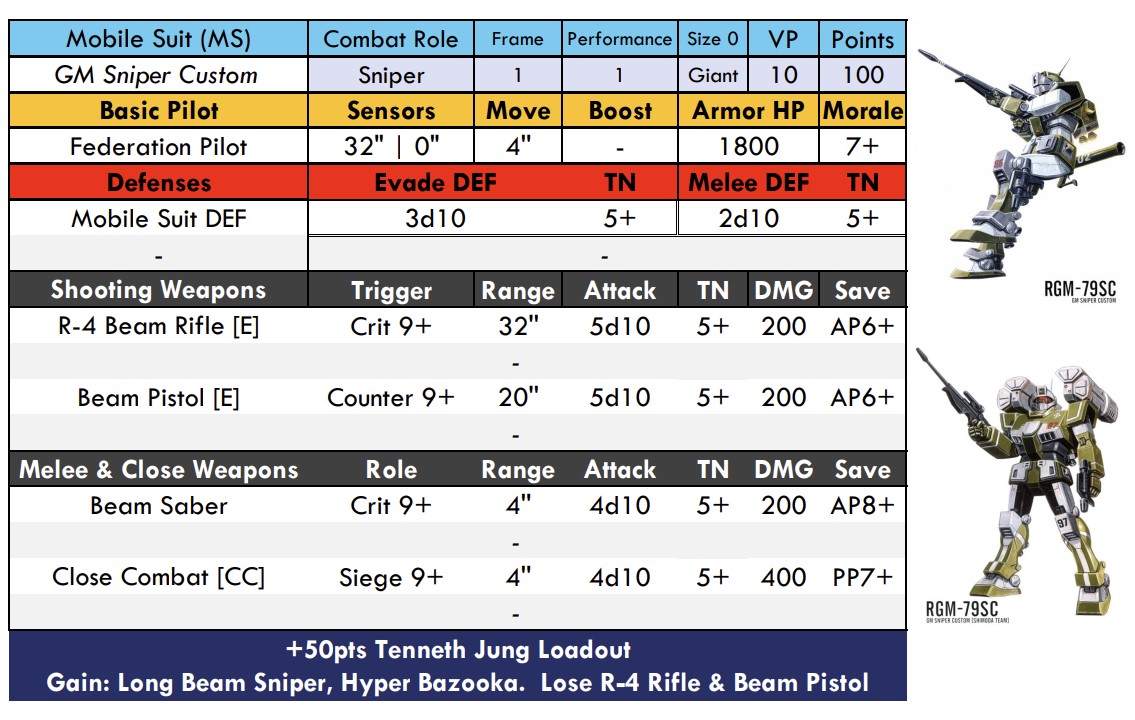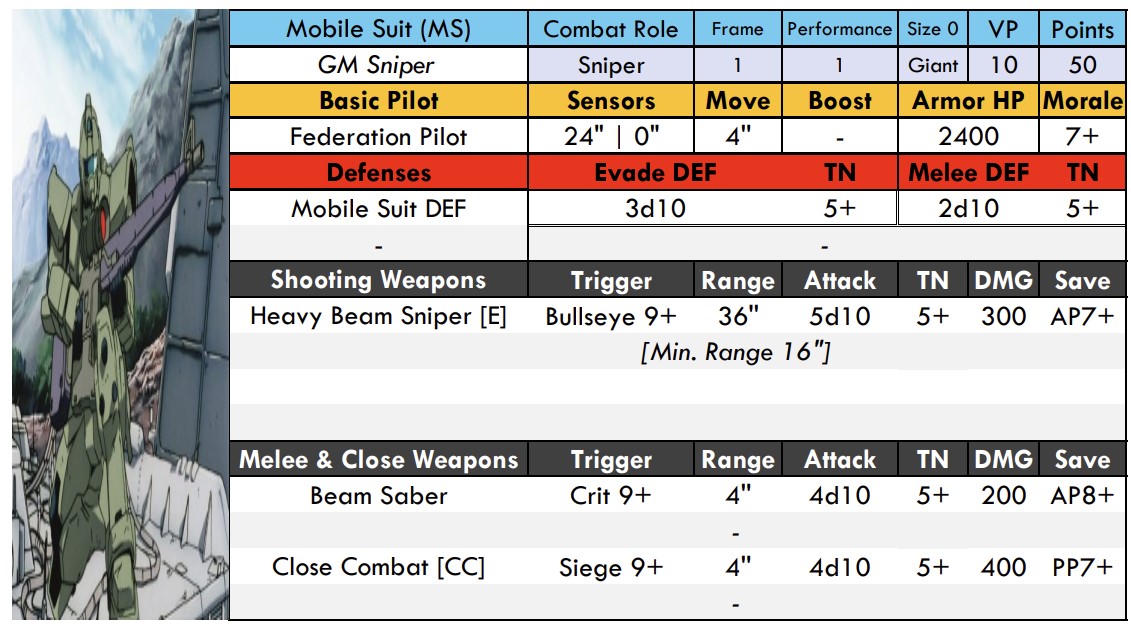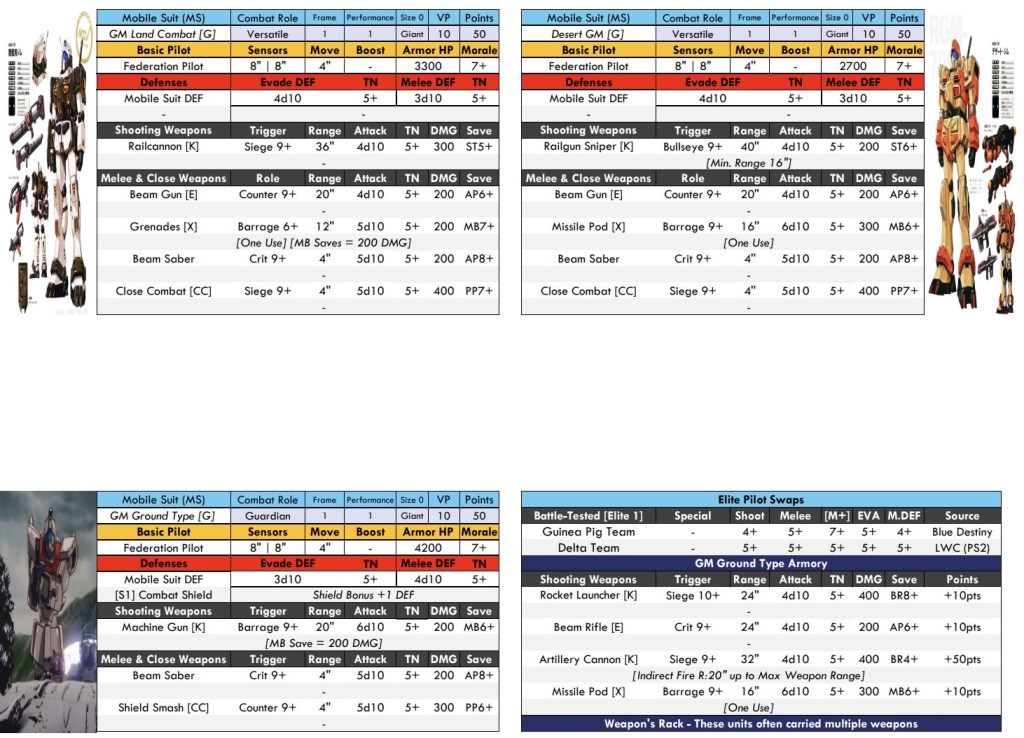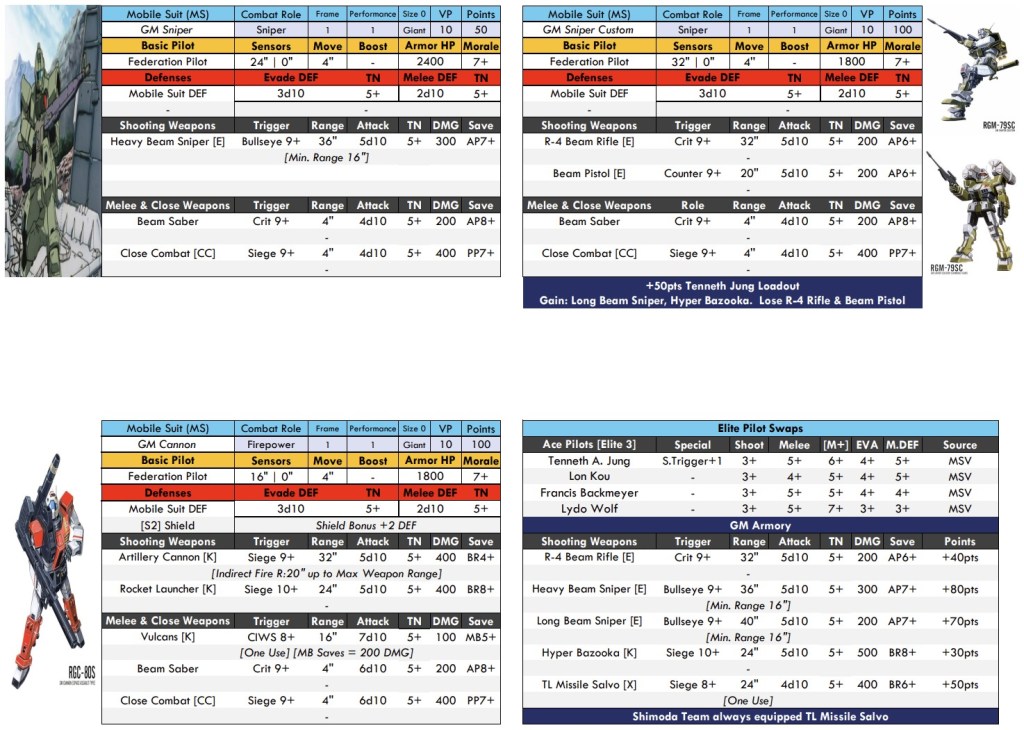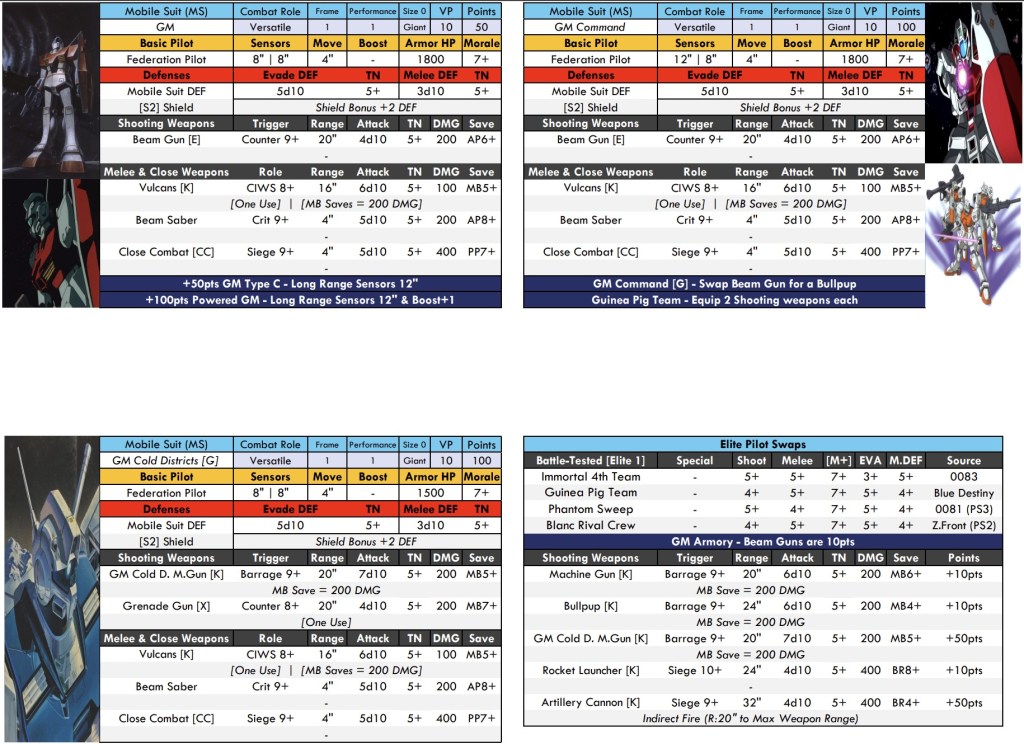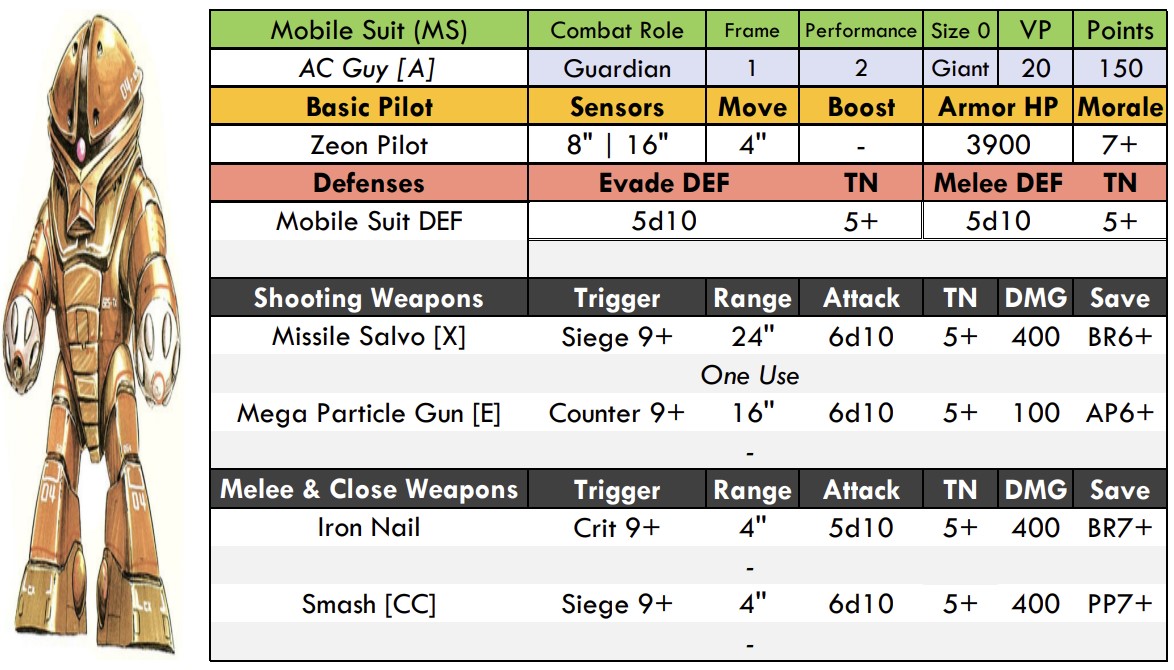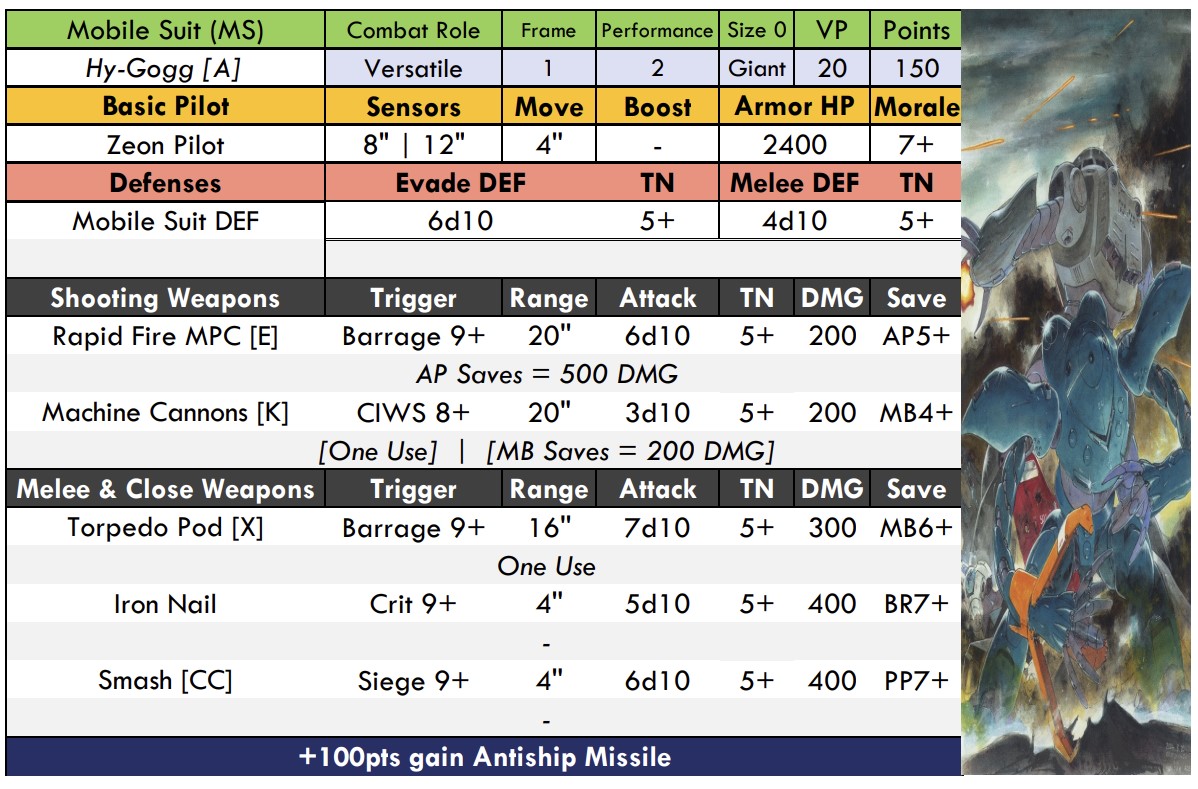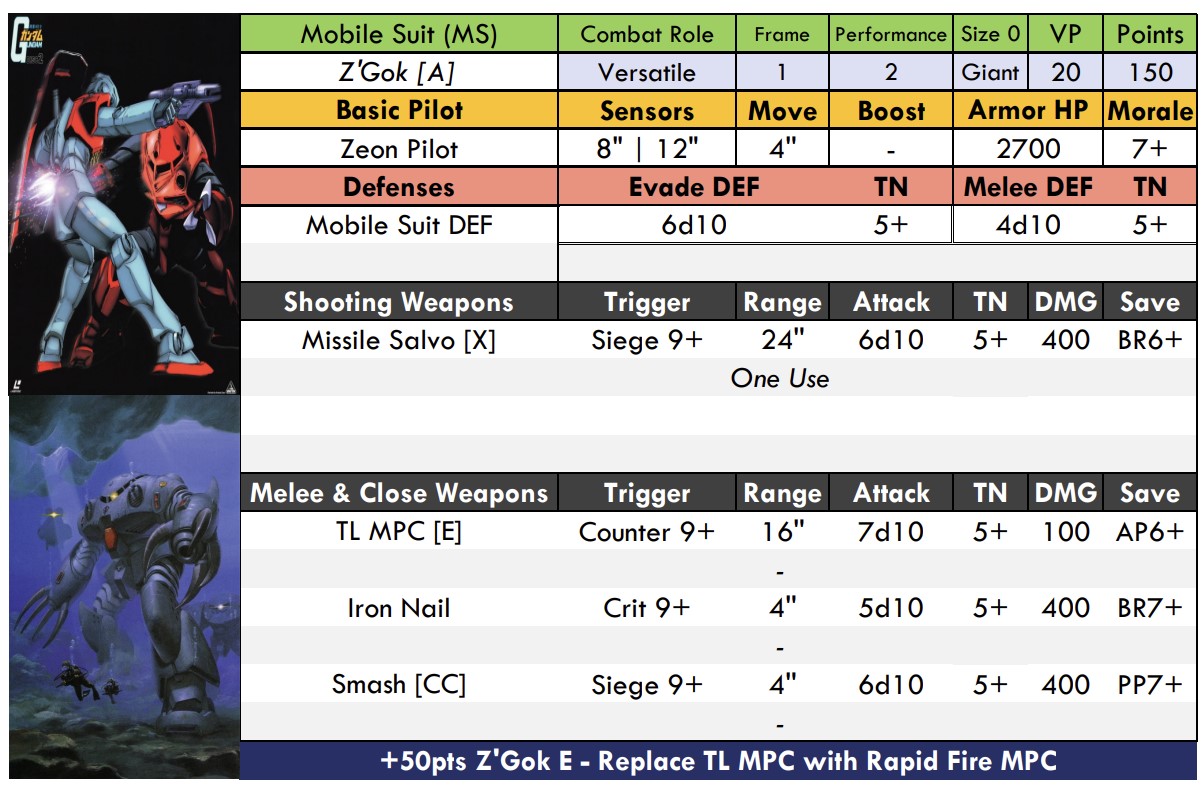
In making VER11 we had a lot of new and interesting design challenges to improve the game. Our overall goal to take VER10 and make it faster, more fun and easier to teach. Weapon Triggers definitely fulfill the more fun part and so far its been fun to teach new playtesters that “yes you can blow up cover with your first attack then fire on the exposed target with your next attack”. Bombard and Siege went through a lot of revisions, one eventually being removed while the other was heavily modified until it reached it’s final form which we’ll discuss in this post.
At the start of VER11 development Bombard and Siege had the following abilities:
- Bombard
- If the target has no Cover, each Trigger is a Critical Hit.
- Bombard was priced cheaper than Crit, a CRIT 9+ weapon is the equivalent of a Bombard 8+ weapon.
- Typically used on Cannon types and some missiles
- Siege
- Each Trigger rolled blows up 1 level of Cover, i.e. reducing Level 3 to Level 2 Cover or Level 1 to Level 0.
- If you attack Cover directly the weapon trigger becomes Siege, if it was already siege, improve your Trigger TN by 2, i.e. Siege 9+ to 7+
- Typically given to Bazookas, some missiles and some melee weapons
We went through several variations of each trait, trying to preserve the combined arms combination where Siege weapons benefit bombard weapons. Siege was a tricky beast, we were experimenting with Siege also destroying or weakening Shields / Armor as well as Cover. Triggers could blow up Cover, or lower a targets shield or armor level by 1. Whether it was permanent or temporary was still up in there. Here’s one DEV conversation
I think I figured out how to fix sequencing on Siege
and make the rules text shorter
so each Siege trigger lowers Cover or Shield bonus by 1. Cover is permanently lowered, Shield is for the rest of the round (synergy by activating bazooka unit first). The iron wall skill reactivates the shield bonus
To permanently break shields, we’ll have to rely on Finisher weapons
so finisher needs to be common either on common weapons like a beam saber
or maybe on everyone’s generic close combat [cc] attack
At the time of this discussion, Finisher weapons were updated to cause a “Battle Damage” save which could blow up a shield first and foremost, and if target had no shield then it might cause system shock like severe damage to a (weapon), leg (propulsion) or head (main camera). This eventually morphed into “Break Saves [BR6+]” and “System Shock” Saves which we’ll discuss later. Likewise, we’ll talk about the Finisher Trigger in the next post.

While we made headway with the shield breaking philosophy moving into Break Saves, Siege continued to be a difficult Trigger to work with, if we wanted to have Siege affect a targets Shields, Armor, or Defense in addition to blowing up cover. Sequencing in particular for the attack action (dice rolls -> triggers -> skills -> bonuses like Cover and Shields -> Defender skills) and Siege was quite messy since the Trigger would occur before the Defender could use Skills, so having a Skill that would prevent your shield from blowing up got messy in the sequencing.
So Amuro would use either Flash or Iron Wall depending on who he’s fighting, so we could have Flash or Iron Wall skills prevent your Shield from being reduced or broken
Yeah, but right now defender doesn’t choose skills until after attacker has resolved attack and triggers which means Siege triggers can reduce the Shield to 0 before the defender even chooses skills
right..well, we could have the skill restore the shield bonus, like if you used Iron Wall this turn, restore your Shield bonus
it feels like we’re just making this more complicated than it needs to be
Likewise, we run into problems if we give Siege a passive bonus like +1d10 ATK if target has no shield. Does that activate if the target started with a shield, but then your triggers blow up the shield, at that points do you add the extra die. All that spawned this DEV conversation.
I don’t like Siege being deadspace if target has no shield or cover
Run through several ideas, best thematic one is that Siege provides system shock saves (Battle Damage) if target has no shield or cover bonus.
However, for sequencing the cleanest way to do this is to make sure this trigger only happens if you start the attack and target has no Cover / Shield bonus. Basically attack 1 needs to annihilate that shield bonus, while attack 2 can cause battle damage.
Our VER11 Design Goal was to make things fast and fun without being overly complicated. Obviously these weren’t working so we tried a few more ideas. We also briefly considered Siege Triggers creating a “DEF penalty” like so
- If target has Level 0 Cover each additional Trigger is -1 DEF bonus on this ATK only
- DEF Bonus includes Shields / Barriers / Armor etc and is Min. +0 DEF.
- i.e. Level 3 Cover, 5 Triggers, Level 0 Cover and target has DEF-2 (Min 0)
- Problem of course being, -DEF is the same as +HIT, so it’s mathematically about the same as CRIT but with a limit that DEF can’t go below 0. This idea went belly up as well.

We considered Siege Trigger = +100 DMG if target has no shield bonus. But that stepped on the toes of Finisher, and also became a self-feeding ability since Siege also weakened shields. Not to mention the sequencing issues of does this apply during an attack when the shield is destroyed or not?
Eventually we moved on to just allow for Siege and Bombard weapons to have deadspace, times when the triggers won’t happen, but give them an always on passive instead. And so we got:
- Bombard (Passive): If target has a Shield gain +1d10 attack
- Siege (Passive): If target has no Shield gain +1d10 attack
Shields were much cheaper at this point of development, because Break Saves could wipe them out. And so we added these passives that way if your opponent had an all shield army, you were incentivized to bring Bombard weapons. This was okay for a bit but felt kind of gamey. While we were going through another pass on the rules to trim things that felt excessive, complicated or redundant, we eventually we got rid of Bombard, since Bullseye was taking over the no-cover Trait.
So then what do we do with Siege?
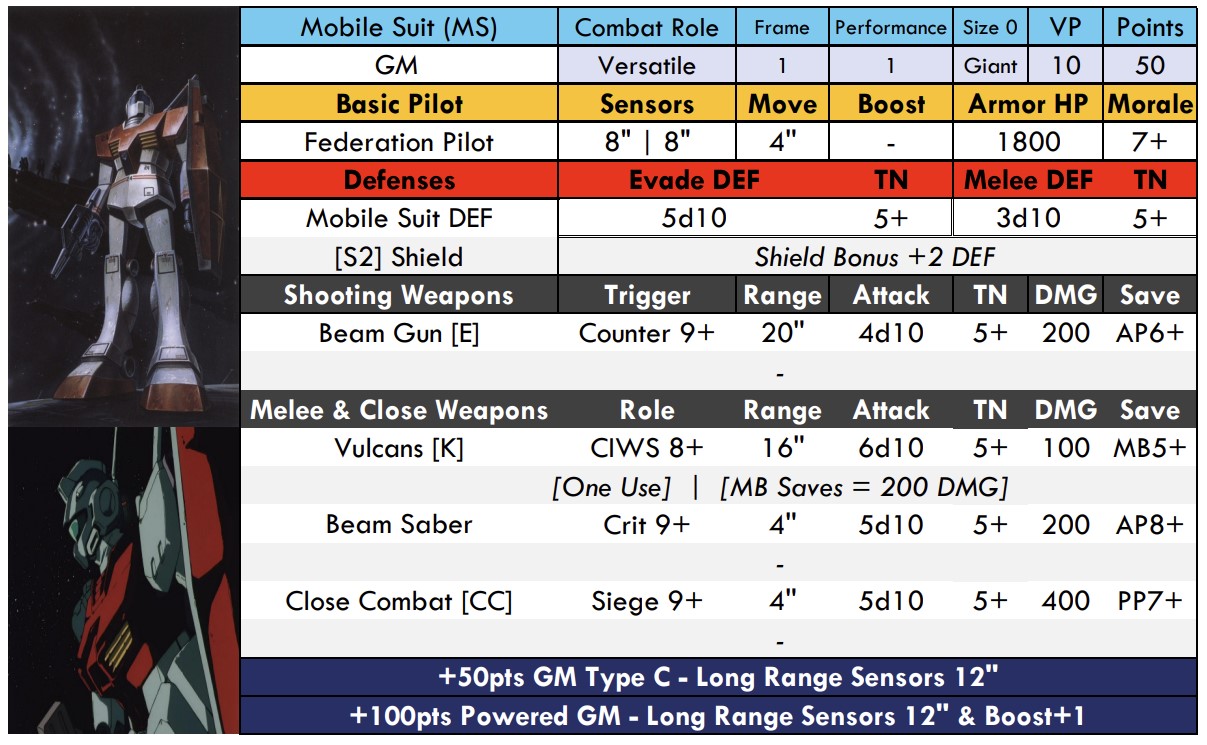
Siege was a fan favorite ability, and we held onto this Trigger until the final week. It was so popular that we even included a gameplay example in the core rules to reenact a favorite tactic of Justice Gundam which was to throw it’s beam boomerang and try to destroy a piece of cover. If they lucked out on the die roll and sliced through that building, they then used its cannons against the exposed target (Bombard weapons gave a Crit vs targets without Cover). The player who discovered that combo still thinks they are a genius =)
That said, Siege did eventually change. Not because of that combo, no in fact we loved it and everyone loved the “Trigger = Blow up that many levels of Cover”. The problem became that, if there was no Cover then Siege did nothing. And late in development 50% of Combo triggers were Siege + another ability. So having 1/2 of your combo trigger be useless if the target had no cover felt rather underwhelming.
One of the goals of the recent combat redesign has been making every weapon trigger feel both intuitive and exciting.
Siege triggers destroyed Cover was awesome! It produced some spectacular moments where a lucky roll could flatten an entire defensive position, but it also had a few downsides:
- The trigger was only useful when Cover was present.
- Occasionally you would roll 0 Triggers and not interact with Cover at all.
- Siege didn’t combine well with other trigger abilities.
- It limited the design space for Super Robot finisher weapons.
The new direction is to separate the battlefield role from the trigger effect.

Siege Passive
- Reduce the target’s Cover Level by 1.
Instead of hoping to roll enough triggers to demolish terrain, Siege weapons now always accomplish their primary purpose—they weaken enemy fortifications. This makes Siege more reliable while reducing swingy outcomes where one lucky attack completely erased multiple terrain features. With Cover removal moved to a passive ability, Siege triggers are free to become something universally useful. The current direction is:
Trigger
- Generate +1 additional Save.
This creates a clear distinction between the defensive-breaking roles.
- Critical = More Hits
- Pierce = Harder Saves
- Siege = More Saves
Rather than punching through armor like Pierce, Siege represents overwhelming structural damage—more systems failing, more secondary explosions, and more catastrophic impacts.
This also opens the door to much more interesting combination triggers. Previously, many Super Robot finisher attacks defaulted to Breaker, because it was the only melee combination that consistently felt rewarding. With Siege becoming a universally useful trigger, there is now room for another powerful melee archetype, Overkill.
Breaker
Critical + Pierce
Each Trigger becomes:
- +1 Hit
- +1 Save TN
This represents concentrated penetration—drills, lances and radiation attacks designed to punch through or lethally bypass heavy armor.
Overkill
Critical + Siege
Each Trigger becomes:
- +1 Hit
- +1 Save
Rather than piercing, these attacks simply overwhelm the target through sheer destructive force.
This is a much better thematic fit for weapons such as giant hammers, rocket punches, pile bunkers, and other crushing finishers.