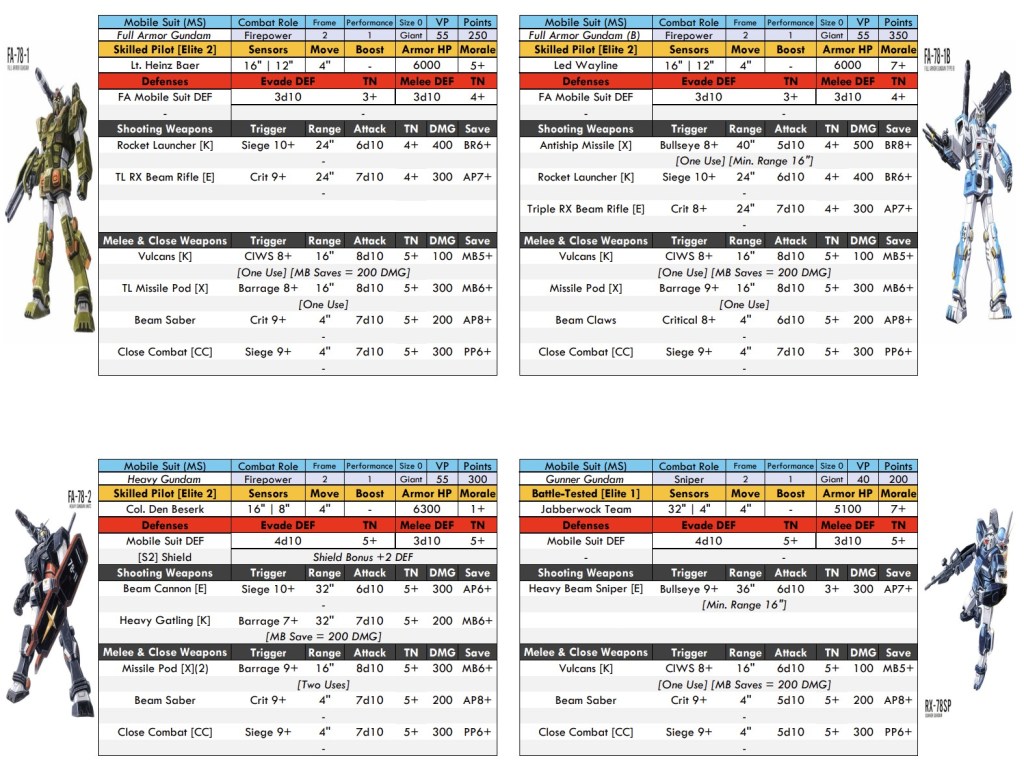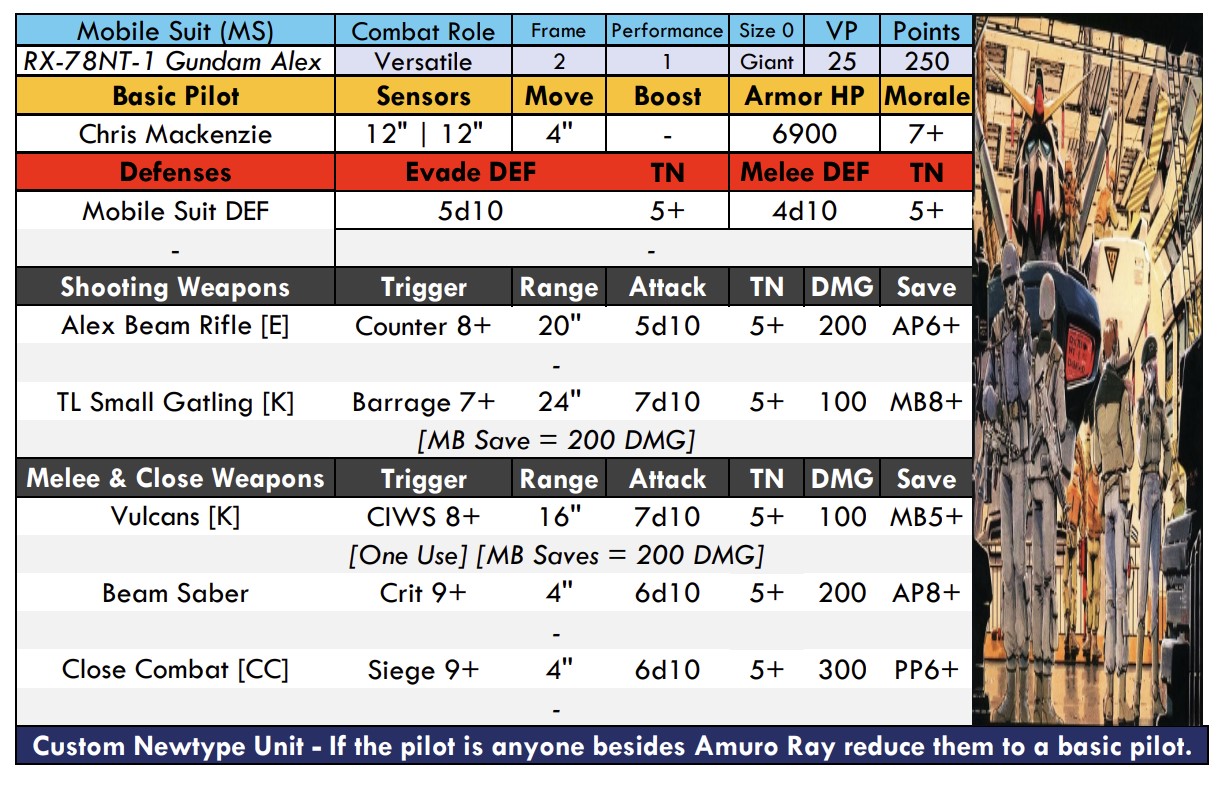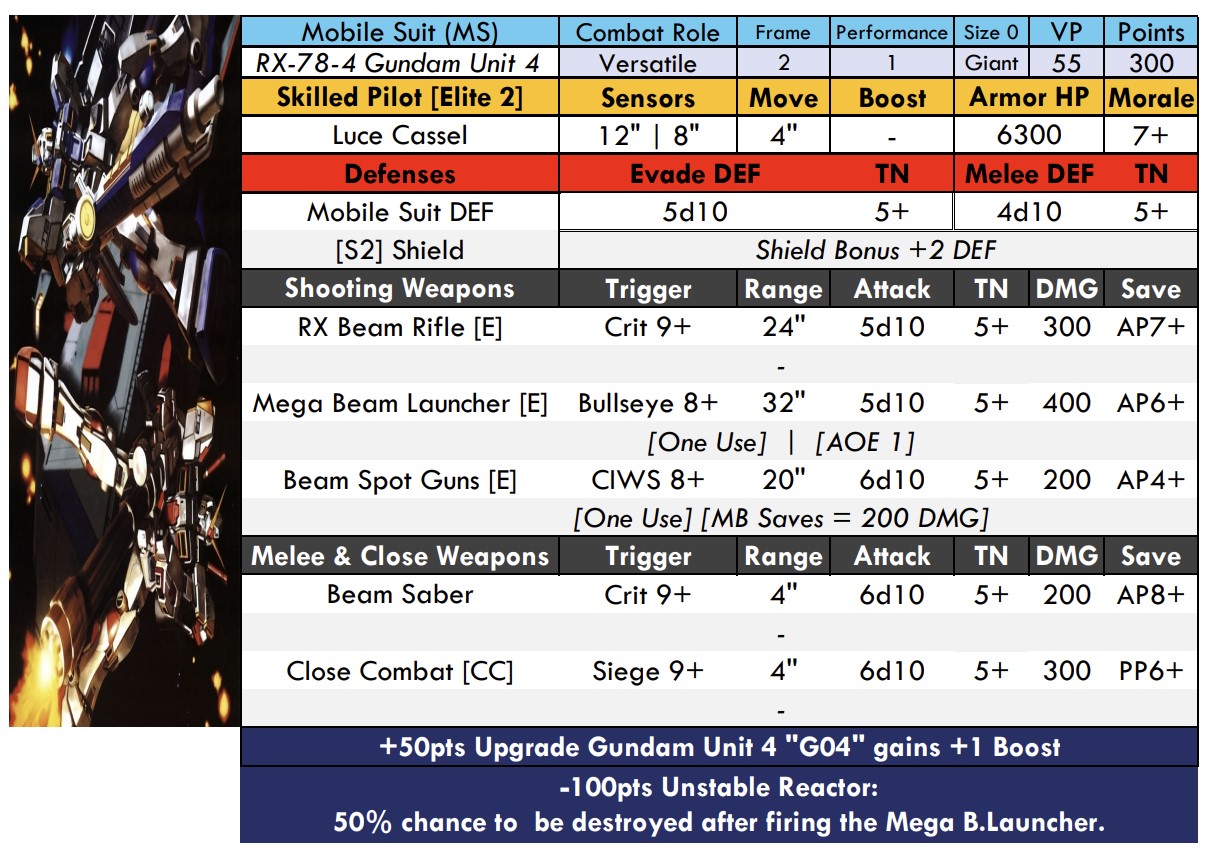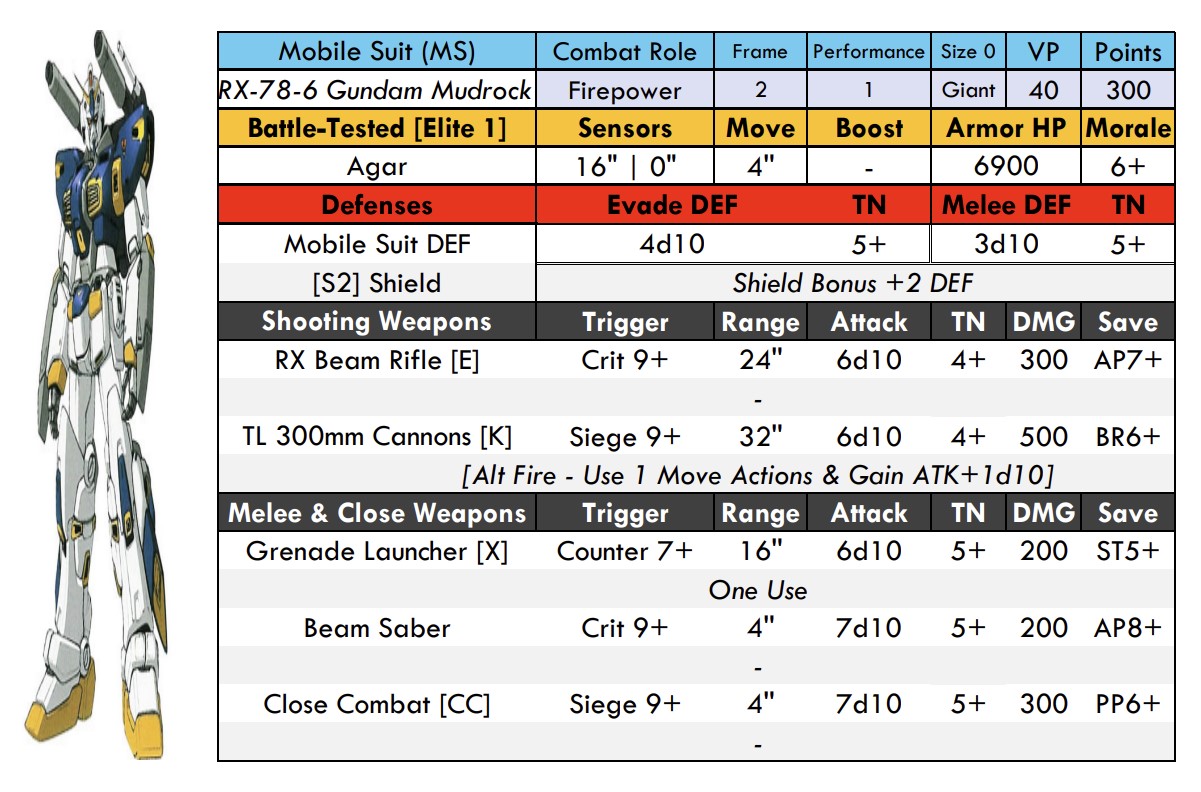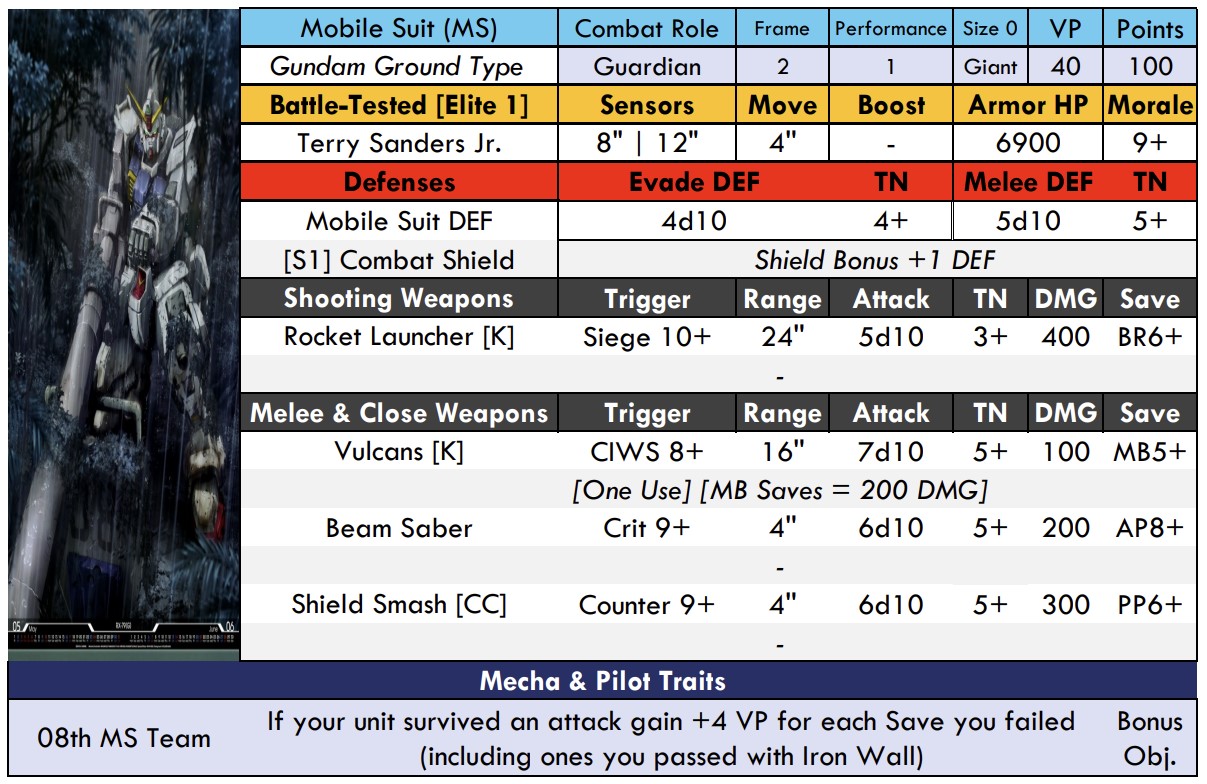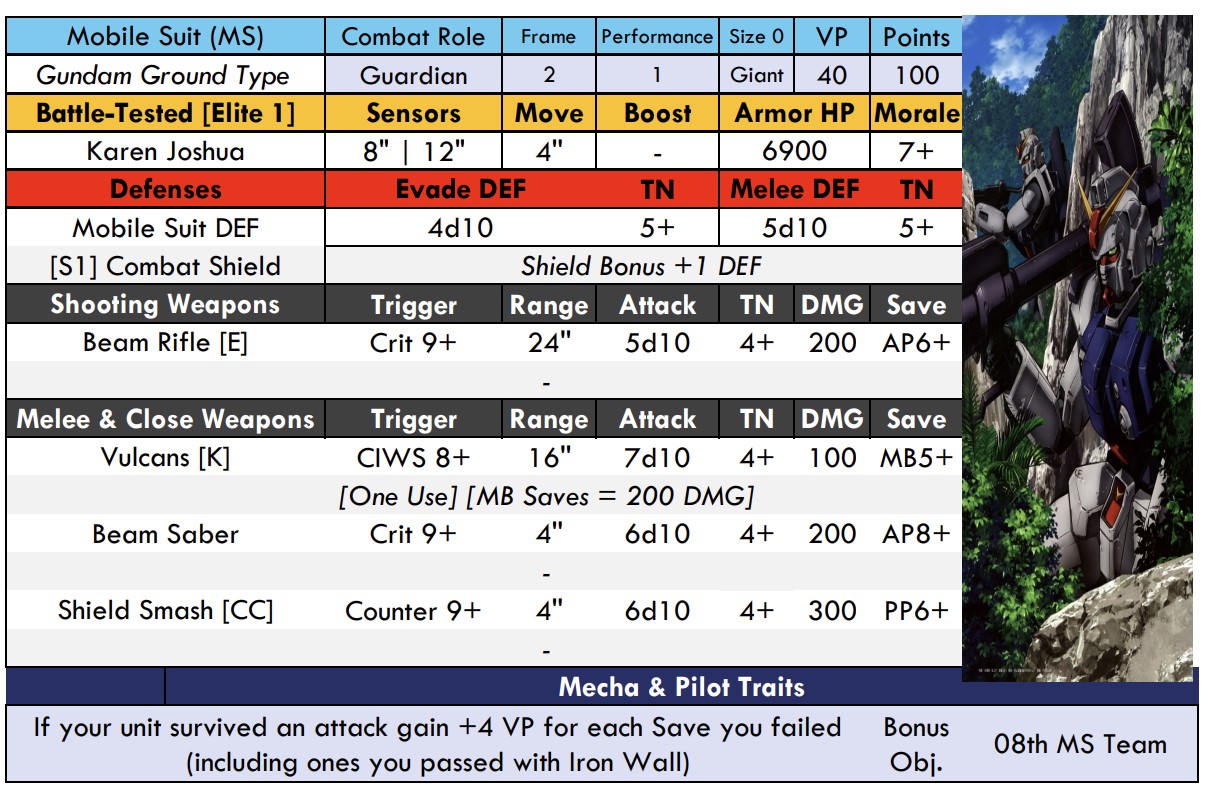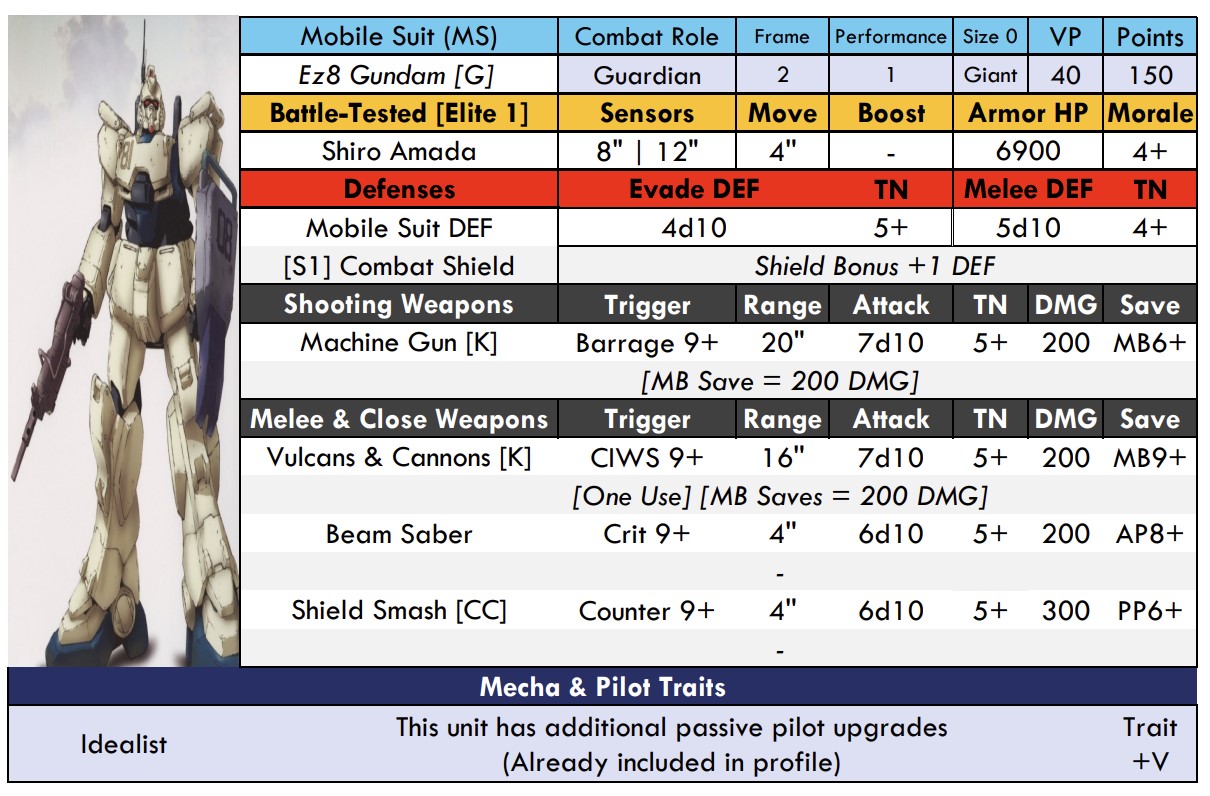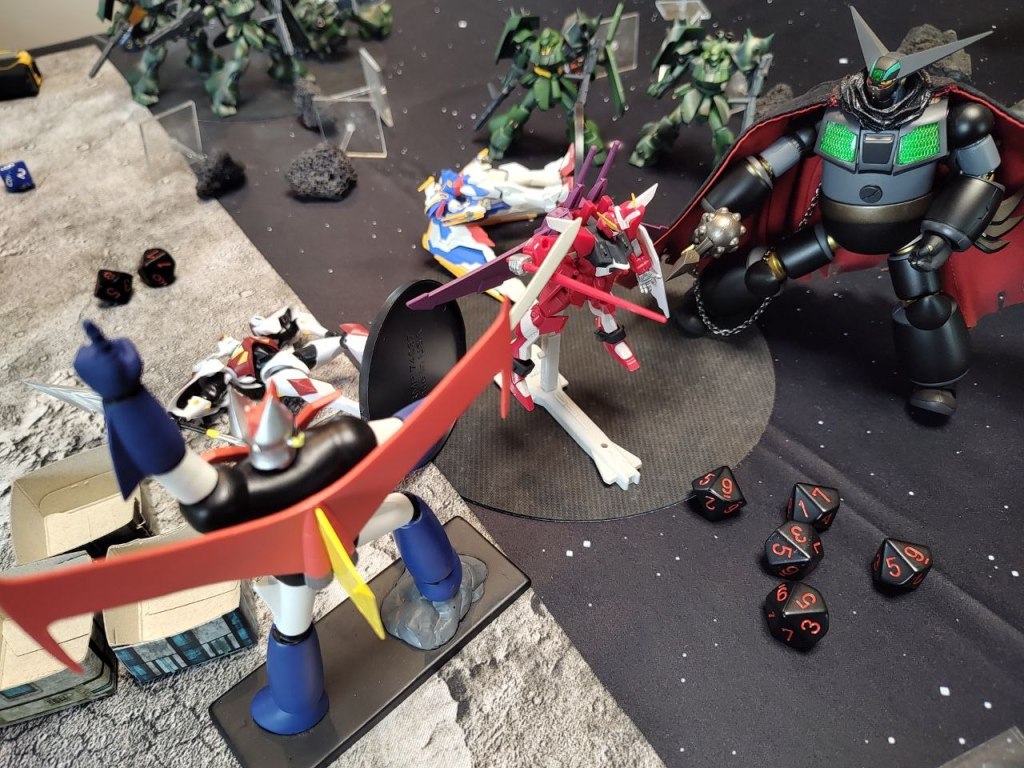
MechaStellar VER11 Design Goals – Barrage Trigger Evolution

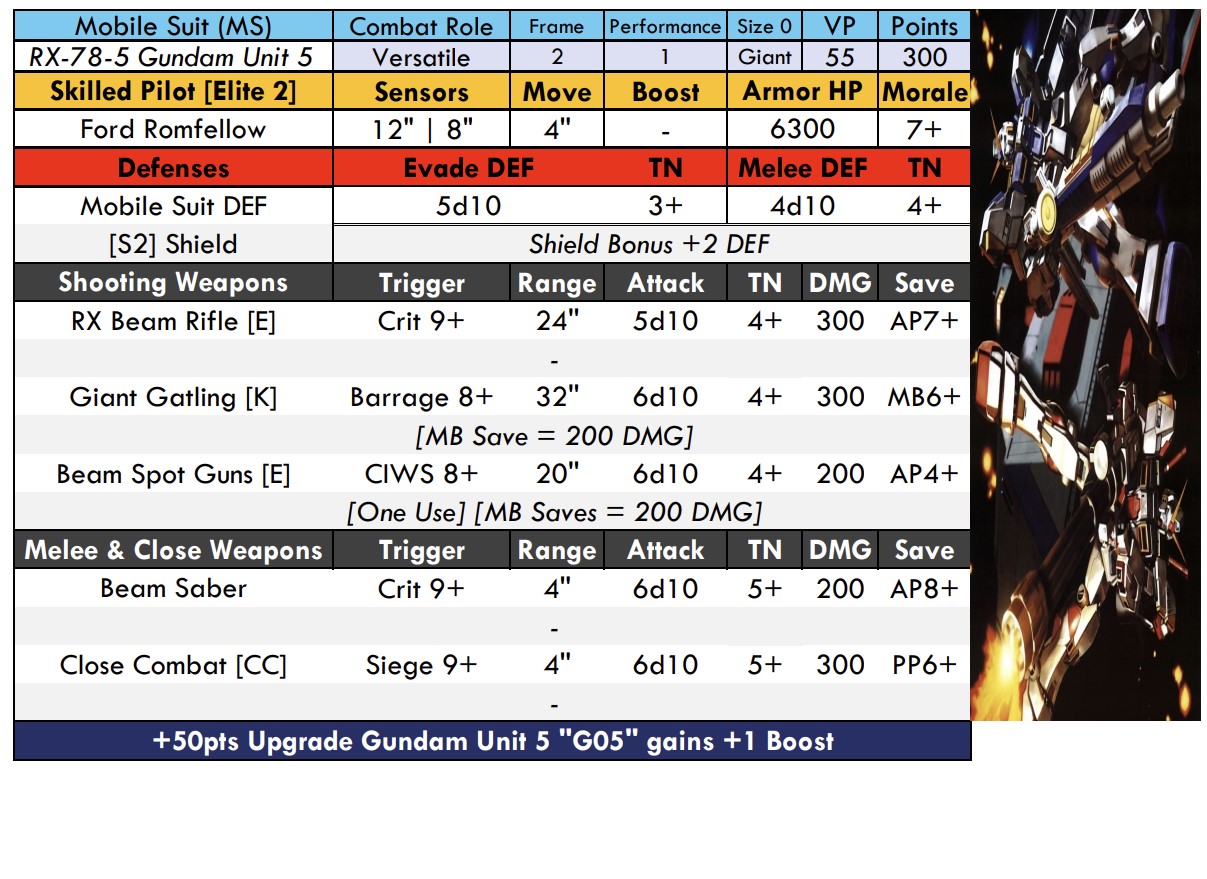
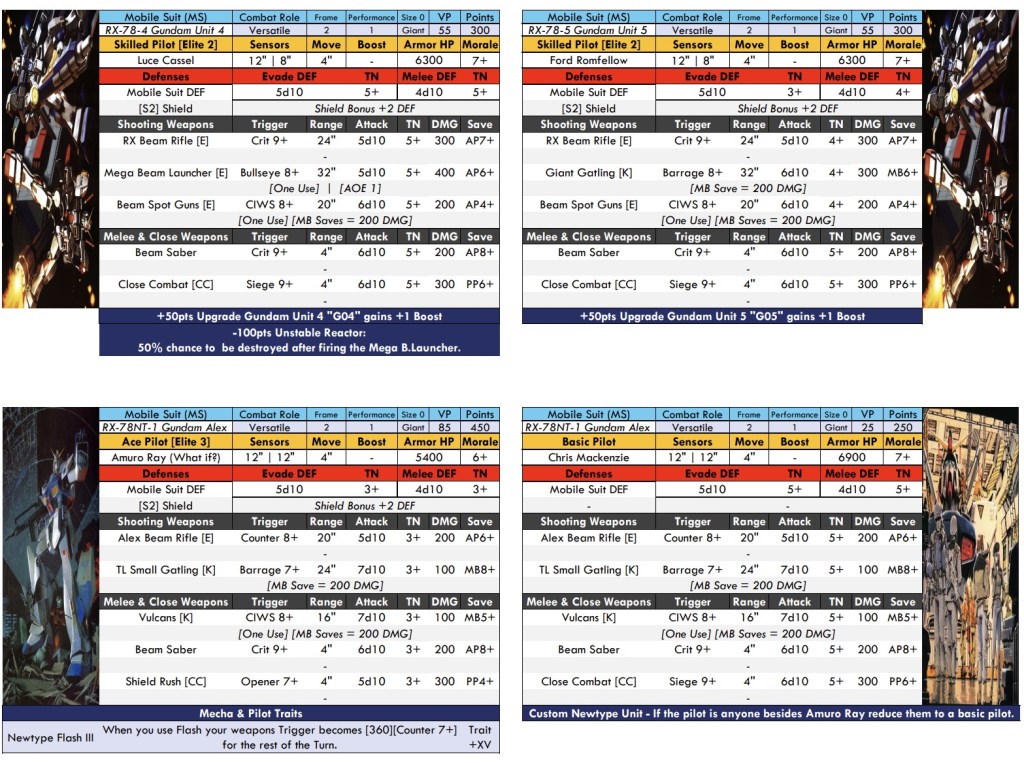
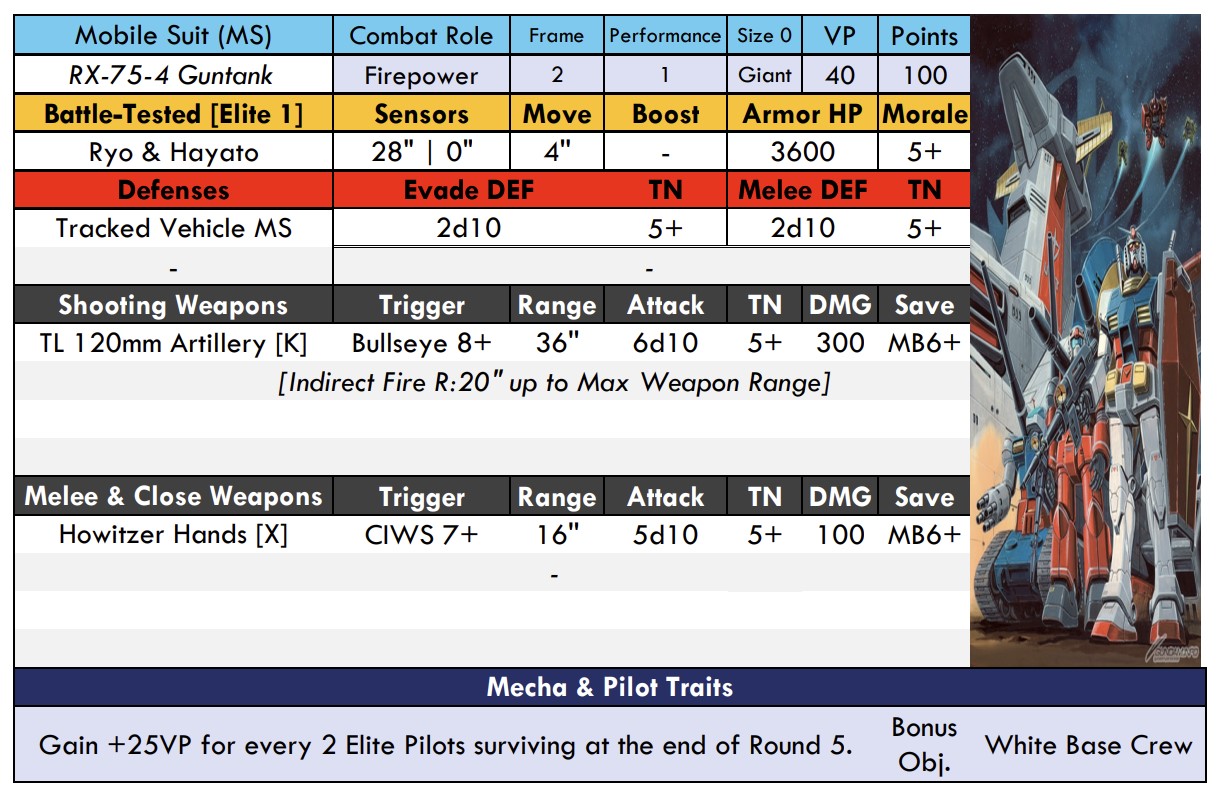
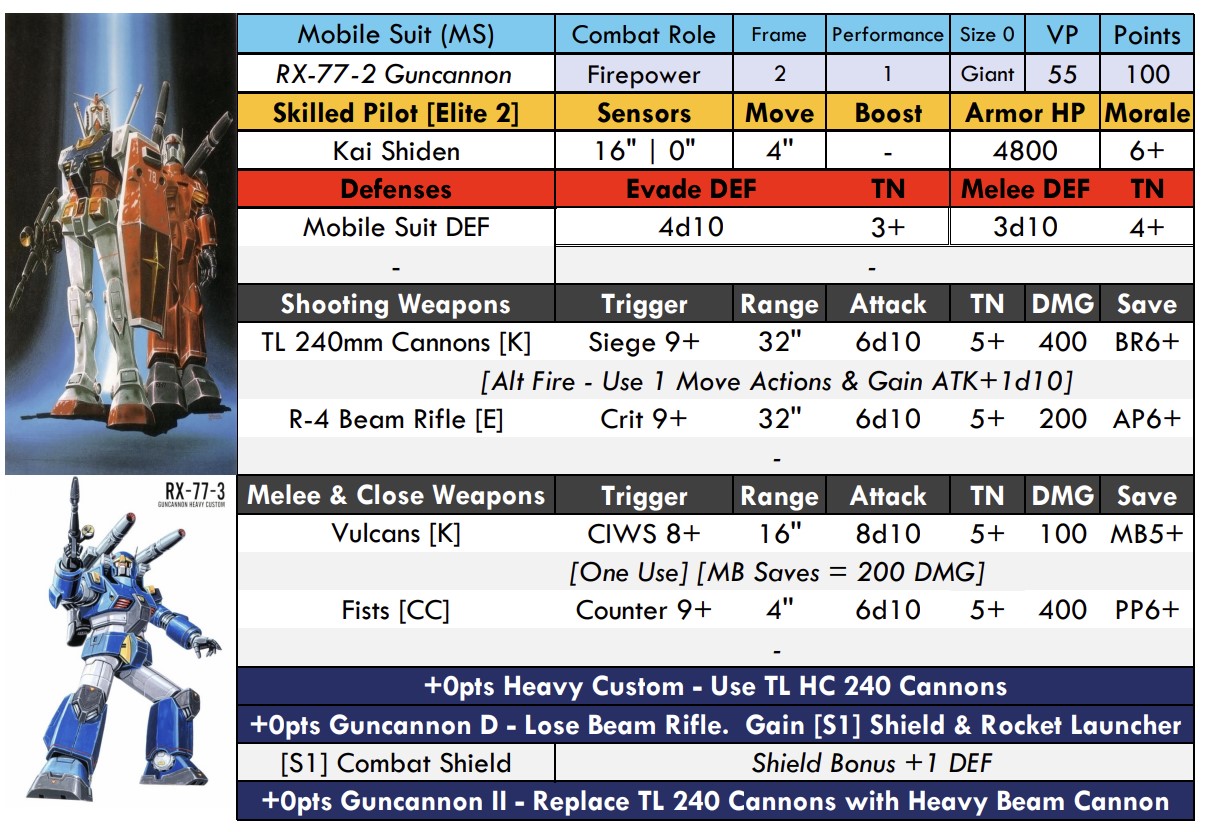
In making MechaStellar VER11 we had a lot of new and interesting design challenges to improve the game.  Our overall goal to take VER10 and make it faster, more fun and easier to teach.  Weapon Triggers definitely fulfill the more fun part and so far its been fun to teach new playtesters that “yes you do get to roll another bucket of dice” and see their smiles in response.  Since Barrage was the genesis of weapon triggers, and also the one that experienced the most changes we wanted to write about it first.
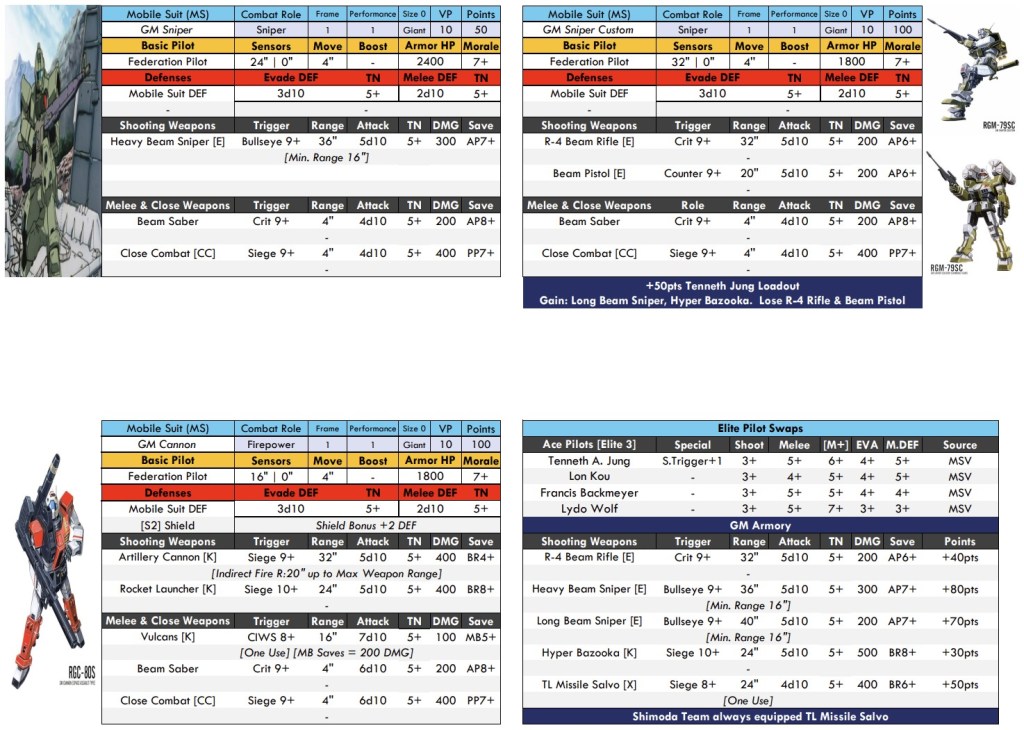
For Reference here’s how the Barrage discussion started

Enfilading fire = We could make Barrage an anti-squad weapon.  But then it would only be useful against squads and not useful every game.

Sustained fire option = We could have barrage convert failed failed hits into hits, low power, not too exciting, and doesn’t keep parity with other weapons

Triple Crit option = Maybe Barrage triggers could be worth 3 Hits instead of Crit which is 2 Hits.  Fun and definitely a hail of gunfire.

Dakkadakka option = threshold hits generate extra dice.  Very fun, but we now we have an issue of weird mental math with dice overflow.  Like start adding dice to your pool, but then if it goes over 10d10 then it’s extra hits.  It’s not too strong but it’s not smooth at all.

SuperDakka option = What about an option where you reroll the trigger dice.  And keep reroll trigger dice until you stop rolling triggers?  This was max. fun, but then one playtester demonstrated how annoying it can be when you “pick up, and drop a die” and magically it keeps landing on the same number. 

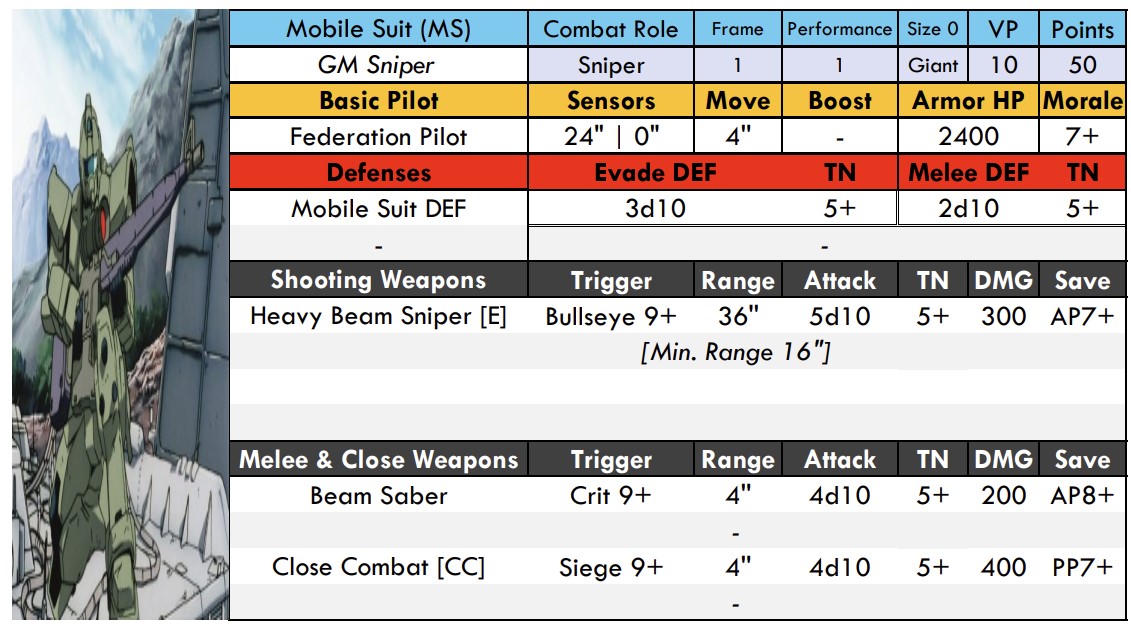
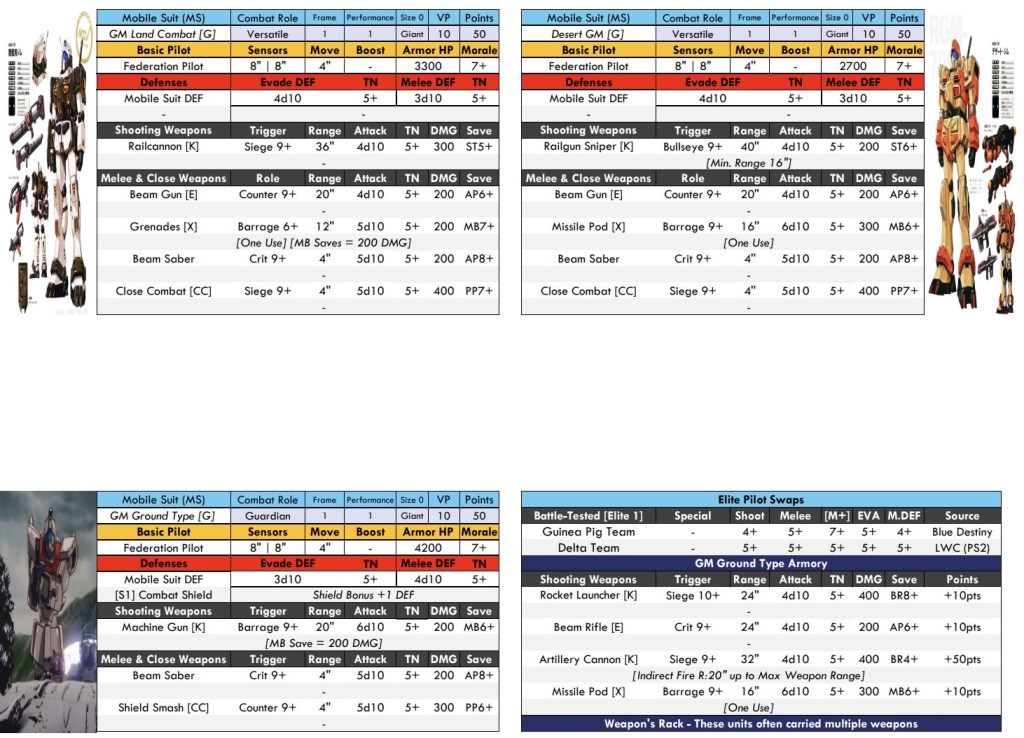
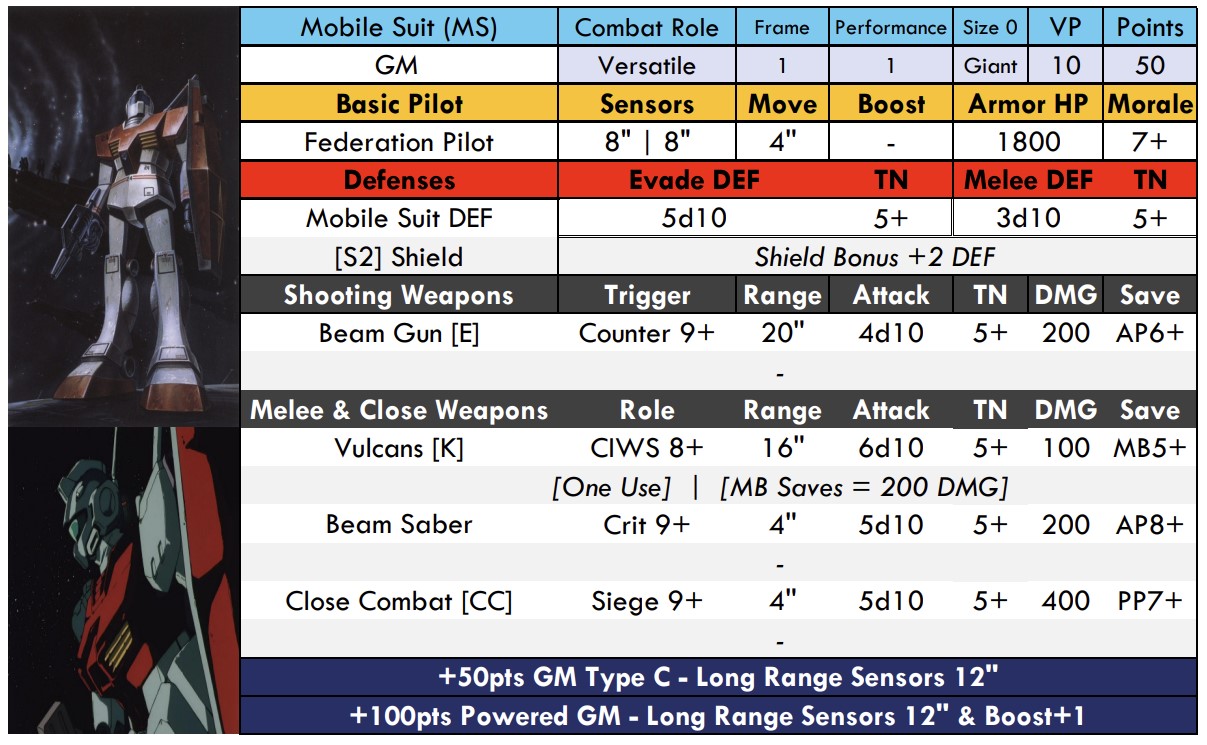
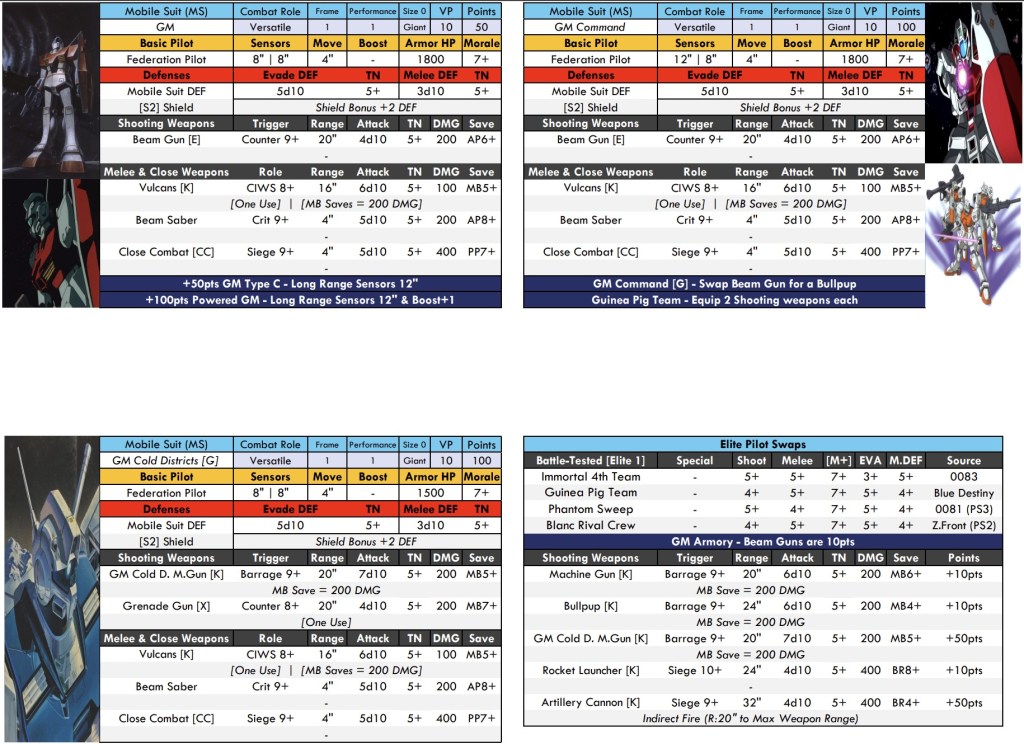
Indeed, even Buzzsaws will have the Barrage trait

From there we settled on the following:

  • Barrage 8+
    • Every 8+ is an exploding hit, after counting Hits & Triggers.  Reroll all your Trigger dice for bonus Hits.  This reroll is considered a separate roll and does not count against the 10d10 dice cap.

Now we had to sanity check this in a couple games to see how powerful this is compared to Crit weapons.  As mentioned in a previous post, we decided against all weapons have CRIT on 10s and instead CRIT would only be for certain Triggers like CRIT or BULLSEYE.  

So rolling a 10 on Barrage was just a regular hit (that you got to roll again).  Barrage has been the most fun ability, but statistically it’s slightly weaker overall than Crit, but it does have a higher chance of getting at least 1+ (albeit lower DMG) hits through.

The DEV Discussion looked like this:

We need to explain how to pick up dice in quick dice section.  First remove the 1s and 2s.  Then pick up all hits that are not threshold, i.e. Barrage 8+, pick up 3-7 as hits, and count your hits.  Then pick up the threshold and count (don’t forget crits) and reroll them, then final count.

Actually maybe we should remove crits.

Definitely remove crits

Okay so if Focus moves back to +1 Hit and Hit on a 3+, then we need to make barrrage always hit on a 3+ otherwise we have a massive sequencing pitfall where players might scoop dice before focusing then forget how many 3+ they had.

At the time we were developing Barrage, some of the pilot skills were getting Overhauled.  Focus would no longer be the “Hit on 3+” skill because now elite pilots were already hitting on 4+ or 3+.  Later, one of the in development pilot skills would let you hit on a 2+.  With all that in mind, we realized we would have sequencing issues with barrage. 

If you wait for the reroll to declare skills, do you then have to go back in time and count those dice with the better Hit Target Number?  What if you declare it before the reroll, but then it didn’t matter because all your reroll dice were Hits anyways. 

  • From that discussion we decided that:
    • Barrage (Passive): This weapon always hits on a 3+. 
    • [Anti Squad] Elite Pilots get +1 Hit per Model, Ace Pilots also get +2 Hits per model in enemy unit.

Eventually, the “Anti-squad” effect got moved into an upgrade ability. 

We were also considering a combined arms ability where Barrage causes a Suppression effect if the target is <50% HP they must make a Morale Save or lose a Move Action.  This would combo with Bullseye which Crits against crippled targets that have only one move action.  Ultimately, this train of thought let to “Mobility Saves [MB6+]” which we’ll discuss in the Saving Throw post.

Since Trigger and Skills were in parallel development paths, we had to keep updating Barrage as well.  When the “Hit on a 2+ Skill” went through testing, Barrage instead turned into

  • Barrage (Passive): The Hit on a 2+ Skill is [M-0] for Barrage weapons, however,  you may not use the Zeal skill.

Eventually that skill was removed entirely (who knows, it may reappear one day), so Barrage just reverted back to

  • Every 8+ is an exploding hit, after counting Hits & Triggers.  Reroll all your Trigger dice for bonus Hits.  This reroll is considered a separate roll and does not count against the 10d10 dice cap.
But it did end here….

But it doesn’t end there.  In the last week of VER11 development we came to a breakthrough.  The other Triggers had hit roughly even parity, but Barrage still lagged a bit behind, a fun trigger but mathematically slightly weaker than all the others.  While we were doing the very last round of testing, one DEV asked:

Is there any reason why we only reroll the triggers?  What if we rerolled all Hits instead?

The reasoning was that we didn’t allow for rerolls to spawn Triggers.  The reason was, back then, before we developed the Save system, we didn’t want any more triggers or saving throws because that could cause an insane tidal wave of damage.  If they reroll all those dice, players might mistakenly assume they could hit and trigger again.

However, since the Save system also finished its parallel developed, the number of saves was drastically reduced per attack action, and Barrage weapons all had 1/2 DMG saves we realized there was no longer a reason to prevent additional Triggers or Saves.  And we so we come to final barrage.

  • Barrage
    • After counting up Hits & Triggers, remove all Misses then reroll the remaining dice one additional time adding any new Hits or Triggers to the original total.

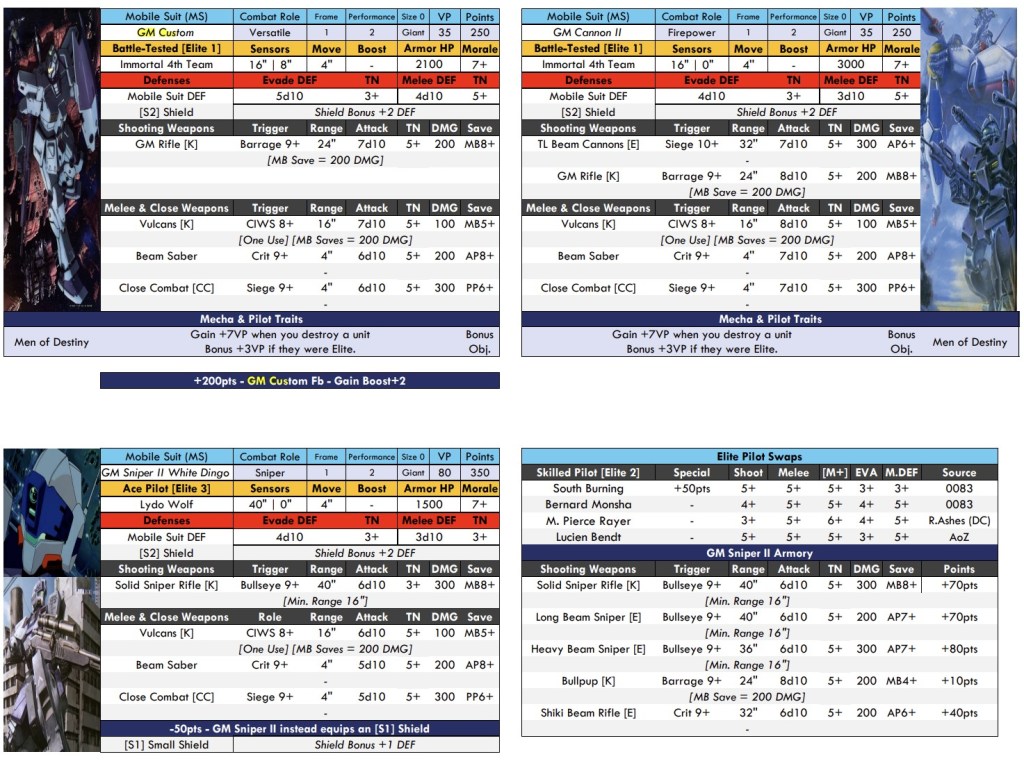
First Count your Triggers (especially for Barrage) – Place a different color die showing the number of Triggers. This marker reminds you how many saves it will cause later.  Pictured above the unit hits on a 5+ and will Barrage on 8+.  They placed a different color d10 showing the number of triggers [3].  The player then removes any misses like the [1&2] then sifts through the Hits [6] and Triggers [8,8,9]. 

Barrage – At this point the player says to their opponent “OK, 4 Hits and 3 Triggers”.  Then the attacker  picks up successful (TN 5+) dice [6,8,8,8] and rerolls them into [5,5,10,10] = +4 Hits and +2 Triggers.  “Ok, 8 Hits and 5 Triggers, your turn for Defense”. 

Next post we’ll talk about the evolution of Siege & Bombard.

MechaStellar VER11 Design Goals – Sensors + Target Lock

Exif_JPEG_422

In making MechaStellar VER11 one of our design goals was to repurpose existing stats to accomplish some heavy lifting on core mechanics instead of having to rely on specific traits or abilities.  Like the Morale stat before it, Sensors became part of this paradigm shift, becoming an invaluable stat to boost your weapon Triggers.

In VER10 we debuted Dual Sensors profiles for Snipers and Firepower types, to represent how they had advanced sensors for long range combat whether it be sniping or long range bombardment / indirect fire, while the second value referred to their regular Sensor value.  We also upgraded sensors to let it be both offensive and defensive, giving you a bonus d10 to ATK or DEF if the target was in your sensors range.  It was a good idea on paper, but was often forgotten until later leading to many times where an attack was finished and one player went “WAIT, I forgot I got +1d10 to DEF because you’re in my Sensors range”.  We wanted to avoid that situation in the future.

Still, we had to come up with an idea that would make Sensors valuable, not just for shooting characters.  Something that would benefit melee centric characters.  We experimented with a few mechanical ideas, but actually one of the Dev’s had a great idea about Sensors as a utility instead of a combat stat.  And so we have the “Sensors Sweep” action.

Sensors Sweep

Designer’s Note: This is a mission-oriented action to earn VP. Create a narrative or use one of these examples: “Locate a missing scientist”, “map the battlefield”, “find the asteroid demolition charges”, “New Mech telemetry”, or “Analyzing Reactor Signatures”.

  • VER11 Scan a Control Point (CP) or enemy unit within Close Range Sensors, neither of which have been scanned before. Gain VP = 10x [Your Frame + Performance Level].
    • If you are able to capture that CP, do so immediately.

The idea for this action was pulled from the VER10 Wargame rules for “Actions on Objective” which said:

It can represent searching for a missing pilot / scientist, secret cache of equipment, or top–secret design information.  It can also represent performing necessary actions to complete the mission like setting demolition charges to break apart an asteroid or destroying the power conduits in a colony laser.

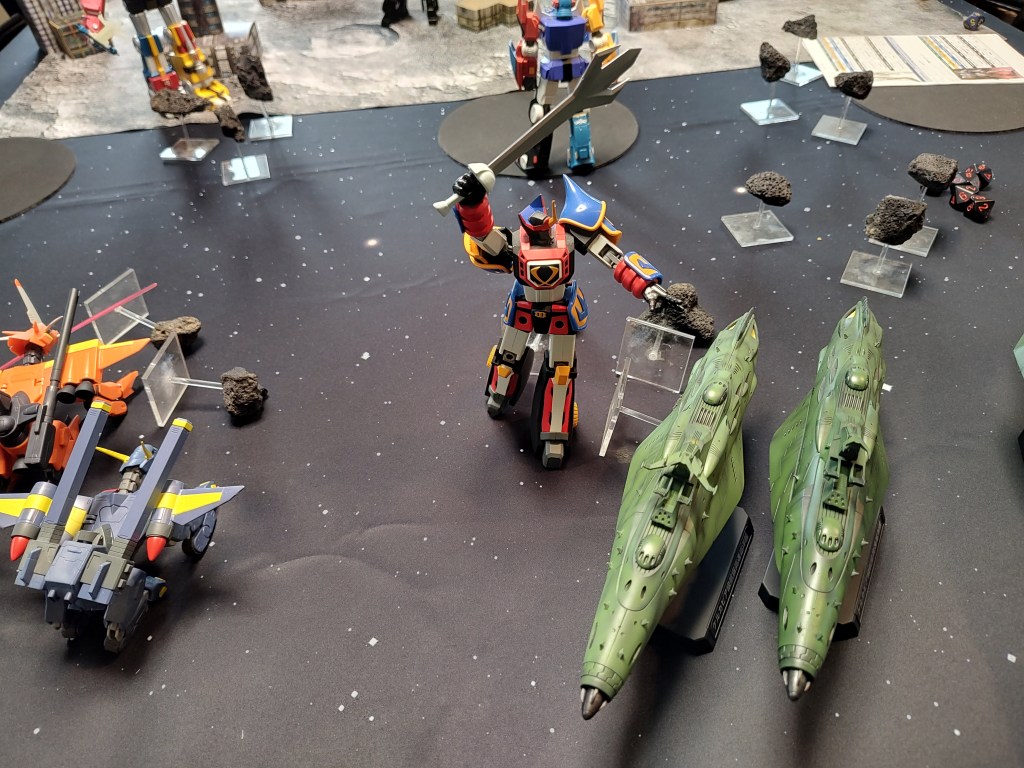
Now it’s integrated into the MechaStellar base game as a fun and useful utility to earn VP while playing the game.  It’s a great way to simulate the various mecha shows, both real robots and super robots like Dancouga pictured above where each mission (or episode) isn’t centered around fighting but instead a very specific plotline like locating a missing person, making contact with rebel forces, finding the enemy mind control machine etc.

We briefly considered letting it generate Morale Points (Momentum) but decided against it.  However, it has become an extremely useful ability to capture a CP without having to end your turn on top of the CP.  Giving players one more action to use instead of burning 100% of your actions attacking the enemy.  Also very valuable for our strategists with a cheap low performance rear echelon unit.

Long Range and Close Range Sensors

That said we still wanted that second sensors value to have more meaning, and we knew that Sensors = Defense bonus would not be returning.  So we took some inspiration from Armored Core and now we have a Long Range Fire Control System (FCS) and Close Range FCS.  So a Sniper might be Long Range Sensors 24″ and Close Range Sensors 0″, meanwhile a Battler is 0″/8″ and a Versatile unit is 8″/8″ which gave a really strong unit combat role identity.

The Long Range sensors would improve shooting attack while close range sensors would improve melee attack.  Initially we were hesitant to give melee a boost, since in VER10 every unit had a “Close range stat” of 8″, but then we decided to make that melee or versatile types only, so now those units would get a bonus with beam sabers while snipers and firepower types would not.  Likewise, your melee monster isn’t getting a shooting bonus. 

From there we also adjusted which weapons would count as melee, making the cutoff roughly 20″+ = Shooting and <20″ = Melee, so Vulcans moved into the melee category, and considering how many melee monstrosities rely on vulcans it actually worked out pretty well.  But unfortunately, added about 6 hours of work for our layout editor.  Sorry….

Last but not least, we are bringing back “Sensors = Starting Deployment range” from previous editions, but this time only for Close Range sensors.  This way you’re melee and front line versatile units can start further away from the table edge, and also allowed us to drastically simplify deployment rules.

As for bonuses, as we mentioned in the Elite unit post, we were trying to eliminate bonus dice abilities to give us more range to work with when developing weapon dice and combat roles, so Target Lock instead provides an extremely powerful “Improve Trigger Target Number by 1”.  So if you normally Crit on a 9+, if you get within sensors range you can now Crit on an 8+. 

Very powerful and very worthwhile, so for those of you worried about Rapid Fire being removed meant we would go back to castling, there is still a very powerful incentive for getting closer or for upgrading your Sensors with the Unit Upgrade rules.  We’re also experimenting with making sensors boost a freebie for advanced grunts to make grunt units cheaper across the board.  We’ll see how that works out!

In the next post we’ll start the deep dive on weapon triggers.

MechaStellar VER11 Design Goals – The Genesis of Weapon Triggers

While making MechaStellar VER11 we had to fix some core balance problems that arose at the end of VER10, in doing so we’ve created an entirely new weapon system called “Triggers” that we’re really proud of, and we’re sure you will enjoy on the tabletop.  Read on for a discussion on how we got here and the genesis of “Weapon Triggers”.

At the end of VER10 we were doing some heavy testing on Warships as well as small size units like Aura Battler Dunbine, VOTOMS, and soon to be Code Geass by popular request.  At the end of VER10, power creep led to Machine guns having a base 10d10 attack dice, and were capped at DMG 200.  So for a small size machine gun you would see on a Knightmare Frame or Armored Trooper, if we lowered DMG to 100 we’d have to raise one of the other stats. 

One option was to raise the rapid fire stat, say from +2 Hits in Rapid Fire range to +5 Hits in rapid fire range.  Another option was to increase the attack above 10d10, with those dice being auto hits.  So a 15d10 machine gun rolled 10d10 with +5 auto-hits.  While the damage wasn’t very high by default, it was a bit demoralizing having so many auto-hits coming at you and having no realistic way to completely dodge the attack. 

Then once you toss in pilot upgrades, a legendary soldier like Chirico could be pumping out high volumes of hits on attack and counterattack while also racking up Finishing Blows. Finishing Blow proved to be a very troublesome system, that was awesome for super robots but absolutely busted for any machine gun units, especially small units.  We’ll deep dive on Finisher in a separate post.

Still you might be asking?  “Well if this is a big problem for small size units, why not just get rid of small size units and make them use the same weapons as everybody else?”

And that’s a valid point!

  •   Problem #1   For people who like versimilitude the 2m mech having the same damage profile as the 18m mech doesn’t feel great.
    • Still it’s an abstraction so we can make do.  
    • But then we also have these two problems.
  • Problem #2 – Unfortunately problems were popping up on normal sized units too, especially when you add Squads into the mix.  
    • Plus machine guns + rapid fire was either overkill or unsatisfying.
  • Problem #3 – Rapid Fire heavily encouraged, getting super close, all the time, and sometimes felt like a punishment for rifles and bazookas who were heavily balanced around 1-2 unblocked hits, where rapid fire range feeling like a requirement to attack any evasive units.   Something had to change.
    • For Warships Rapid Fire range was essential to making them functional

So the DEV Team started working on “Barrage” as a trait that machine guns have, that let them feel like machine guns.    Barrage was going to be a DakkaDakka type trait where rolling 10s were exploding dice that could be rolled again.  This way, the small machine gun could be DMG 100, but have a bigger Barrage trait, i.e. [Barrage 8+].  Then the question came up, well does Barrage and CRIT stack?  So 10s are worth double but also explode into more dice?   If it’s Barrage 8+ are those also Crits?  Generally, the Devs felt it should be Crit and Barrage because it might get complicated.

So the DEV Team asked a simple question.  “What if we got rid of rapid fire?”

“What if you got rid of rapid fire?  Replace with battlefield roles like Barrage, Bullseye, Counter, Finisher, etc.”

Now that’s a novel idea.

Getting rid of rapid fire meant we no longer had to worry about going over 10d10, we didn’t have to worry about machine guns spiking up to incredible number by virtue of being 12″ closer, we didn’t have to worry about some weapons being ineffective until you get closer forcing you to always move in for our staple weapons of rifles and machine guns, and especially Warship guns.  We wouldn’t have to worry about writing rules to benefit or not benefit machine guns, i.e. DMG<300 or ATK>7d10, we could just say “This bonus applies to Barrage weapons”, and it make it way easier to calculate weapon points without half a dozen nested if statements.  This would solve a lot of problem we have had over the years.

Suddenly we would open up a whole new design space for each weapon type, giving them all a Battle Field Role, where rolling this number or better would trigger a special effect; thus the name “Weapon Trigger” was born.   Here’s a copy paste from the Dev notes doc, that shows our initial brainstormed ideas from that day for triggers and even a few melee weapon ideas. 

Weapon Trigger Brainstorming

  • Crit 10+ = Crit on a 10 like usual
  • Counter 7+ = Only these weapons can Counter, but during Counterattack they instead hit on a 7+
    • We can combo this with the Intuition Skill  – Gain Counter 9+, if you already had counter then improve the number by +2
    • To avoid this becoming super long we should not let the attacker get a counterdefense, but you can still use shields, cover, etc. to block.
  • Barrage 8+ Exploding dice on 8+, each 8 means rolling extra dice. This will be a separate dice pool so we don’t have to worry about the 10d10 cap.
    • Because there’s a lot of sequencing issues with pilot skills, this weapon should probably Auto Hit on a 3+, Elite units instead gain bonus Hits per model in the squad making it a great anti-squad weapon
  • Bullseye 8+ These weapons Crit on a 8+ vs a unit on a CP or a unit with <2 Move Actions (crippled).
    • Can target any unit, elite units gain a +HIT bonus
    • Can cause System shock saves to cripple legs
  • Bombard – Crit on Targets without Cover.  Trait for cannons, will combo well with Bazookas (Siege)
  • Siege 10+  Rolling this number blows up one piece of cover.
    • Define cover by levels like 1-3, which gives +1-3 DEF.  Each time a piece of cover is blown up lower the level by 1. 
    • Maybe Siege should also blow up Shields which was really common in 0079
    • Simplest might be blow up shield instead of weakening, so if it’s a level 2 S2 Shield, then you need 2 triggers to blow it up, 1 trigger doesn’t hurt it, which would ease the bookeeping burden.
    • Maybe using the Iron wall skill means your shield can no longer be broken that Turn, but then we run into a weird timing issues for the attack action…
  • Finisher 8+ =  8s are crits when target is below 50% HP

What about Combination Triggers?

  • AOE = Barrage (Anti Squad) + Siege (Anti Cover)
  • Breaker = Pierce + Finisher
  • CIWS = Barrage + Counter
  • Dominate (Warship) = Bullseye + Finisher?
  • IDF = Siege + Bombard?  
  • Overkill = Crit + Finisher?

Weapon Type Brainstorming

  • Drill = Pierce
  • Scythe = Finisher
  • Saber = Crit or Counter?
  • Axe = Crit
  • Hammer = Siege
  • [CC] =  Bombard or Counter?

A lot has changed since then, some triggers like Barrage have merged, others like AOE and IDF have become separate bonus Traits, but overall many Triggers are still very similar to their original incarnation. Before we start the deep dive on Weapon Triggers for Barrage / Bullseye, Bombard / Siege, and Finisher we’re going to take a small detour for Sensors and Target Lock which instead of bonus attack dice will instead modify a units Trigger value.

MechaStellar VER11 Design Goals – Momentum and Morale

Preface: Based on a number of requests from bilingual players, Momentum Points are being renamed to Morale Points.

One of the goals of VER11 has been reducing overall lethality while preserving the exciting moments that Momentum and Morale creates. One of the bigger changes at the end of VER10 was to give both players higher starting Momentum (Morale Points) to be used on pilot skills. This allows Flash to be used on Defense more often to prevent alpha strikes and help buffer early game mistakes. However, since units can generate Momentum on their turn, starting at M=10 was sometimes a penalty. In VER11 we’ve kept the spirit of that system in place, but instead of one player starting at 10, and the other lower; instead we have one player start at 5 and the other start higher.

  • VER10 Starting Momentum = Tally up your Elite level. The player with the lowest starts with M=10, the other player starts 10 minus the difference
    • (i.e. Elite 7 vs Elite 4, difference of 3, the other player starts with M=7).
  • VER11 Starting Momentum = The player with the highest Elite Level starts at [M=5].  The other player starts 5 plus the difference in Elite Level to a maximum of [M=10].
    • Player 1’s Elite Level is 7, Player 2’s is 4, the difference is 3, Player 1 starts with M=5, Player 2 starts with 5+3 = [M=8]

VER10 had 3 competing Momentum systems.

  • One tied to Momentum shifts, where battlefield movement rewarded or punished momentum.
  • One tied to Morale which includes Captain’s orders that would allow the whole army to rally or the enemy to rout and a general Morale mechanics like when a pilot dies, or pilot traits that let you gain momentum on your turn or force your opponent to rout when you attack.
  • Lastly, capturing Control Points (CPs) rewarded you with Momentum at the end of each Round.

Historically, Momentum Shifts were tied directly to movement. Players gained or lost Momentum based on whether they moved toward or away from enemy units. This system successfully encouraged aggressive play and discouraged castles and kiting, but it also created several unintended interactions.

Because Momentum generation was tied to movement distance rather than battlefield objectives, players occasionally found ways to “farm” Momentum. The most notable example involved Zeal activations where players could spend Momentum, trigger a Momentum Shift, and immediately recover the Momentum they had just spent.

The system was functional, but over time it became clear that players were sometimes interacting with the Momentum economy rather than the battlefield itself. VER11 slims down the Momentum system to just two systems. We’re keeping CPs = Momentum / Morale Point generation, and now we’re going to better integrate every unit’s Morale stat.

As a reminder, we’re switching from “Momentum points” to “Morale Points” so from here on out we will start referring to them as Morale Points.

Control Points continue to provide the backbone of the Morale Point economy.

At the end of each round, players gain Morale Points for every Control Point they control. This ensures that battlefield objectives remain important and prevents games from becoming focused entirely on destroying enemy units. Player’s were committing to fighting on top of CPs to take and hold control of them because each CP could refill your stock of Morale points at the end of each Round. That type of gameplay was exactly what we wanted. Thus keeping CPs as a Morale Point generator was a no-brainer.

For an alternate way to gain Morale Points we experimented with a lot of different avenues. Momentum shifts were well beloved by players because it gave each unit a change to earn Momentum points / Morale points on their turn, which could change the tide of battle. That said, Momentum Shifts were very easy to game. First we rewrote the rules several times so the only time you would get those morale points would be if you started or ended your turn within engagement range of an enemy, this way you were rewarded for closing into melee or being locked in engagement range and gain [M+1]. It worked but it was more, or less the same as VER10 and we were still running into problems with people gaming the system.

So we decided to do something radical. A brand new system the rewarded our high morale pilots, that extremely simple and easy to remember.

The other major change is the expanded role of Morale. Historically, Morale Saves occurred infrequently. Most units could go several games without interacting with the Morale system at all. While Morale was thematically important, it often lacked battlefield relevance.

So with that, we started experimenting more with the Morale stat which was historically underused in VER10. Instead of an automatic [M+1] we considered having your units make a Rally Save, with the target number TN = Morale. So a unit with Morale 7+ rarely gets the Morale points, while a character like Guy Shishio with Morale 3+ is almost always getting it.

The more we tried this the more fun it wound up being. Eventually it morphed into, as soon as you activate a unit, make a Rally Save. So right at the start of your turn you would find out if you would gain Morale points or not, it might give you just enough to use a pilot skills like Zeal or Valor, or maybe it would let you fire in melee. Tension was added right at the start of your turn.

We also had to adjudicate during development how that would work with units in squads, how it worked with warships and also elite pilots. I think you’ll be pleasantly surprised by the simple but powerful bonuses these give to Morale system when you read over the new rules.

Successful Rally Saves generate Morale Points, representing disciplined troops maintaining formation, hot-blooded pilots inspiring their allies, and veteran soldiers keeping the initiative during battle. This change serves several purposes.

  • First, it creates a reliable but limited source of Morale point generation.
  • Second, it gives Morale a meaningful role throughout the game rather than only during rare Rout situations.
  • Third, it allows different units to interact with the Morale Point economy in unique ways.

High-Morale units such as Captains, Elite Pilots, Kaiju, and iconic Super Robots naturally generate more Morale Points than ordinary troops. Rather than requiring special Morale-generation abilities like a specific pilot trait, these units now leverage a statistic already present on their profile. This accomplished a major design goal of VER11, leveraging existing stats instead of having to create specialist rules.

Rally, Rout & Battle Cry!

At the same time, Rout remains the counterpart to Rally.

Failing a Rout Save causes Morale loss, representing battlefield confusion, hesitation, and collapsing morale. Elite casualties and disengagements can therefore create dramatic Morale swings without relying on artificial catch-up mechanics or hidden thresholds.

Late in VER11 testing, during a game with a Super Robot with an extra action and nothing to use it on, we decided to create another combat action “Battle Cry”. For novelty, this action would once per Turn give them a chance to Rally, and as we thought about it we also decided to have it cause a Rout save to the nearest enemy. It was a huge hit, with our Super Robot loving player. It’s also great for certain pilots known for shouting in combat, like Kamille.

Then an epiphany struck. Instead of having a rule like “When an allied elite unit dies, the nearest enemy makes a Rout Save” which is easy to forget (dev’s included lmao); we thought “What if when you destroy an enemy Elite unit, Battle Cry becomes a free action that turn.”

“Woah, that’s a great idea” said one dev. Because now it’s a reward for the attacking player they would be sure not forget it. And even better, that action / event interacts with both players giving both a Rally and Rout Save. It’s one of our favorite last minute tweaks to VER11 so we really hope you enjoy it.

Summary

One lesson learned during development was that Morale Point systems work best when they reward meaningful battlefield actions rather than abstract movement patterns. Earlier versions rewarded moving closer to the enemy. The new system rewards fighting over objectives, committing to engagements, maintaining morale, and controlling territory. The result is a Morale Point economy that remains dynamic and aggressive while being easier to understand, harder to exploit, and more closely tied to the events occurring on the battlefield.

Perhaps most importantly, Morale Points now comes from doing the things a giant robot pilot should be doing:

CPs

  • Holding the line.
  • Capturing objectives.

Morale

  • Charging into battle.
  • Keeping your nerve under fire.
  • And inspiring your allies to fight on.

MechaStellar VER11 Design Goals – Pilot Skills

Continuing from our previous post on Elite units and pilots now we’re going to briefly touch on Pilot Skills. In making VER11 we’ve kept the same pilot skills from VER10 and revamped them for the current system. We’ll deep dive on the pilot skills in later posts. Next post will be on Momentum and Morale Points.

In VER10 we had the following pilot skills

  • [M-3] Valor = Gain +5 HITS
  • [M-3] Flash = Gain +5 DEF
  • [M-X] Zeal = Gain bonus actions

Early on MechaStellar VER10 we had a very tight balance between bonus Hits and bonus DEF.  That common units when they were attacking each other would average 0-2 Unblocked Hits, which meant that damage was relatively small.  Often Zeal was never a worthwhile choice unless you were a much stronger unit attacking grunts. 

Typically if you wanted to Hit you would go with Valor which your target could trump by using Flash to reset field.  Balance wise it worked extremely well, but +5 Hits vs +5 DEF sometimes felt rather underwhelming for some players.  And if one player could secure a lot of Momentum they could quickly wipe out more powerful enemies which hurt the experience.

However, as MechaStellar continued that finely tuned balanced started to fall off.  Unit roles had further expanded combat bonuses, starting with a range of +0 to +2, then later +0 to +3, then +1 to +4 for roles like Sniper, Battler, Versatile etc. 

With these the average number of unblocked hits kept creeping up, and eventually Zeal supplanted Valor as the best way to attack multiple units, or to completely obliterate a single unit, not to mention wiping out the target’s momentum pool by forcing multiple Flashes.  The Iron Wall skill was updated to counter Zeal by providing a defense bonus for the full turn but for some matchups Zeal would be the better choice than Valor.

After over a year of trying to keep balance in check, new features were added like the Support and Squad system it soon became impossible to keep game balance.  Certain units could stack bonuses, along with pilot traits to completely tear through the system launching huge amounts of hits on attack and counterattack while avoiding all but the most severe reprisals from the enemy. 

Obviously something had to change.

VER11 had the big task to fix this issue.  Weapon Triggers which we’ll discuss later, replaced Rapid Fire and gave other outlets for growth on small unit weapons you’d see on Votoms, Dunbine or Code Geass.  Pilot traits which we discussed previously, switched over to smaller passive bonuses rather than traits you could stack for potentially tremendous benefit.  Pilot skills would also need to be changed.

We’ll go into the pilot skill evolution in a separate post but in general we wound up with this frame work.  Additionally, as we mentioned before ship Captains could now use all but one of the pilot skills making gameplay more universal and easier to remember.

  • Focus – Cheap but powerful offense skill
  • Flash – Potential large bonus for DEF based on your die roll.  Not usable by Warships or Kaiju
  • Alert – Warship / Kaiju only.  Bonus to DEF and Counterattack chance. 
  • Iron Wall – A chance to nullify the damage or effects of a failed save
  • Valor – An expensive but powerful offense skill that also integrates Finishing Blow
  • Zeal – Bonus actions with a hard cap to prevent abuse.

MechaStellar VER11 Design Goals – Elite Units

One of our primary goals in making VER11 a simpler and easier to teach improvement over VER10 was to cut down on the number of “oh I forgot about this ability” on a mech’s profile sheet.  Early in VER11 development the first thing we did was remove pilot bonuses, formerly Barrage, Bullseye, Dodge, Guard, etc.  Instead, they were replaced with a Flat +1 bonus to HIT or DEF or both depending on the level of the pilot.

As we continued developing VER11 we got rid of bonus +HITs and +DEF and instead just used dice pools.  As mentioned in our previous post on the Core Mechanic Update, we were considering how to handle Elite pilots whether or not they should include a mechs combat dice pool or improving their TN to Hit or DEF.  Eventually we settled on having a unit improve Target Number (TNs) for Attack, Defense and Morale.

Pilot progression has existed in Mecha Stellar for years, and for the most part it has always worked. Ordinary pilots eventually became Elite veterans, then Skilled pilots, and finally legendary Aces. As Version 11 continues simplifying the core game, however, pilot progression became one of the last major systems worth re-examining. The original progression for VER 11 was straightforward.

Ordinary Pilot

  • HIT 5+ / DEF 5+
  • Morale 7+

Elite

  • HIT 4+ / DEF 4+

Skilled

  • HIT 4+ / DEF 4+
  • Morale 6+

Ace

  • HIT 3+ / DEF 3+
  • Morale 5+

There was nothing inherently wrong with this system. In fact, it had one enormous advantage.

The Biggest Strength of the Original VER11 System

Elite pilots required almost no bookkeeping. Imagine deciding before a battle that every Zaku in your force was crewed by Elite veterans. Nothing on the printed profile needed to change.

You simply remembered:

“These Zakus HIT and DEF on 4+.”

Likewise, campaign progression was incredibly simple. A surviving pilot became Elite without requiring players to edit their profile. I considered this one of the system’s greatest strengths.

As Version 11 evolved, another issue slowly became apparent. The new version removes passive HIT and DEF bonuses from weapons entirely, in it’s place we now placed the units TN to Hit or DEF (i.e. 5+, 4+ or 3+ on the profile). So now if you change a characters elite level you would need to scratch those out potentially. Then another problem arose.

The Character Problem

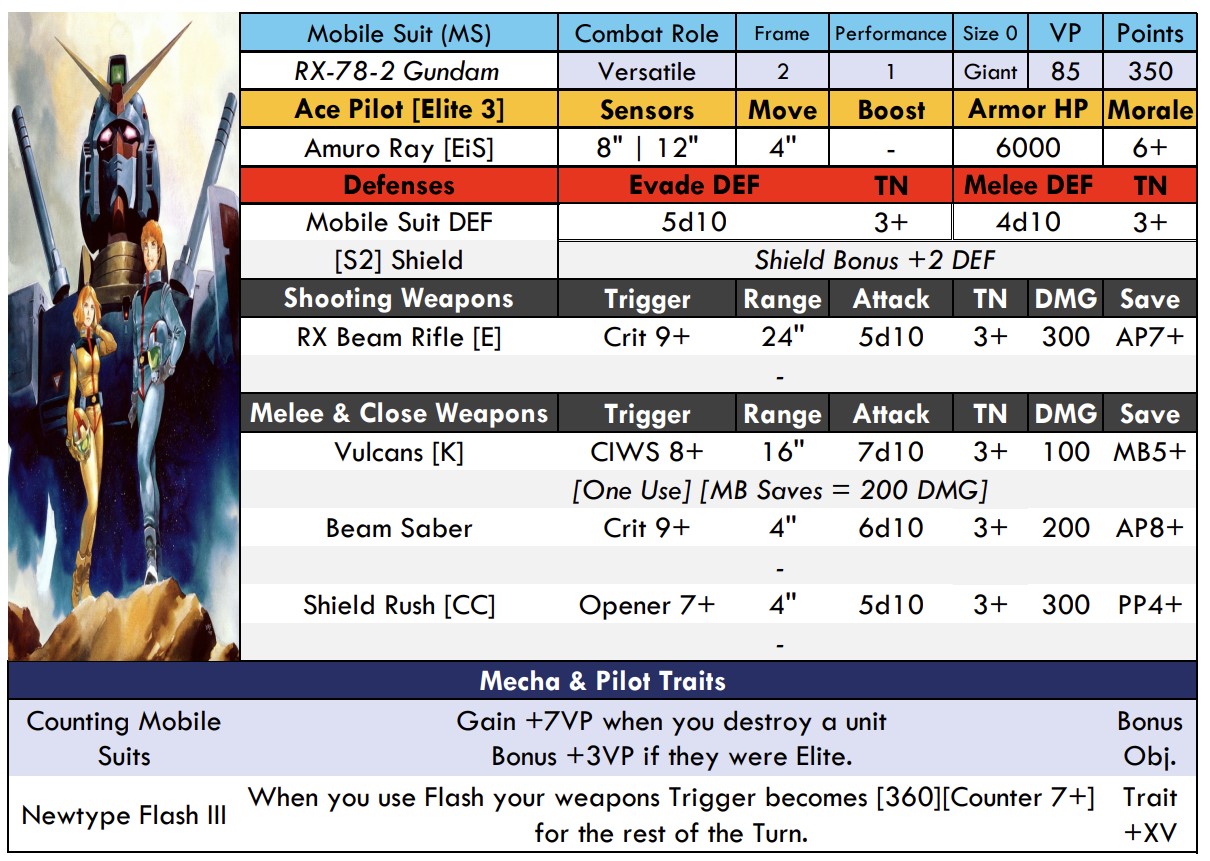
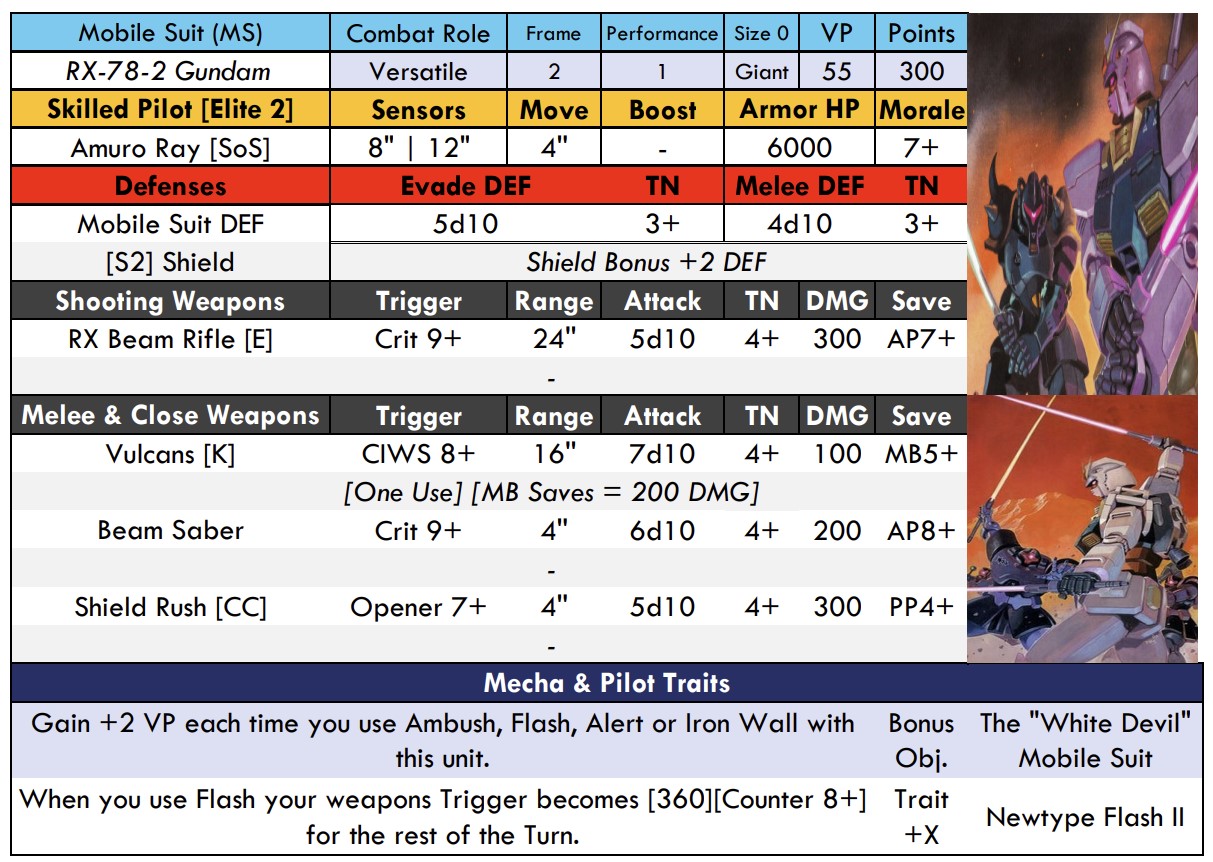
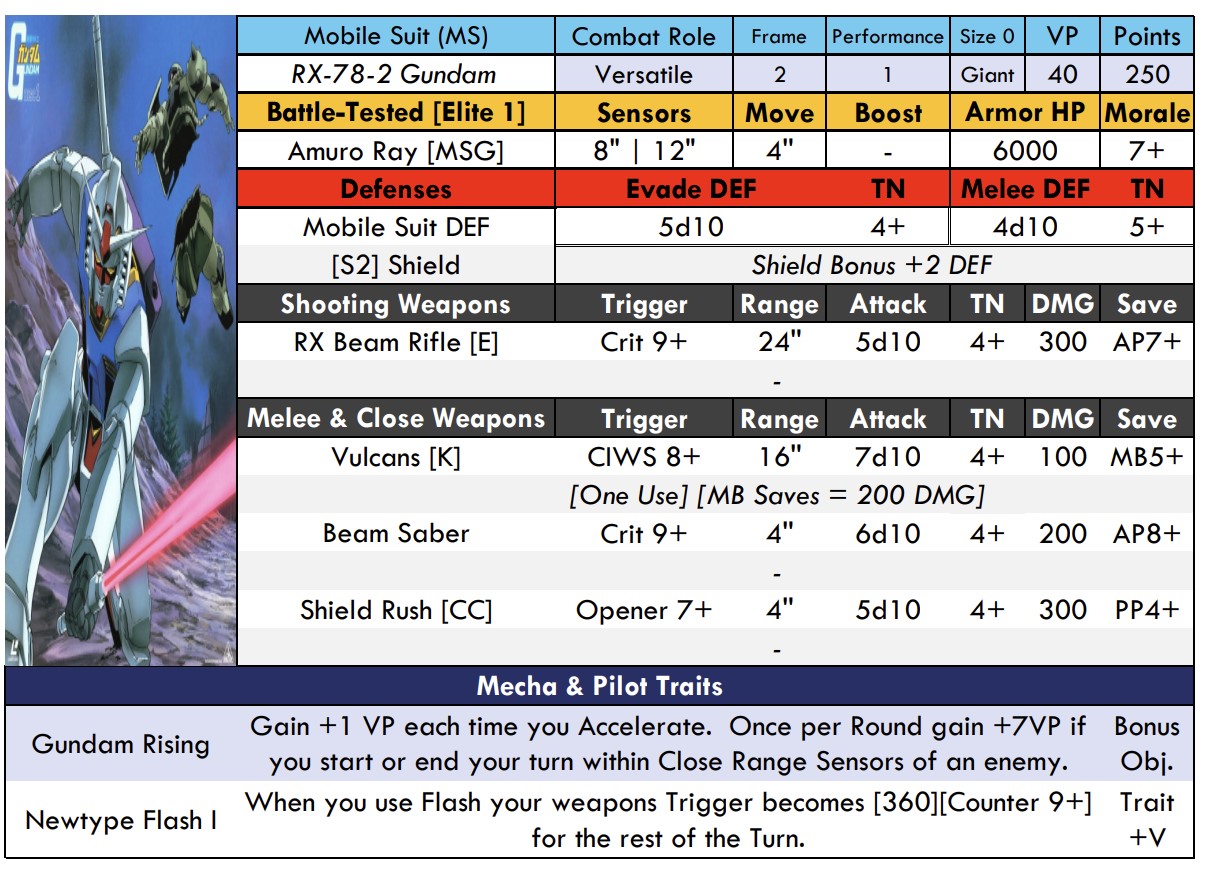
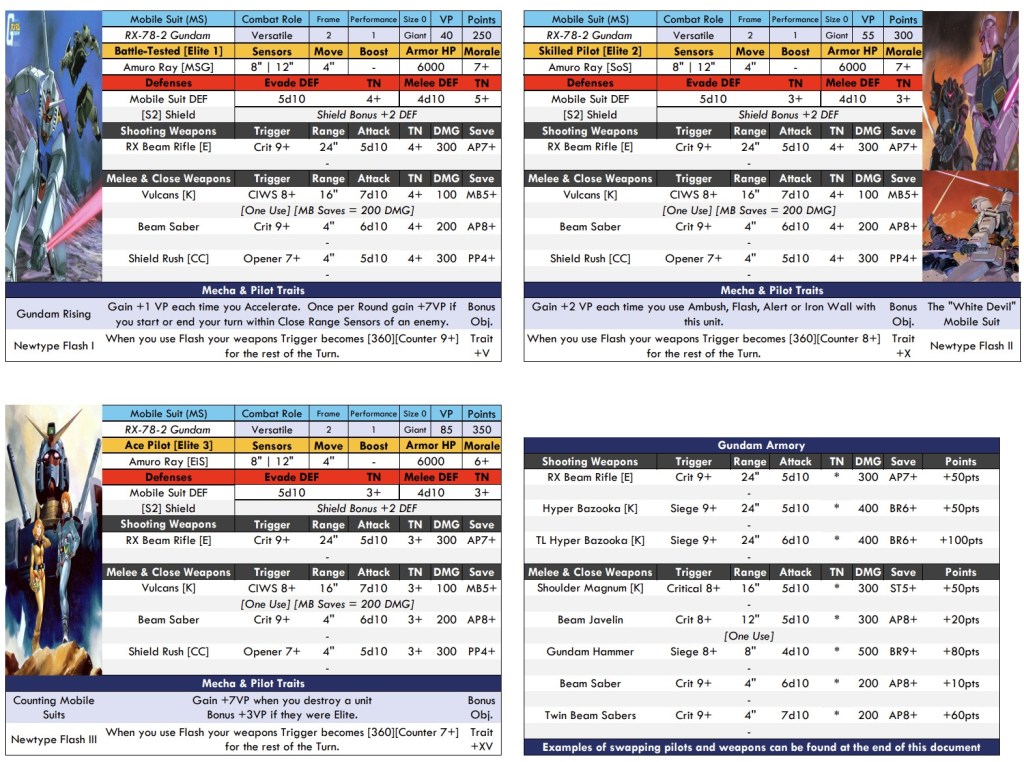
In the above progression, all battle-tested, skilled and ace units wind up with the same bonuses. But that’s not really how we view our characters. Consider a few Gundam examples.

  • Late One Year War Amuro might naturally become both incredibly accurate and almost impossible to hit.
  • Kamille, on the other hand, feels much more like a pilot who continually invests in overwhelming offensive ability.
  • Quattro often feels calmer and more defensive than his younger self.
  • Emma Sheen represents professionalism and composure more than reckless aggression.

Those characters shouldn’t necessarily end up with the same statistical progression. They should tell different stories.

So we decided to let elite units choose where to spend their elite passive upgrades, splitting options into ATK+, DEF+, Morale+. A Battle Tested unit might be Morale 5+, or Hit 4+ or DEF 4+. A skilled pilot would choose 2 of those, or perhaps only have ATK 3+. It worked great, but the more we played the more we felt it didn’t represent the full breadth of characters present in Mecha fiction. For example, Amuro might be an all rounder, while Kamille favors shooting over melee, similarly we might see Quattro more reserved and defensive than the aggressive Red Comet.

We realized that it would be a lot better to further split up ATK and DEF into Shooting / Melee ATK and Evade / Melee DEF.  Each level of elite unit, whether it be Battle Tested, Skilled or Ace, will have points available to improve these target numbers giving us a lot more variety in types of pilots.  Consider the following:

  • Basic pilot – Morale 7+, ATK / DEF 5+
  • Char – Morale 5+, Shooting 4+, Melee 4+,  Evade 3+
  • Ramba Ral – Morale 6+, Melee 3+, Evade 3+, Melee DEF 4+
  • Black Tri Stars – Morale 6+, Shooting 3+, Melee 3+, Evade 4+

Now let’s consider some pilots with very similar archetypes, we now have a lot of flexibility to make them feel different

  • Might Gaine with Maito Senpuji – Morale 5+, Shooting 3+, Melee ATK 4+, Melee DEF 4+
  • GaoGaiGar with Guy Shishioh – Morale 3+, Melee DEF 4+, Melee ATK 4+
  • Gurren Lagann with Kamina & Simon – Morale 3+, Melee ATK 3+

Campaigns And Scenarios

Perhaps my favorite aspect of the new system is that campaign progression and historical scenarios now use exactly the same language. A rookie pilot surviving battle after battle simply chooses upgrades as they earn promotions. Likewise, historical characters can simply begin at different stages of that exact progression and you can use the optional upgrade system to take a base profile and make it the best version of that pilot. The system naturally supports both.

One realization kept resurfacing throughout the discussion. Version 11 is increasingly moving away from making every veteran mathematically better at everything. Instead, it encourages players to ask:

“What kind of pilot did this character become?”

  • Did they become gods of melee?
  • Did they become impossible to hit?
  • Did they develop legendary marksmanship?
  • Did they simply become one of the calmest, most reliable commanders on the battlefield?
  • Those answers should not all be the same.

Hopefully, the new pilot progression finally allows legendary characters to feel legendary in different ways. Campaigns, however, tell a different story.

Pilots earn promotions through surviving battles and achieving victories, slowly investing in ATK, DEF, or Morale as their experience grows. Reaching 3+/3+/3+/3+ should feel like the culmination of an extraordinary career, being the best pilot to ever live and having your final battle as Axis is falling towards Earth or right before Genesis fires on Earth.

Elite units now provide passive bonuses fully built into your unit profile, you no longer need to refer down to their pilot trait or need to remember what it does.  Fear not though, for the previous pilot traits of VER10 still exist, but now become upgrade options for any given unit.

Likewise, we are making Elite Captains play just like an Elite Pilot using almost all of the same pilot skills (with 1 exception) and have the same passive pilot abilities.  Captain’s orders and mission commander orders are also still in the game but they will also be relegated to upgrade options.

We’re still experimenting on whether or not we want elite units to also improve, Weapon Trigger TN, Save TN, or DMG, so were looking for feedback from you, on whether that would be AWESOME or TERRIBLE for game balance.

MechaStellar VER11 Core Mechanic Update

In making VER11 we wanted to improve on the Core Mechanic from VER10. VER10’s biggest change from 5-9 was to change the core mechanic from “Attacker declares target, and defender rolls” to “Both attacker and defender rolls”, something we hadn’t done since VER2.  This core mechanic remarkably streamlined the game, having both Shooting and Melee use the exact same mechanic and gave us a lot more design space to use, since now a unit could have improved attack of defense, each rolling their own dice pools, whereas previously we only had 1d10 of Evade per shot meaning we were constrained on a units Shooting and Evade bonus.

It was a big success and made the game significantly easier to teach resolving our #1 FAQ of “Why can’t I roll dice to attack”.  That said, keeping units balanced against each other and allowing higher performance units to dominate meant giving bonus +HITs and +DEF.  While not a huge burden, it did introduce additional mental math to the game. 

One of the guiding philosophies behind Version 11 has been deceptively simple:

Can we remove one more calculation from every attack?

Over the past several versions, Mecha Stellar has steadily moved away from passive bookkeeping and towards active decision making. Momentum generation has been simplified. Weapon abilities have become more distinct.

What if passive HIT and DEF bonuses simply disappeared?

It Started With A New Playtester. Interestingly, this discussion didn’t begin with mathematics. It began with language. One of our newest playtesters, who is bilingual in Japanese and English, repeatedly stumbled over mechanics that experienced wargamers barely think about. When they saw:

Beam Rifle

  • ATK 5d10
  • +3 HIT
  • HIT on 5+
  • CRIT 10+

They continually expected the +3 to modify the dice rather than the final result. Experienced players perform these calculations almost automatically, but new players don’t have years of wargaming habits to fall back on.

VER10 Attack process

Resolving the attack requires players to:

  1. Roll attack dice.
  2. Count successful HITs.
  3. Add passive HIT bonuses.
  4. Roll defense dice.
  5. Count successful DEFs.
  6. Add passive DEF bonuses.
  7. Add Shield and Cover.
  8. Compare the totals.

None of these steps are individually difficult. However, they occur during every single attack. That raised a simple question.

Why Are Players Doing This Math At All?

The profile generator already calculates:

  • Weapon bonuses
  • Role bonuses
  • Performance bonuses
  • Frame bonuses
  • Pilot bonuses

Players never actually perform that arithmetic themselves. So why are we still asking players to perform the final arithmetic every single time they attack?

One of VER11’s design principles was “what can we change to make this game the faster and easiest to teach”.  So we started experimenting with removing bonus +HITs and +DEF entirely.

VER11 Dice Pool Development

First we had to decide how we would get rid of these bonuses. Were we going to roll them into the attack dice pool, have them affect your target number (TN) to hit, or something else entirely. For a quick thought exercise we ran a game and just took every +HIT or +DEF and turned it into bonus dice instead just to feel how swingy the variance would be. Instead of:

Instead of Beam Rifle

  • ATK 5d10
  • +3 HIT

Simply put: ATK 8d10

Likewise, instead of: Evade 7d10 +3 DEF

Simply print: Evade 10d10

It was a super simple idea to implement but unfortunately…several problems immediately appeared.

Concern #1 – Reliability

One of the biggest arguments against removing passive bonuses was consistency. Flat bonuses make advanced machines feel reliable. A veteran rifle currently attacking with:

5d10 +3 HIT is remarkably dependable.

Changing that to: 8d10

Creates roughly similar averages…but noticeably more variance. Elite machines would occasionally roll poorly. Initially, I wasn’t convinced that was acceptable.

Concern #2 – Weapon Identity

Another concern quickly followed. If every passive bonus simply becomes more dice…would rifles and machine guns begin feeling too similar? Fortunately this was resolved as we were developing the weapon trigger system which created Barrage weapons (machine guns), crit weapons (rifles), siege weapons (bazookas), etc

Dice Pool Warfare

The initial model worked well, but we weren’t sure exactly how we wanted to build the dice pools for each unit. We had to develop a system where the WEAPON, PERFORMANCE, MECH COMBAT ROLE, PILOT all influenced this dice pool.  Of course, we had to keep this within the 10d10 dice cap, since exceeding that cap proved disastrous for late stage VER10.

We wanted a system where units started off around 4-6 d10 and could max out at 10d10.  With 4 inputs of Weapon, Performance, Mech Combat Role and Pilot, it was going to be very hard to keep this within the 4-10d10 limit.

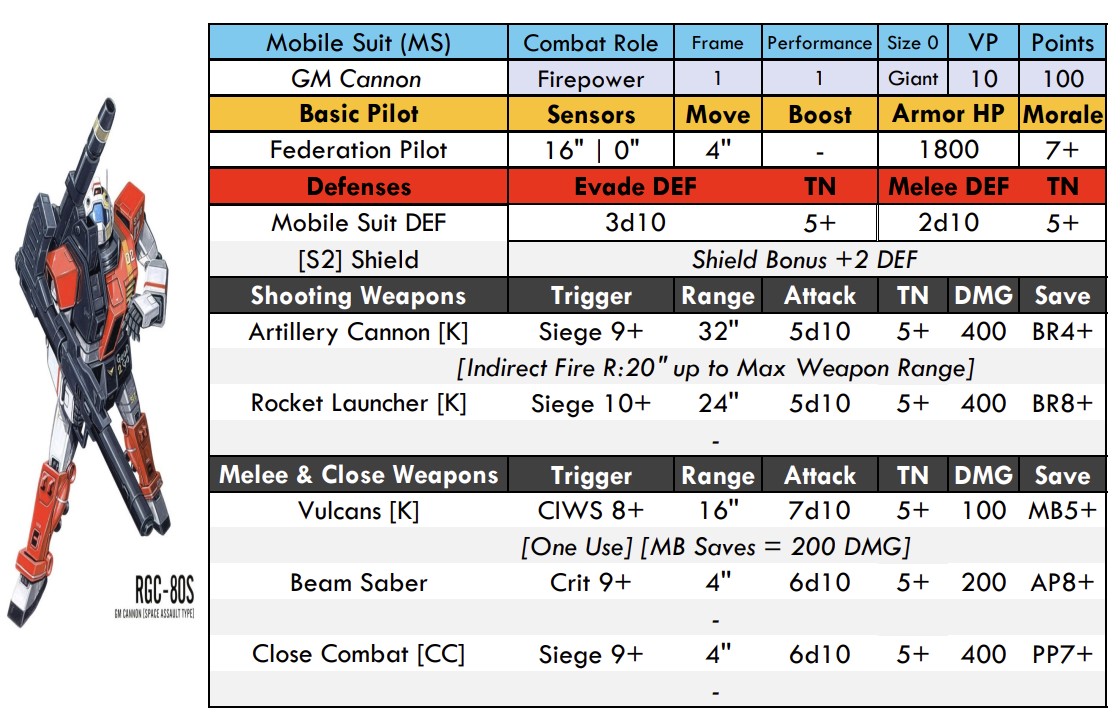
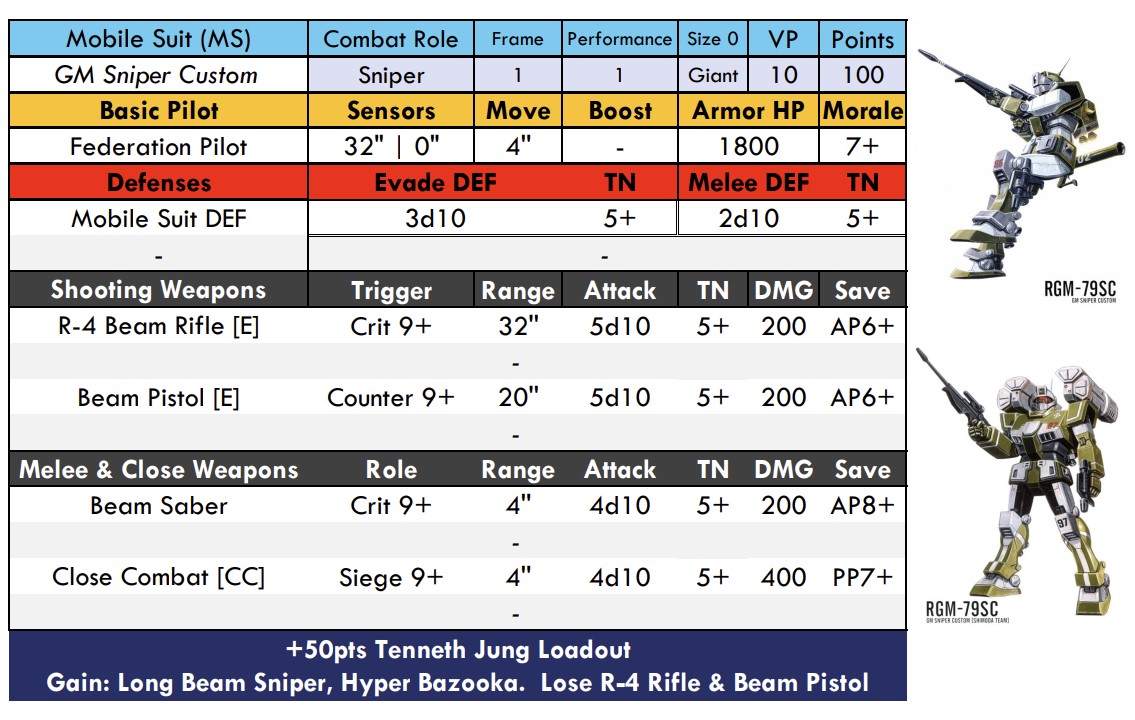
The first step was to flatten performance, initially 1-4, with One Year War = 1-2, Zeta = 2-3, CCA+ (F91, G-Reco, etc.) = 4, which roughly corresponded to dividing all current performance by 2.  Later when dice were at  a premium it was further collapsed into 1-3, with 1 = OYW, 2 = Zeta, 3 = CCA+.  We also flatted Frames to 1 (grunt) 2 (superior unit) and kept the high Frame units provide a performance boost, this way original RX-78-2 Gundam (Frame 2, Performance 1) was on the same playing field as the average Zeta grunt like the Hizack (Frame 1, Performance 2.) 

While flattening performance does take away a lot of the nuance we had before on building mobile suit profiles and making each one very distinct, MechaStellar still has a lot of levers we can pull with both combat role and equipment loadout that we can still make the dozens of GM, and Zaku variants / descendants feel different from one another.  The tremendous upside is that people can much more easily field older models vs newer models, using their favorite models without having to dive deep into an upgrade system.  With our goal of making it easier and more fun to teach newer players this was a huge boon.

With Frame & Performance providing a bonus of 1-4, that limits what space we have avaialble if we want to keep all weapons around 4-10d10.  Now we only have 6d10 left to play with on our maximum limit.  And we still have to factor in the Weapon’s base dice, Combat Role (Sniper, Battler, etc.), & Pilot.  And also consider if there will be any other bonuses, like Target Lock gaining +1d10 ATK.

Mech Combat Roles & Pilot

This became a really challenging problem for the design team with essentially two camps.  We know we couldn’t have both pilot and mech role provide the same exact bonus because we had a limit of 10d10 and not much space left.  Earlier in the development of VER11, when we still had +HITs and +DEF, pilots gave a bonus +1 Hit and +1 DEF, with those gone we would have to decide what to do.

CAMP #1 (including this author)

  • Pilots should improve the number of dice rolled
  • Mech Combat Roles should improve your chance to Hit (Sniper Shoots on a 3+, Battler melees on a 3+, versatile Shoots and Melees on a 4+ etc.)

CAMP #2

  • Mech Combat Roles should improve the number of dice rolled
  • Pilots should improve your chance to hit (Sniper pilots shoot on a 3+, Brawler pilots melee on a 3+, versatile pilots hits and shoot and evade on a 4+ etc.)

Both camps had good reason for how this fit the verisimilitude of piloting a mech.   We went back and forth on this a lot and prototyped two different types of profiles for VER11, which was quite a burden on our layout editor but we’re grateful for them doing double the work.  While neither camp was wrong, and both options worked well we eventually decided on Camp #2 since it felt more correct that the pilot was improving the odds, while the machine was providing the ceiling.  In essence, only a true pilot could bring out the full potential (DEF on a 3+) for the Tallgeese (DEF on a 3+ with a huge defense dice pool) or a Gundam Dynames (Shoot 3+ with a huge def dice pool).

We had rebalanced all combat roles at the start of VER11, in VER10 a role would have a bonus ranging from +0 to +4, while in VER11 it ranged from +0 to +2 shortening the variance.    So before a Sniper might be +4, a firepower unit Shooting+3, a Raid unit Shooting +2 etc; this has all been collapsed down to a max of +2 on Shooting or Melee.  This meant we could do either +2d10 dice, or improve target number (TN) to hit like 5+ to 3+. 

But on the pilot side of things, we had simplified everything that Elite pilots HIT and DEF on a 4+, while an Ace unit HITs and DEF on a 3+.  But later on, we had the idea to further expand this.  Since one of VER11s goals was to reduce the number of “oh I forgot I have this ability” we ended up moving all previous pilot traits to optional upgrades, while all pilot bonuses became passive bonuses, allowing a unit to improve their TN for shooting, melee attack, melee defense, evade or morale.  We found it a lot better to have pilots modify TNs for both attack, defense and morale keeping it all one unified mechanic, rather than pilots improve Morale TN but provide bonus dice to combat.

Finalizing Weapons Dice

So with our goal of 4d10 – 10d10 on the dice pool we have the following.

  • Frame & Performance 1-4
  • Mech Combat Role 0-2
  • Pilot 0 (but improves your TN to Hit or DEF)

With a cap of 10d10 that leaves us with (-4d10 Frame / Performance, -2d10 Mech Combat Role) = Weapons can at most be 4d10.

So we set the majority of weapons with attack dice of 2d10 to 4d10.  Weapons will be further differentiated by their Triggers which we’ll cover later.

Likewise for Defense, a mobile suit would be 3d10 Evade and 1d10 Melee DEF plus similar bonuses on Frame, Performance, and Combat Roles.  Super Robots would often be 2d10 Evade 2d10 Melee DEF with flexibility there for the slower Big O or Ideon types and the more agile Daitarn or Raideen types.

MechaStellar VER11 Roadmap

MechaStellar VER10 had a long run and it was a significant departure from VER 5-9 which had the paradigm of you attack with a flat number of shots and your opponent rolls dice to evade.  Instead VER10 set a new paradigm with both the attacker and defender rolling dice to HIT and DEF.  This solved our #1 FAQ of “Why can’t I roll dice to attack?”.  VER11 will continue with that paradigm, reusing a lot of the same rules and thought processes from VER10 while cutting down on the number of things you need to remember on a mech profile and trimming down mental math.  VER11 will have the following major changes.

We will also cover these in depth in their own separate posts.

Removal of Bonus Hits & DEF

MechaStellar VER10 would have you roll your attack dice then apply a modifier, for example 6d10 + 3 HITs, so if you rolled 4 Hits your total would be 7 Hits.  Likewise for Defense.  VER11 is removing these modifiers and it will simply be dice pool vs dice pool, i.e. 6d10 vs 5d10; and whoever rolls best wins.

This had the advantage of being much faster with less mental math.  It also becomes more exciting because the variance on attacks or defense is much, much higher.  Sometimes you’ll have 6-10 hits, othertimes you might have one or none.  Likewise, this is also the biggest disadvantage.

That said, MechaStellar VER11 is significantly less lethal than previous versions.  And Pilot Skills will let you either mitigate that variance or multiply it, leading to some dramatic moments on the tabletop.

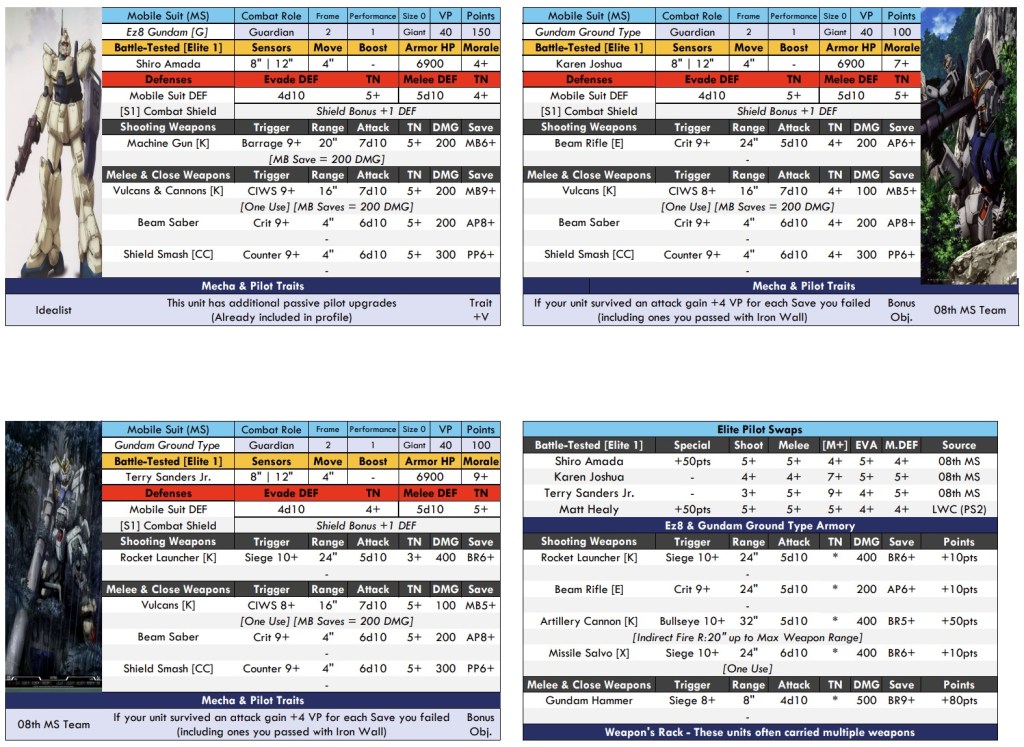
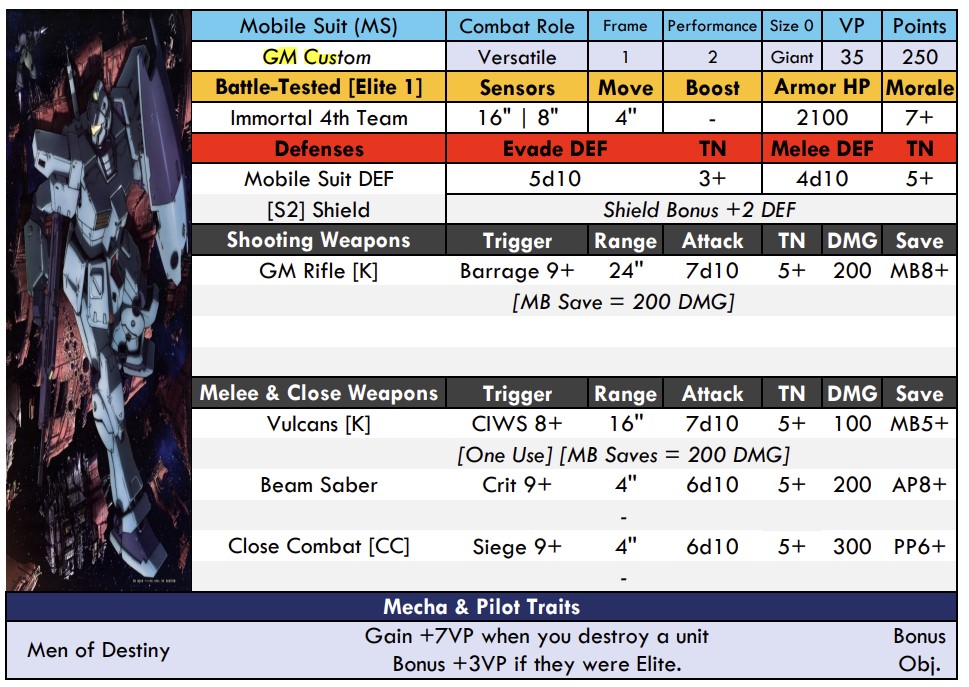
Mech Performance has also been flattened from 1-10 to 1-3 to represent three different eras. It’s now significantly easier to field your favorite units like the 08th MS Team even against superior models from Char’s Counterattack and still hold your own or reenact you favorite scenes like Unicorn’s Torrington base or Kondoh’s Revival of Zeon.

Rest assured, that unit roles like Sniper, Battler, etc. which provided bonus Hits or Defense before will still improve your unit.  Likewise, elite pilot bonuses like Barrage / Bullseye etc. have been folded into the Weapon trigger system, as well as passive pilot bonuses.

Weapon Triggers

The biggest change to VER11 is the inclusion of Weapon Triggers and the removal of Rapid Fire.  While working on small size units you would see in Dunbine, Votoms, or Code Geass, our previous paradigm of low damage but massive +HIT bonuses was not working out.  We were looking for alternate ways to make machine gun types weapons effective, without the tidal wave of hits they were causing.

This eventually led to the development of the “Barrage Trait” for machine gun type weapons that gave you a lot of extra dakka on your rolls while preventing weapons from going over the 10d10 attack dice cap.  Barrage was instantly a huge hit at the playtester tables, and eventually spawned the question of “should other weapons have Trait’s too?”

To do so, Rapid Fire, one of the last legacy items from our 40k roots was eliminated and replaced with Battle Field roles like Barrage Bullseye, Siege, AOE, etc.  Which were all big successes.  Eventually we decided that “Rolling a 10 = CRIT” should be removed and instead replaced with the weapon trait.  For example Barrage 10+, Siege 10+, Bullseye 10+.  Then for the sake of weapon balance the “crit numbers” now called “Trigger numbers” would change to be Barrage 8+ or Bullseye 9+ etc.

Weapon Triggers were the longest development items in the 4 months of VER11 dev time (April through July).  There will be multiple Design Goals posts featuring weapon triggers, how we prototyped them, the mechanical dead ends and the final products.  Since that will likely be a weeks worth of posts, those will come at the of the VER11 Design Goals series.

Here are some sample Triggers. Additionally, the number of saves you roll is no longer equal to the number of unblocked hits.  Instead it’s based on the number of Triggers rolled, making the game significantly less lethal when you cannot avoid a hit.

  • Critical weapons still Crit (2 Hits instead of 1).
  • Barrage weapons roll lots of dakka dice without needing to be in Rapid Fire range.
  • Bullseye weapons can target any unit and gain Crits vs targets without cover.
    • Elites no longer ignore the targeting rules
  • Siege weapons blow up cover and generate 2 Saves per Trigger.
    • See more on Saves below
  • Pierce weapons improve their Save i.e. Armor Penetration for each Trigger.
  • Counter weapons are the only weapon that can counterattack by default.
  • There are also Combination Triggers that combine 2 of the above Triggers.

Saves

Armor Saves are no longer the only Save in the game.   Now each weapon has a Save assigned to it, and all weapons can force a Save every time you roll a Trigger.  Since Saves are now tied to Triggers instead of Unblocked Hits, only lucky rolls are lethal.

  • Armor Penetration (AP) = Standard Pass the Save or take 1000 DMG
  • Stun Save (ST) = They remove actions or deal 500 DMG
  • Push / Pull (PP) = These Move the target or deal 500 DMG.
  • Break Saves (BR) = This weakens the targets Shield / Armor or deals 500 DMG.
  • Mobility Saves (MB) = The target loses a Move action or takes 500 DMG.

Morale

Momentum have been renamed to Morale Points.  You now gain Morale by making a Rally save at the start of your turn or from Control Points you captured at the end of the round.  Morale Point gains are more rare but Pilot Skills are now cheaper.

Pilot Skills & Elite Units

Pilot Skills have been revamped, with Flash and Iron Wall having clear identities.  Many Skills are now cheaper, while Valor is now integrated into the Finisher system.  Boost / Power / Havoc are now tied into skill usage for Flash / Valor / Zeal. 

Elite Units now have built in passives like improved TN to HIT, DEF or Morale.  Captains play just like regular pilots while Captains orders and Pilot Traits are now upgrade options.

MechaStellar VER11 Design Goals Schedule

  1. VER11 Core Mechanic
    1. Removal of bonus HITs and DEF
    2. Dice pool warfare
    3. How Mech roles & Pilots now provide bonuses
  2. Elite Units
    1. Passive bonuses from Elite Units instead of “remember this trait” making it easier to run a SRW game
    2. Traits and Captain’s orders moving to upgrade options
  3. Pilot Skills
    1. Revamped and cheaper pilot skills
    2. Boost / Power / Havoc and the Finisher Phase
    3. Multiple posts on the evolution of pilot skills
  4. Morale
    1. Changing the pace of Momentum regeneration
    2. Taking the 3 separate momentum generation systems and unifying them
    3. Adjusting roles and mech stats to play into Momentum generation and CP captures
    4. Additional actions
  5. Weapons and the genesis of Triggers
    1. Multiple posts covering different triggers and their evolutions
  6. Expanding Saving Throws beyond Armor Saves
    1. Adjusting lethality of the game

The desired end state for MechaStellar VER11 is to make this version the most fun but also the easier version to teach to you and your friends. As you’re reading through the design goals posts, if you see an opportunity to make the game more fun, simpler or easier to teach, please don’t hesitate to comment and let us know. Thank you all for your support and loyalty over the years.