MechaStellar: Tactical Advantage

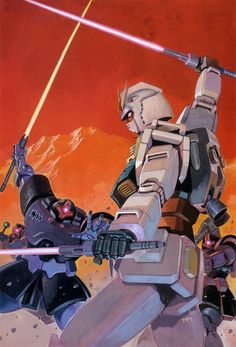
Gouf Custom

It MechaStellar we wanted to have a few different options to pursue that would give you a tactical advantage over your opponent.  We started with five different categories each with a different benefit, but after significant play testing we opted to consolidate down to three categories.  Next we gave each one the same effect, to make it easier to remember on the fly.

The three tactical advantages are as follows:  Blindside!  High Ground Advantage and Point Blank Shot.

The benefits of such have gone through many revisions, the most recent one involved rerolls, but after stacking 3 rerolls on a suit with +2 ATK we soon realized it got a little silly.  Here is the current incarnation of the rules.

Tactical Advantage

  • Each conditions provides +2 ATK, +1 PEN & costs +1 Cost for Skill Defense
    • Remember: Melee and AOE attacks cost +1 for Skill Defense
  • NOTE: These advantages do not apply when using Indirect Fire.

Here are the restrictions for each.

  • Blindside! Moving behind your target’s 180 degree facing arc
    • NOTE: To Blindside the unit when activated must already be behind their target’s 180 degree arc or LOS cover. You cannot walk past an opponent who has LOS and blindside.
    • You can only Blindside the first melee attack. The Defender spins around after that.
  • High Ground! The feet of your figure must be higher than the enemies head.
    • NOTE: Jumping does not enable High Ground, they must be standing on terrain
    • NOTE: High Ground does not apply in space battles
  • Point Blank! Attack with a Ranged (not Melee) weapon within 6”


The advantages are quite significant.  The Attack bonus allows for suits with low ATK to have a better chance to hit suits with higher EVADE.  PEN means non-beam weapons now get a chance to punch through heavily armored suits, especially if you can stack advantages.  Ex: Shooting a Machine Gun point blank and blindsiding gives each shot +2 PEN.  Lastly, +1 Skill cost means that your Ace pilots should be going for flashy moves like going for high terrain or boosting around the cover for a sneak attack, since many grunts do not have more than 1 or 2 skill, that +1 skill cost means they won’t be able to auto-dodge an attack.

Tactical Advantage is a player favorite but we’re still fine tuning it.  Now that we’ve covered all the main rules we’ll do a turn-by-turn match in the next post.

MechaStellar: Unit Points Cost

Gundam and TriStars

We discussed in previous posts that Frame is the biggest driver in a units cost to field, and in our last post we talked about how Pilot skill has a variable cost depending on whether you are piloting the average grunt or an extreme prototype.  In this post we’ll go over the math on calculating a units cost.  Worry not!  The unit excel sheet autocalculates points based off of your inputted Frame, Performance and Pilot level so you don’t need to do anything by hand.

We’ll start with Frame Level.  The cost is Frame Level squared times 5,  or 5x (Frame LVL)^2 .

Level 1 Frame = 1 x 1 x 5 = 5 points

Level 2 Frame = 2 x 2 x 5 = 20 points

Level 3 Frame = 3 x 3 x 5 = 45 points

Level 4 Frame = 4 x 4 x 5 = 80 points

Level 5 Frame = 5 x 5 x 5 = 125 points

We decided early on Frame Level would be a big points cost and decided on an exponential growth function.  Since Frame controls HP, AP, and Armor Saves, each one is considerably good and by the time you reach Frame 4 and 5 you are very, very sturdy compared to your peers and the cost reflects that.

For Performance and Pilot Skill we initially started with something very simple.  Performance was 2 points per level and Pilot Skill was 3 points per Level.  Now as mentioned at the end of last post, pilot skill lets grunt suits keep up with top of the line suits, now if you put an ace pilot in a powerful machine pilot skill becomes even better.

Likewise for Performance, a Frame 5 Performance 0 Machine may have all the firepower but terrible targeting.  But a Frame 5 Performance 10 machine will be unstoppable.  As a result we decided the formula we need to change at higher Frame Levels.  We made the cutoff at Frame Level 3, since Frame 1 & 2 are where we keep all the grunt suits, and 3 is the transition between grunt and unstoppable prototype.

Here is the formula for Performance.  2.5 points per level for Frames 1 & 2.  5 points per level for Frame 3, 4 & 5.

Pilot skill is similar.  2.5 points per level for Frames 1 & 2.  5 points per level for Frames 3, 4 & 5.  After summing points between pilot and skill, round down, so cost of 22.5 becomes 22.

Additionally, if you cross the threshold into Ace Pilot (6+) there is a 10 point premium to pay.  The premium is there to help with the Pilot skill ability to auto-hit against a lower level pilot.  Putting the premium in there means not every unit fielded will be an ace, and those that are will be nearly immune to the effect.

You may be wondering why we didn’t use a linear formula, making performance or skill cost more at each Frame level? i.e. Frame 5 has a higher performance cost than Frame 4.

There are two reasons for that.  One is simplicity, you don’t want to have too complicated a formula, especially if you are going by hand.  Two, while a Frame 5 is more powerful than Frame 4 and 3, in playtesting we found that there isn’t enough to justify a bigger points cost for Performance.  They already have a high base due to the Frame cost (45, 80 and 125 respectively) that adding on scaling performance made it more egregious and people less likely to field high frame suits.  Since many iconic suits are Frame 4, we wanted to avoid that outcome.
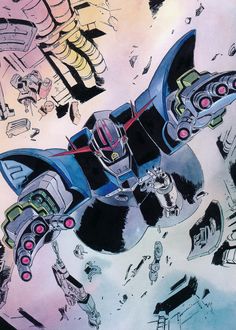
Zeong

Lastly there is an EQ Slot option for low production cost.  This is to represent some mass-produced models that were pretty barebones.  It’s also great to take when you know the model should be a high Frame LVL but you don’t want to justify the cost to field such a slow moving behemoth.  This EQ slot is only available at Frame 2+, and it may not exceed your Frame level.  E.g. Frame 3 can have LVL 2 Low Production cost.  At Frame 2 it reduces points by 5, at 3+ it reduces points by 10.

Now time for some examples.

Early GM Mass Produced – Frame 1, Performance 0, Pilot 0 = 5 + 0 + 0 = 5 points

GM Ground Type – Frame 1, Performance 1, Pilot 1 = 5 + 2 + 3 = 10 points

Zaku II Veteran – Frame 1, Performance 2, Pilot 2 = 5 + 4 + 6 = 15 points

Dom – Frame 2, Performance 3, Pilot 2 = 20 + 9 + 6 = 35 points

Gouf Custom – Frame 2, Performance 5, Pilot 10 = 20 + 10 + 30 + 10 Ace Premium = 70 points

Zeong (Char) – Frame 4, Performance 4, Pilot 8 = 80 + 20 + 40 + 10 Ace Premium = 150 points

Gundam (Magnetic Coating) – Frame 4, Performance 4, Pilot 8 = 80 + 20 + 40 + 10 Ace Premium = 150 points

Gundam (No Magnetic Coating, early show Amuro) – Frame 4, Performance 2, Pilot 2 = 80 + 10 + 10 = 100 points

Zeta Gundam (Kamille) – Frame 4, Performance 8, Pilot 10 = 80 + 40 + 50 + 10 Ace Premium = 180 points

Zock – Frame 4, Performance 0, Pilot 0, Low Production Cost 1 = 80 + 0 + 0 -10 = 70 points

Barzam – Frame 2, Performance 5, Pilot 0, Low Production Cost 1 = 20 + 10 + 0 -5 = 25 points

Guncannon – Frame 3, Performance 0, Pilot 0, Low Production Cost 2 = 45 + 0 + 0 – 20 = 25 points

MechaStellar: Equipment Slots 1-F

GMs

In this post we’ll have some additional examples of equipment slots using Federation suits.  You can read more about equipment slots in this post here.  As Gundam is my personal favorite real robot show, that will be most of the examples you see, but you can still use the system to model your favorite mech show whether it’s Macross, Votoms, Full Metal Panic etc.  Western style heavy mechs will be covered in a separate series of rules, where they trade evasion and mobility for more HP and equipment slots.

For these examples we’ll tackle the GM, originally known as Gundam Mass Produced, the mainstay of Federation forces for early UC, slowly being phased out in the CCA era to F91.  We’ll look at some of the very earliest GM models, specifically the fragile Frame Level 1 varieties.

When designing mobile suits think about whether or not a suit can survive a direct hit from a powerful weapon like a beam rifle or bazooka (DMG 400-500), if it is then it’s probably a Frame LVL 3 suit (HP 600).  The GMs we’re looking at can be easily destroyed by machine gun fire so we consider them Frame Level 1, which is excellent for horde armies as Frame Level is the biggest driver of a suits cost when building your army but we’ll cover that later.

Continue reading “MechaStellar: Equipment Slots 1-F”

MechaStellar: Equipment Slots 1-Z

Zaku II 180mm front

This time let’s talk about Equipment (EQ) slots which are used to build and customize your suit.  Every suit has a Frame Level and Performance Level to start, for example Frame 3 Performance 4, this establishes their baseline combat statistics.  Two suits with identical Frame and Performance level will have identical stats, so Equipment is how we differentiate our Mechs from one another.  We’ll look at a couple examples in this post and talk about Weight as well.

Continue reading “MechaStellar: Equipment Slots 1-Z”

MechaStellar: Melee Combat

GM Command Pre Saber

Melee is an especially dangerous affair.  Watching your favorite shows you know that once it comes down to melee combat there can be only one victor and it’s often a sudden and explosive finish.  To that end we’ve tried to replicate that feeling in Mechastellar.  Below are the rules for Melee combat in Mechastellar Ver. 1.0

Continue reading “MechaStellar: Melee Combat”

MechaStellar: Performance Stats In-Depth

Powered GM Thrust

Performance Stats are quite a bit faster to cover than Frame level stats as they are all combat driven.  So we have Ranged Attack, Melee Attack, Evade and Movement.

Movement describes how far you can move in a round.  Movement 7 means you can move 7″.  If you ever need to back up, pop out of a building then pop back into cover, or make a sharp turn exceeding 90 degrees you pay a 2″ penalty once (and only once) for the turn.  After paying the penalty you are free to execute as many maneuvers as you want.  The reason for only paying it once is for speed of play and to avoid being overly punishing for certain slow units such as our favorite Guncannon.

Continue reading “MechaStellar: Performance Stats In-Depth”

MechaStellar: Frame Stats In-Depth

Asshimar

While some previous posts have touched on stats and mechanics let’s devote this post to a more in-depth look with the latest and greatest.  It’s been another year in development and lots of fun playtesting so we’ve been sharpening our mechanics in the meantime.  Alright time for some stats.

As you recall from this post Frame Level controls the following:  Hull Points (HP), Equipment Slots (EQ), Output (Action Points), Armor Save (ARM Sv), and Sensors.  Let’s explore those.

Continue reading “MechaStellar: Frame Stats In-Depth”

MechaStellar: Mobile Suit Types Update

AC Guy Beach

Aloha!  Sorry for the delay in posting, internet and blogging is not necessarily and easy thing on deployment.  Now it’s time for some design updates and playtest reports.  As soon as I finish them I’ll begin posting them so look forward to that.

In the last post we talked about Suit types to be used in Mechastellar.  Mechastellar is a Mech game to be used as either a tabletop war game or a tabletop RPG depending on your groups preferences.  The RPG / War Game system can be used to simulate your favorite mech series such as Mobile Suit Gundam or Mech Warrior.

Continue reading “MechaStellar: Mobile Suit Types Update”